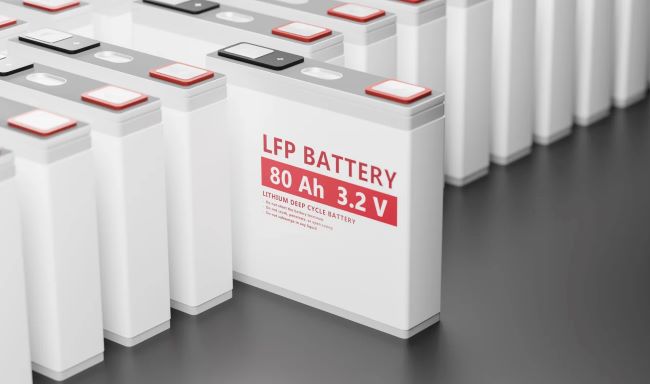
LFP Battery (Image courtesy of Recurrentauto)
SEOUL, Aug. 7 (Korea Bizwire) — South Korea’s Ministry of Environment on Wednesday unveiled new regulatory exemptions aimed at promoting the recycling of lithium iron phosphate (LFP) batteries and electronic waste, as part of a broader push to support emerging green technologies.
Under the country’s regulatory sandbox framework, which allows temporary exemptions from existing laws to facilitate innovation, the ministry will grant special waivers to three projects. Applications to carry out these pilot initiatives will be accepted from August 7 through September 6.
LFP batteries, favored for their lower cost, have seen rising use but are considered less valuable and more difficult to recycle than nickel-cobalt-manganese (NCM) batteries. Current waste management laws require recycled materials to contain at least 10% nickel by weight—standards LFP batteries often fail to meet.
The ministry aims to test the technical and commercial feasibility of recycling LFP batteries, with a view to revising the existing legal framework if the trials prove successful.
A second project will focus on extracting key minerals such as copper and nickel from printed circuit boards (PCBs), which are ubiquitous in electronic devices.
Due to unclear classification under current regulations, PCBs without chips are labeled as synthetic waste, while those with chips are categorized as electronic waste—creating barriers to uniform recycling.
The Environment Ministry said it will explore the need for a new waste classification specifically for PCBs and assess the efficiency of mineral recovery from such components.
The third exemption involves rock wool, a synthetic mineral fiber made from melted basalt, commonly used as a growing medium in hydroponic farming. Despite its potential for reuse, waste rock wool is currently classified as “miscellaneous waste,” making recycling effectively prohibited.
“This round of regulatory sandboxes is notable in that the government proactively identified candidates based on industry feedback,” the ministry said. “Any qualified company may submit a proposal and, if selected, proceed with pilot testing under relaxed rules.”
The initiative underscores South Korea’s growing commitment to advancing its circular economy and clean tech sectors through regulatory reform.
M. H. Lee (mhlee@koreabizwire.com)