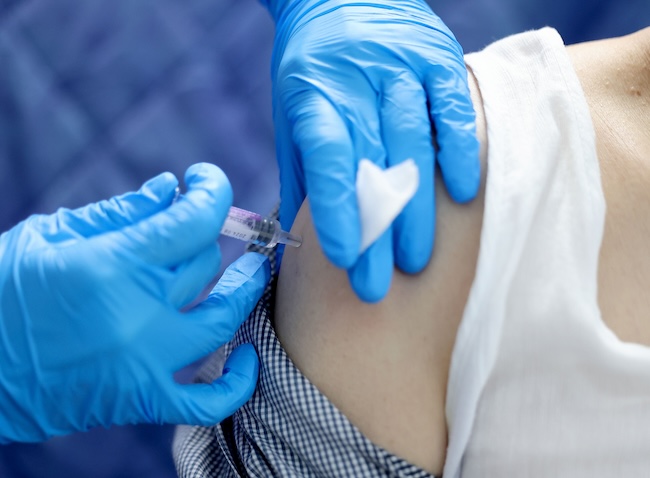
Vaccination (Image courtesy of Yonhap)
SEOUL, Dec. 16 (Korea Bizwire) — A majority of South Korean adults believe a new infectious disease outbreak is likely in the near future and would persist for an extended period, even as willingness to be vaccinated continues to decline, according to a government-commissioned survey released Monday.
The Korea Disease Control and Prevention Agency (KDCA) asked polling firm Hankook Research to survey 1,000 adults nationwide from Dec. 3–5 for its semiannual “Public Perception of Infectious Diseases” report. The findings suggest heightened anxiety about future health crises but growing skepticism toward vaccines.
About 67 percent of respondents said they expect a new infectious disease to emerge domestically “in the near future,” while 69 percent said a future outbreak would likely last more than a year. Only about one-quarter disagreed with each statement.
Despite those concerns, intent to receive vaccines in a future pandemic has weakened. Just 35.6 percent said they would “definitely” get vaccinated, down 1.2 percentage points from the first half of the year, while 42.6 percent said they “probably” would, also slightly lower. Around 15 percent said they were unlikely to be vaccinated or would refuse, with 3.4 percent saying they would “never” get the shot.
Among those hesitant or unwilling, the most common reason was concern about side effects, cited by 56.5 percent.
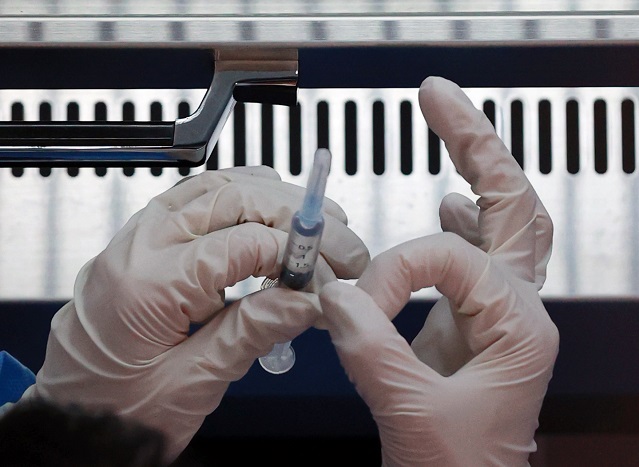
A medical worker splits up doses of a coronavirus vaccine in a vial at a COVID-19 vaccination center in Seoul on Sept. 23, 2021. (Yonhap)
The survey also highlighted the scale of misinformation during recent outbreaks. Eight in ten respondents said they had encountered fake news about infectious diseases over the past year. YouTube was the most common source, mentioned by 57.3 percent, followed by social media platforms, online communities and blogs, and word of mouth.
When asked whom they trust during a public health emergency, respondents overwhelmingly favored medical professionals (90.8 percent), the KDCA (87.3 percent), and international bodies such as the World Health Organization (87.2 percent). Social media ranked lowest at 46.1 percent, though trust was higher among people in their 40s, 50s, and 70s.
The web-based survey had a response rate of 3 percent and a margin of error of ±3.1 percentage points at a 95 percent confidence level.
Lina Jang (linajang@koreabizwire.com)