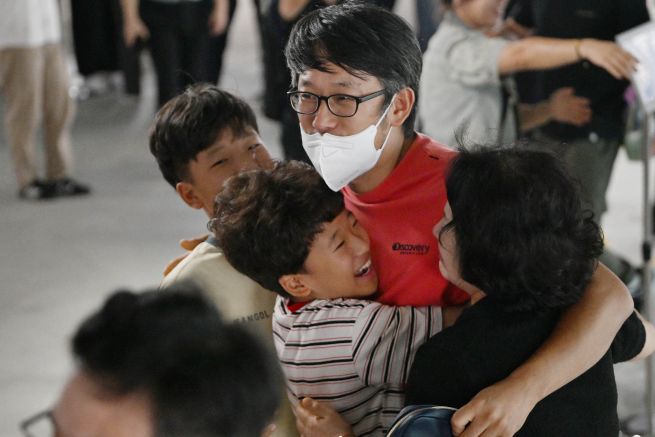
A South Korean worker who had been detained in Georgia by U.S. immigration authorities is reunited with family members in the parking lot after arriving through Terminal 2 of Incheon International Airport on September 12. They are among the engineers recognized as having top-tier technical expertise in South Korea. (Yonhap)
SEOUL, Sept. 12 (Korea Bizwire) — At 3:23 p.m. on Friday, the arrival hall at Incheon International Airport filled with tears, embraces, and a palpable sense of relief. More than 300 South Korean workers, shackled only days earlier in Georgia during a sweeping U.S. immigration raid, finally walked free onto home soil.
Families pressed against barricades, some waving signs, others clutching tissue packets. A pregnant woman—who had been placed in first class for her comfort—emerged quietly, escorted by airline staff. Behind her, men and women in chartered company jackets filed into waiting buses, their week-long ordeal leaving behind both exhaustion and quiet defiance.
“It should never have taken this long,” said Kang Hoon-sik, President Lee Jae Myung’s chief of staff, who came to the airport to meet them in person. “We regret we could not bring them home sooner. But now we must work urgently to fix the visa system so that Korean companies can invest in America without fear.”
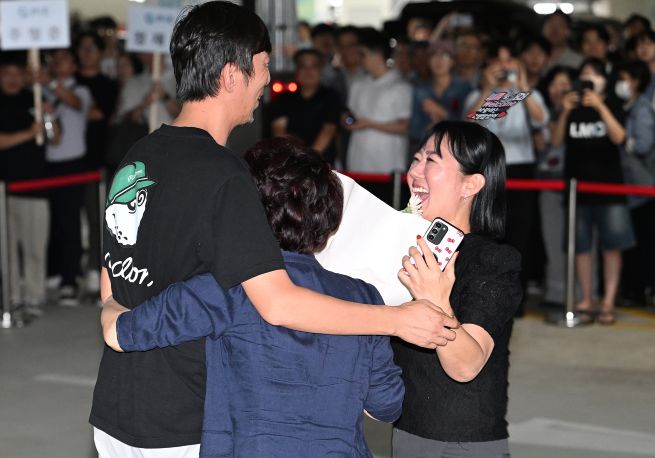
A South Korean worker who had been detained in Georgia by U.S. immigration authorities is reunited with family members in the parking lot after arriving through Terminal 2 of Incheon International Airport on September 12. They are among the engineers recognized as having top-tier technical expertise in South Korea. (Yonhap)
A Shocking Raid
The images still sting. Footage released by U.S. immigration authorities last week showed South Korean laborers lined up in rows, hands and legs chained with metal shackles, before being loaded onto buses. The raid unfolded at a battery plant construction site in Bryan County, Georgia, run jointly by Hyundai Motor Group and LG Energy Solution.
To many in Seoul, the images seemed less like a regulatory action than a humiliating spectacle. Public anger surged. Social media exploded with calls for boycotts of U.S. goods, and headlines described the event as a breach of trust between allies.
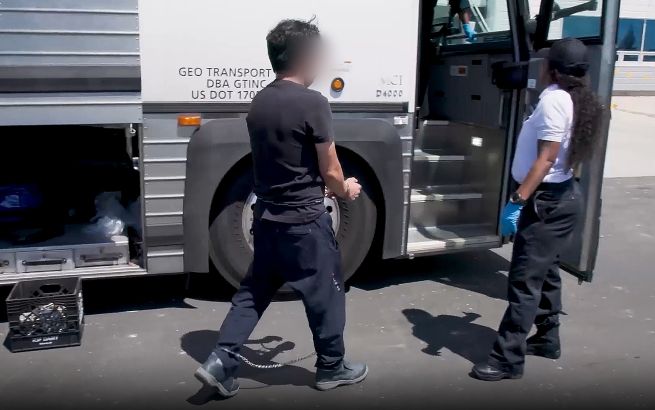
U.S. immigration authorities released footage on their website of a September 4 (local time) raid targeting undocumented workers at the Hyundai Motor Group–LG Energy Solution joint battery plant construction site in Georgia. (Image source: website video capture)
Diplomatic Firestorm
Within days, South Korea dispatched senior diplomats to Washington, while Hyundai and LG executives rushed to Georgia to contain the fallout. Foreign Minister Cho Hyun shuttled between negotiations, eventually reaching an agreement with U.S. officials that the Koreans would be released as “voluntary departures,” not deportees—a crucial distinction intended to prevent future travel restrictions.
Cho announced that Seoul and Washington would form a working group on visa reform, including the possible creation of a new category for corporate investment staff. The plan also envisions a dedicated visa desk at the U.S. Embassy in Seoul.
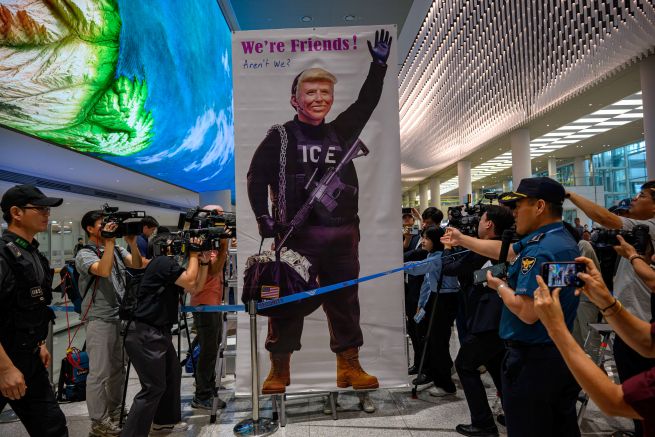
On September 12, at the arrival hall of Terminal 2 at Incheon International Airport, where South Korean workers detained in Georgia by U.S. immigration authorities returned home, Lee Je-seok, head of the Lee Je-seok Advertising Research Institute and widely known as a genius ad planner in Korea, staged a placard performance featuring the image of U.S. President Donald Trump. A recent poll shows that many South Koreans feel not only bewildered but increasingly angry over the incident. (Yonhap)
A System Under Strain
Most of the detainees had entered the U.S. on short-term business visas or 90-day recreational permits, documents ill-suited for the long, technical work demanded at construction sites. Companies had long warned of gaps in the system, but few expected matters to unravel so dramatically.
“It’s a gray area that both sides interpret differently,” Kang admitted. “That gap must be closed before trust can be rebuilt.”
One South Korean, who has family in the United States, chose to remain in custody and fight his case in court. Others spoke privately of trauma: of being treated “like criminals,” of phones confiscated, of nights spent in detention facilities far from home.
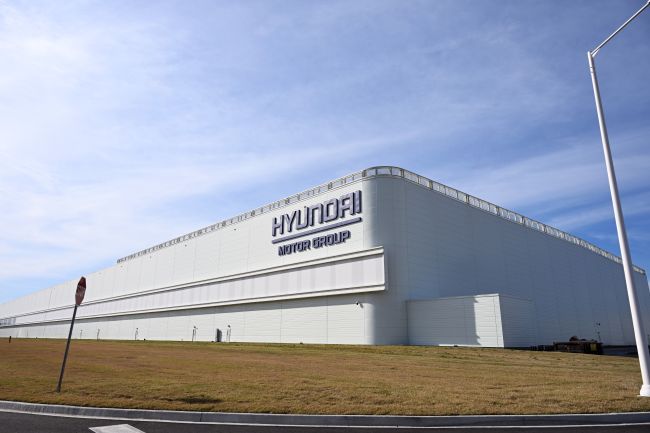
Hyundai Motor Group Metaplant America (HMGMA) located in Ellabell, Savannah, Georgia, USA. (Image courtesy of Hyundai Motor)
Symbolism Beyond Georgia
The crisis came at a delicate moment in U.S.–Korea relations. President Donald Trump, who has sought Seoul’s cooperation to rebuild U.S. shipbuilding, semiconductor, and battery industries, briefly delayed the release, encouraging some workers to stay on.
But in Seoul, President Lee Jae Myung struck a cautious note at his 100-day press conference. “If incidents like this recur, companies will inevitably hesitate to make direct investments in the United States,” he said, urging Washington to deliver concrete reforms.
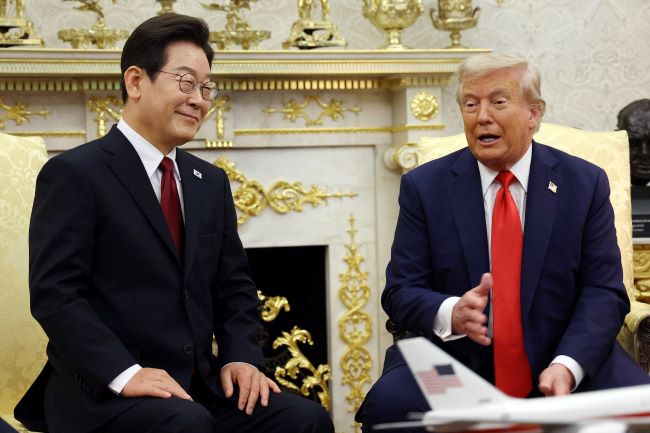
South Korean President Lee Jae Myung (L) holds talks with U.S. President Donald Trump in the Oval Office of the White House in Washington on Aug. 25, 2025. (Image courtesy of Yonhap)
Home, For Now
For the workers, the return marked both an ending and a beginning. After processing through a fast-track immigration line, they were ushered into buses chartered by Hyundai and LG. Security around the terminal was heavy, with foreign press crews jostling for footage of the scene.
Among the passengers were 10 Chinese, three Japanese, and one Indonesian, alongside 316 Koreans. Only 10 of the detainees were women.
As the buses pulled away, some workers waved faintly through tinted windows. Families waved back, grateful but unsettled. The scars of a week in detention, and the uncertainty of what lies ahead for Korea’s global workforce, will linger long after the airport crowd dispersed.
M. H. Lee (mhlee@koreabizwire.com)