
Blood Glucose Test. (Image courtesy of Yonhap)
SEOUL, Aug. 27 (Korea Bizwire) — The prevalence of diabetes among South Koreans under 30 has risen sharply over the past decade, with Type 2 diabetes — traditionally associated with obesity and older adults — nearly quadrupling in that age group, according to a new study.
Researchers at Seoul National University Bundang Hospital analyzed national insurance data from 130,000 patients between 2008 and 2021. They found that the prevalence of Type 2 diabetes in those under 30 jumped from 73 cases per 100,000 people in 2008 to 270 in 2021.
Type 1 diabetes, an autoimmune condition more common in children, also doubled during the same period. The findings were published in the Journal of the Korean Medical Science.
The incidence of new Type 2 diabetes cases rose more than twofold, from 28 to 61 per 100,000, while Type 1 cases saw only a modest increase. Gender differences were marked: Type 1 was 26 percent more common among young women, while Type 2 was 17 percent more common among young men.
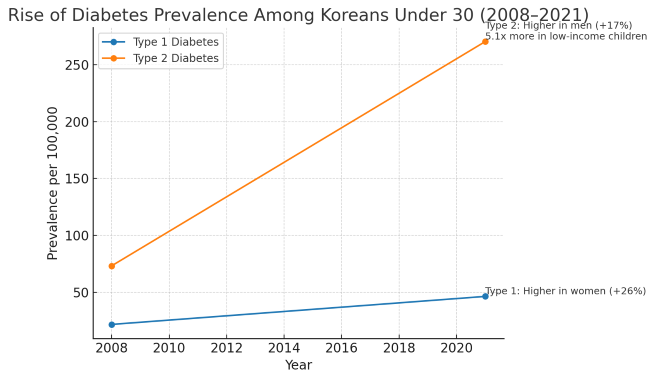
This infographic shows the rise in Type 1 and Type 2 diabetes prevalence among South Koreans under 30 from 2008 to 2021, with callouts highlighting gender and income disparities.
Socioeconomic disparities were also pronounced. Children from low-income households were far more likely to develop the disease — up to 5.1 times more likely for Type 2 diabetes among those under 14 — than their middle- and upper-income peers.
The study noted that Type 1 diabetes rose most steeply among infants and toddlers, while Type 2 diabetes increased fastest among adolescents aged 13 to 18.
“These results show diabetes is no longer confined to older populations,” said Park Hyun-young, director of the Korea National Institute of Health. “With rates rising among children and young adults, urgent national-level management is needed, especially for vulnerable groups.”
M. H. Lee (mhlee@koreabizwire.com)