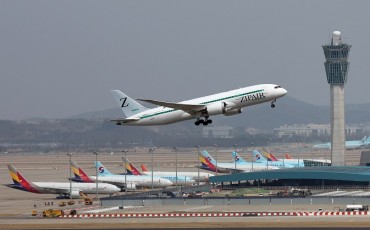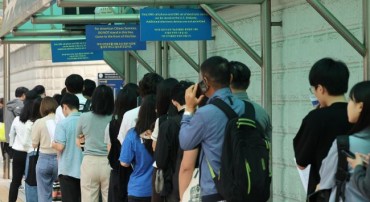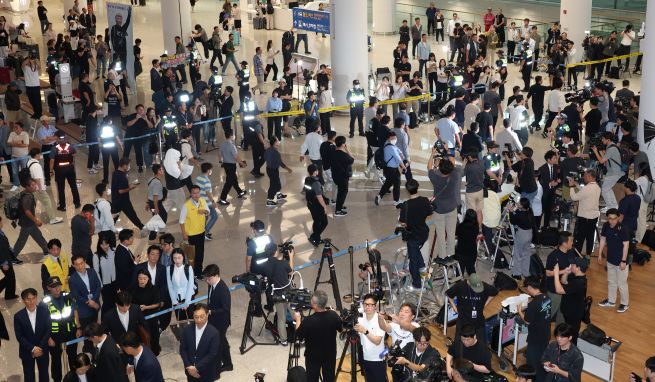
Korean workers who had been detained by U.S. immigration authorities in Georgia walk out of the arrival hall at Incheon International Airport’s Terminal 2 on September 12. (Yonhap)
SEOUL, Sept. 15 (Korea Bizwire) — When more than 300 South Korean workers were swept up in a U.S. immigration raid at a Georgia battery plant earlier this month, the images and testimonies that followed shocked many in Seoul: men shackled at the waist, ankles and wrists, confined in overcrowded cells, sleeping on mold-covered mattresses in near-freezing conditions.
Now, the South Korean government is asking whether those conditions amounted to human rights violations.
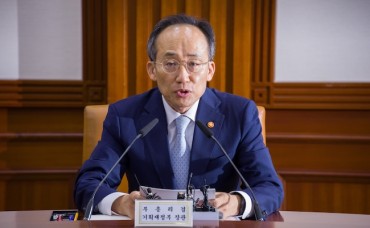
“We understand the government is conducting a thorough review with the companies to determine whether any violations occurred,” Kang Yu-jung, a presidential spokesperson, told reporters on Monday. The presidential office said it has launched a fact-finding process in coordination with the Foreign Ministry and the two firms at the center of the controversy — Hyundai Motor Group and LG Energy Solution, whose joint venture site in Bryan County was raided.
The incident has triggered a rare diplomatic flare-up between Seoul and Washington, longtime security allies whose economic partnership has deepened as South Korean firms pour billions into U.S. factories. A total of 316 South Koreans, among 330 workers detained, were repatriated last Friday after a week in custody, following what officials described as “intense negotiations.”
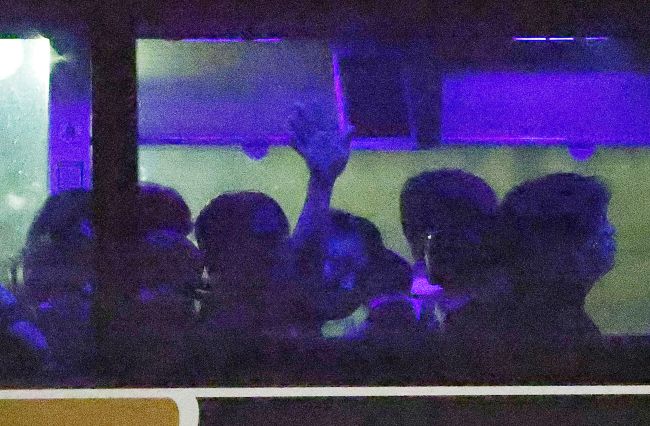
Released detained Korean workers. (Image courtesy of Yonhap)
Inside the Detention
Workers who spoke to local media painted a grim picture. Some described being treated like convicts: shackled in chains, marched into buses, and placed in crowded detention halls. Others recalled unsanitary conditions — mattresses spotted with mold, limited access to showers, and inadequate heating that left detainees shivering at night.
Consular officials, who eventually gained access after Seoul lodged formal protests, said their priority was securing the workers’ release rather than cataloguing complaints. Still, they confirmed that detainees were able to make phone calls and access needed medication only after consular intervention.
The U.S. Immigration and Customs Enforcement agency, or ICE, agreed to waive a standard requirement that workers sign documents admitting to unlawful stay — a concession Seoul pushed for to protect their visa status. Workers holding short-term B-1 visas, typically used for meetings and contract signings, were assured that their visas would remain valid.
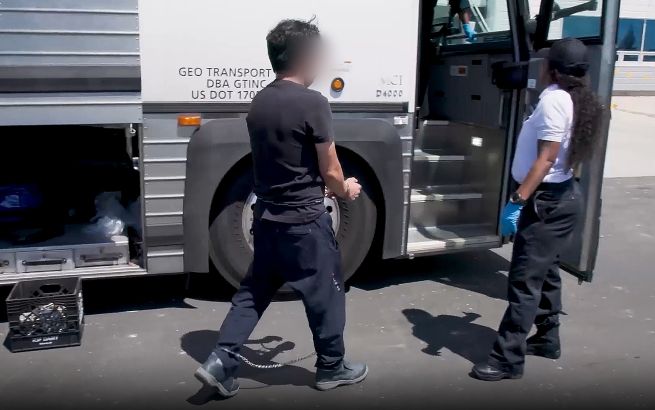
U.S. immigration authorities released footage on their website of a September 4 (local time) raid targeting undocumented workers at the Hyundai Motor Group–LG Energy Solution joint battery plant construction site in Georgia. (Image source: website video capture)
A Diplomatic Balancing Act
The South Korean government has expressed “strong regret” to Washington and vowed to continue pressing for answers. Kang, the presidential spokesperson, acknowledged that “some requests have been accepted, and there were improvements,” but added that officials would continue investigating whether “any issues or inconveniences for our citizens remain.”
Hyundai and LG are separately collecting testimonies from the workers to determine whether discrimination or mistreatment occurred, with plans to share their findings with the Foreign Ministry.
For now, the episode has cast an uncomfortable spotlight on the vulnerabilities South Korean companies and workers face as they expand aggressively into the United States, drawn by the promise of tax incentives and proximity to American automakers.
“A comprehensive fact-finding review will be carried out,” a ministry official said. “If we find that human rights violations did occur, we will raise the issue with the U.S.”
M. H. Lee (mhlee@koreabizwire.com)