Related: Seoul, Washington Strive to Wrap Up Trade Talks Before Leaders’ Summit
The Big Picture
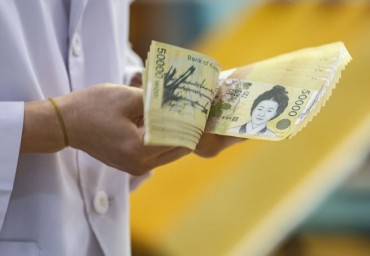
South Korea’s economic policymakers are in Washington this week for what could be one of the most consequential trade negotiations in years. Led by Industry Minister Kim Jung-kwan and Presidential Policy Chief Kim Yong-beom, Seoul’s top economic team is working to finalize a US$350 billion investment pledge under a framework deal reached with the United States in July.
The deal, if ratified, could mark a historic realignment of the two countries’ economic partnership — expanding from traditional defense and technology cooperation into a deeper industrial and infrastructure alliance.
But with the clock ticking ahead of next month’s APEC Summit in Gyeongju, where President Lee Jae Myung is expected to meet U.S. President Donald Trump, both sides are racing to narrow their differences.
The Deal: What’s on the Table
At the heart of the July framework agreement lies a grand bargain:
-
Seoul commits to investing $350 billion in U.S. industries — from advanced manufacturing to clean energy and shipbuilding.
-
Washington, in return, agrees to lower its so-called reciprocal tariff on South Korean autos from 25 percent to 15 percent, easing one of the most persistent friction points in bilateral trade.
The package also includes expanded cooperation in defense, AI-driven manufacturing, and maritime infrastructure under a new initiative known as MASGA — short for Make American Shipbuilding Great Again.
The MASGA Connection
First proposed by Seoul as part of its investment package, the MASGA Project has become a centerpiece of the talks.
The initiative envisions:
-
Building new shipyards on U.S. soil.
-
Training American workers in advanced shipbuilding.
-
Reconstructing supply chains for naval and commercial vessels.
-
Engaging Korean firms like HD Hyundai and Hanwha Ocean to transfer expertise and technology.
On Thursday, Minister Kim and his team met with Russell Vought, director of the U.S. Office of Management and Budget, which oversees industrial and infrastructure spending, to discuss next steps. “We had constructive talks on various matters related to the MASGA project,” Kim said.
The discussions highlight how the deal has evolved far beyond tariffs — into a strategic industrial partnership with geopolitical implications.
The Challenges
Despite the momentum, several issues remain unresolved:
-
How the $350 billion investment will be financed — through public funds, private-sector projects, or hybrid partnerships.
-
Which industries will qualify for tariff reductions or investment incentives.
-
How to align the agreement with each country’s domestic political and regulatory landscape — particularly amid U.S. election-year sensitivities.
Both governments have avoided disclosing details, signaling that some of the remaining differences may be more political than technical.
Why It Matters
For South Korea, the deal represents an attempt to redefine its economic identity in a world of shifting alliances. With global supply chains realigning amid U.S.-China tensions, Seoul is betting that closer alignment with Washington could secure its industrial future — but at a cost that remains politically sensitive at home.
For the United States, the deal fits neatly into its effort to rebuild domestic manufacturing through foreign partnerships — particularly in strategic sectors like shipbuilding, semiconductors, and clean energy.
If finalized, the pact could reshape the architecture of trans-Pacific industrial cooperation, anchoring South Korea as a key pillar in Washington’s economic and security strategy.
The Road Ahead
U.S. Treasury Secretary Scott Bessent said earlier this week that he expects a result “within 10 days” — a sign, Seoul officials believe, that Washington is preparing to make concessions.
Still, Korean officials have emphasized that they will not rush. “Our position is to stay principled, not hasty,” one senior official told reporters.
The two sides are expected to reconvene in the coming days, with negotiators aiming to produce a draft agreement ahead of the Lee–Trump summit.
The Bottom Line
This is more than a trade deal — it’s a strategic realignment.
For Seoul, success would mean securing a leadership role in the next generation of global manufacturing and shipbuilding.
For Washington, it would mean bringing allied industry back to American shores.
Whether the $350 billion commitment becomes a blueprint for partnership or a political flashpoint will depend on the coming days in Washington — and the delicate balance between economic ambition and national interest.
M. H. Lee (mhlee@koreabizwire.com)