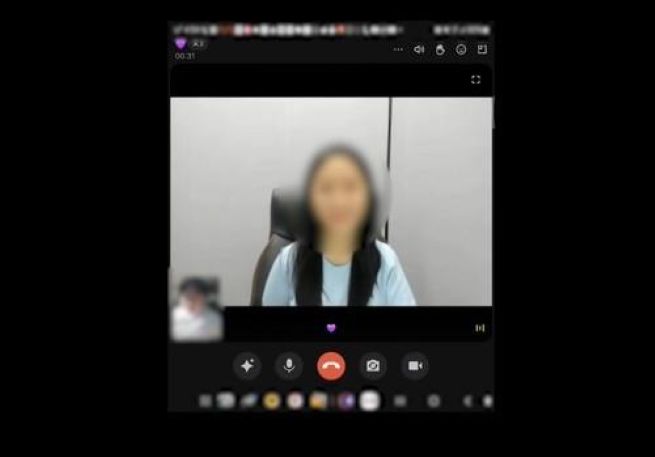
A romance scam video featuring a deepfake individual. (Image provided by the Ulsan Metropolitan Police Agency)
SEOUL, Oct. 28 (Korea Bizwire) — The recent arrest of a Korean couple accused of orchestrating a multimillion-dollar fraud ring in Cambodia has thrown new light on a crime many still struggle to take seriously: romance scams.
While some ask how anyone could fall for a stranger online, advances in artificial intelligence and increasingly sophisticated psychological tactics are driving a sharp rise in victims — and the financial and emotional damage is growing.
Police data show more than 2,400 reported cases and roughly 1.38 trillion won (about $1 billion) in losses over just the last year and a half. Those numbers are widely understood to be undercounts. Victims often hide their experiences out of shame, and scammers disappear the moment money stops flowing.
The playbook is familiar: someone posing as a love interest — once typically a foreign doctor, engineer or investor — builds trust over days or weeks before introducing a crisis requiring money. But the schemes have evolved.
Organized criminal groups operating out of Southeast Asia now recruit Korean speakers to target Koreans directly. Fraudsters use stolen photos enhanced by AI, fake passports and fabricated shipping or investment platforms to create airtight illusions.
The investment pitch has become especially lucrative. One model, known locally as the “pig-butchering scam,” allows victims to see small early profits before they are urged to pour in more — even borrowing to increase their stake. Once the scammer judges the victim sufficiently “fattened,” withdrawals are blocked and the money vanishes.
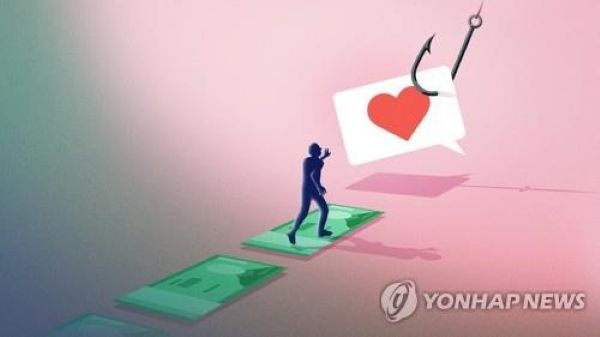
A romance scam that deceitfully exploits romantic feelings
These relationships move fast. One study found the cycle from first contact to financial loss averaged just eight days — with more than 2,000 messages exchanged in that time. The intimacy is manufactured, but the psychological fallout is real. Victims describe the collapse of trust not only in others but in themselves.
Authorities say prevention remains the best defense. The Financial Supervisory Service warns consumers to be suspicious of any online acquaintance pushing crypto investments, claiming imminent travel to Korea, or professing devotion after only a handful of exchanges.
Yet experts argue that platforms — especially dating apps — must do more to police fake profiles and detect abusive patterns.
There is a growing awareness that romance scams are not crimes of gullibility, but of manipulation. “It isn’t about being naive,” one police investigator said. “Scammers build rapport. That’s what makes the betrayal so devastating.”
The greatest danger, advocates say, is the silence. Online support groups intended to help victims have already become hunting grounds for secondary scams — proof that once trust breaks, exploitation can become a cycle.
M. H. Lee (mhlee@koreabizwire.com)