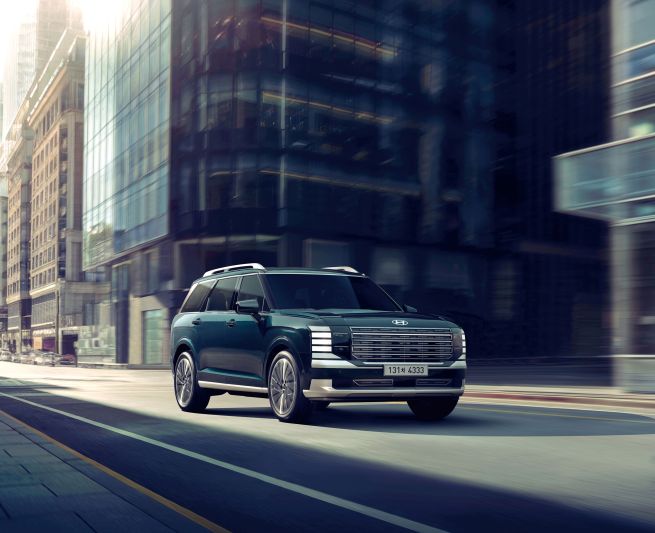
Domestic sales of eco-friendly vehicles — including hybrid electric vehicles (HEVs), electric vehicles (EVs), and plug-in hybrid vehicles (PHEVs) — are expected to surpass 400,000 units in the third quarter, setting an all-time high. The photo shows Hyundai’s “The All-New Palisade” model (Hyundai Motor).
SEOUL, Nov. 17 (Korea Bizwire) — South Korea’s electric vehicle market has hit a symbolic milestone, surpassing 200,000 new registrations in a single year for the first time — a development officials say signals the end of a three-year slump.
The Climate, Energy and Environment Ministry said Sunday that 200,650 new EVs were registered as of Nov. 13, marking the highest annual total since the government launched its EV deployment program in 2011.
From 2011 to 2016, only 11,767 EVs were registered nationwide, but the market rapidly expanded in the years that followed, buoyed by subsidies, aggressive model rollouts, and a post-pandemic shift toward low-carbon lifestyles.
New registrations more than doubled between 2020 and 2021, rising from 46,713 to 100,427. But momentum stalled beginning in 2023 as charging shortages and high-profile fire concerns tempered consumer enthusiasm.
Annual EV registrations fell from 164,486 in 2022 to 162,605 in 2023, then to 146,902 in 2024 — a three-year descent often described as a “chasm” period.
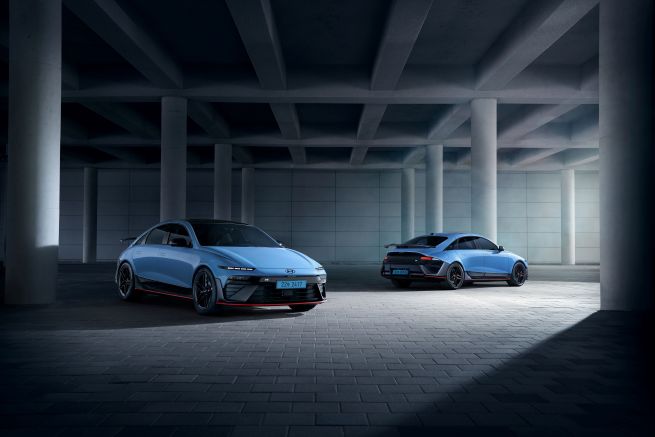
This photo, provided by Hyundai Motor Co., shows models of the company’s Ioniq 6 N high-performance EV sedan. (Yonhap)
This year’s rebound, officials say, reflects a flood of new models and an expanded charging network. As of October, South Korea had more than 52,000 fast chargers and over 420,000 slow chargers installed nationwide. Unlike past years, EV purchase subsidies were finalized early, shortening the usual “sales freeze” that hits the market each January.
Still, officials warn that the country remains far off its longer-term climate targets. South Korea aims to deploy more than 4.2 million EVs by 2030 as part of its national emissions-cutting plan, but has so far registered just 884,894.
Meeting the goal requires accelerating annual EV adoption to roughly 660,000 per year through the end of the decade — more than triple this year’s pace.
A new national commitment under discussion would require 40 percent of new cars to be electric or hydrogen-powered by 2030, rising to 70 percent by 2035. Yet as of late October, EVs and hydrogen vehicles accounted for only 13.9 percent of new registrations this year.
The market is also becoming increasingly polarized between domestic and foreign brands. Tesla continues to lead in autonomous tech, while China’s BYD is rapidly gaining ground with aggressively priced models.

This file photo from May 6, 2024, shows a plug-in hybrid electric vehicle being charged at a parking lot in Seoul. (Image courtesy of Yonhap)
Among 2025 registrations so far, domestic brands held 54.7 percent of electric passenger cars, 63.7 percent of electric vans, and 92.7 percent of electric trucks. The share of domestically made electric buses has also rebounded to 63.3 percent, up sharply from a low of 45.8 percent in 2023.
Despite this year’s milestone, officials say that scaling EV adoption fast enough to meet national climate targets remains one of the decade’s most pressing industrial and policy challenges.
Kevin Lee (kevinlee@koreabizwire.com)