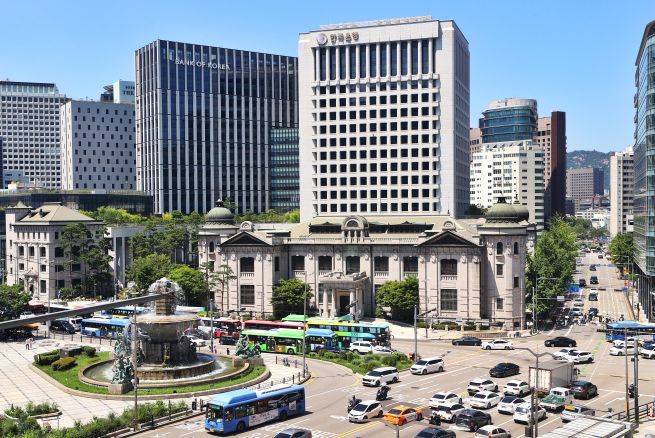
The headquarters of the Bank of Korea in Jung District, Seoul. (Image courtesy of Yonhap)
SEOUL, Dec. 16 (Korea Bizwire) — Increased liquidity is not the sole factor behind the recent surge in housing prices in the Seoul metropolitan area or the weakness of the local currency, the Bank of Korea (BOK) said Tuesday, stressing that monetary policy alone is not sufficient to fully control an increase in loans.
In a blog post, the central bank rejected claims that recent “excessive” liquidity has fueled rising home prices and weakened the Korean won against the U.S. dollar.
“There are various factors affecting housing prices and the exchange rate, and it is unreasonable to attribute them solely to an increase in liquidity,” the BOK said. “Although M2 has risen in recent months, the increase is not unusual.”
The central bank noted that the increase in liquidity stemmed from four policy rate cuts during the current easing cycle that began last year, which have affected private credit with a time lag, as well as a recent expansion in the current account surplus. Higher government bond issuance driven by increased fiscal spending was also cited as a contributing factor.
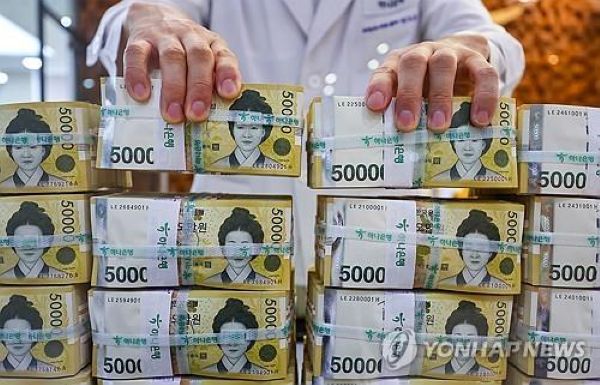
An official inspects 50,000 won banknotes at Hana Bank’s counterfeit response center in Seoul, in this file photo taken July 17, 2024. (Yonhap)
“Compared with past easing cycles, however, the cumulative growth rate of M2 during the current rate-cutting period stands at 8.7 percent, higher than in 2012, but lower than in 2014 and 2019,” the post said.
The BOK added that the recent weakening of the won was largely driven by supply-demand factors, including increased overseas investment and exporters’ holding of foreign currency earnings.
It attributed rising housing prices in Seoul and nearby areas mainly to supply shortage concerns, expectations of price gains in specific districts and a strong preference for owning a single, solid home, rather than multiple properties.
“It is difficult to fully control domestic liquidity through monetary policy alone. Policy efforts are needed to bolster investor confidence and ensure that liquidity flows into more productive sectors,” the BOK said.
(Yonhap)