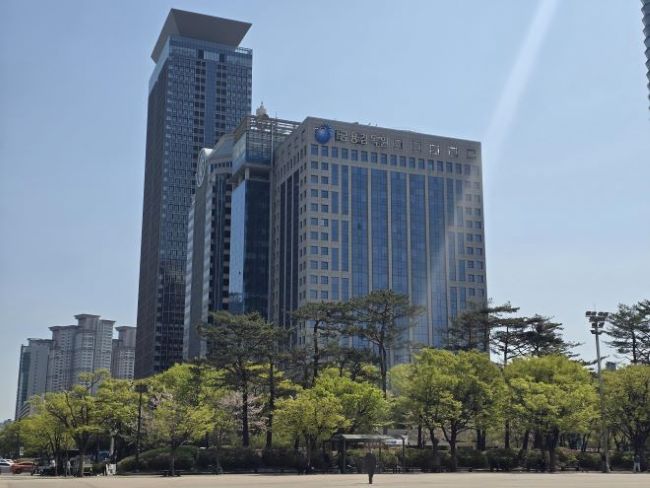
The Financial Supervisory Service. (Image courtesy of Yonhap)
SEOUL, Dec. 23 (Korea Bizwire) — South Korea’s financial watchdog warned on Monday that bonus systems at banks and other financial institutions remain overly focused on short-term performance, even as incentive pay surged more than 30 percent last year.
The Financial Supervisory Service said total performance-based compensation paid to employees at financial companies reached 1.396 trillion won in 2024, up 32.2 percent from the previous year. The increase came amid strong earnings in parts of the financial sector, particularly investment banking and securities firms.
The watchdog made the assessment at a policy seminar in Seoul attended by academics and legal experts, where officials examined weaknesses in current bonus structures and discussed ways to align compensation more closely with long-term stability and consumer protection.
According to the regulator, investment firms accounted for the largest share of bonuses, paying 972 billion won, a jump of 48 percent from a year earlier. Banks followed with 176 billion won, up 13 percent, while bonuses at insurance companies and credit finance firms declined modestly.
Average performance pay per employee rose to 159 million won, an increase of 11 percent. Chief executives received an average of 530 million won, up nearly 30 percent, while other executives earned about 260 million won. At the top end, heads of financial holding companies and banks averaged more than 900 million won in bonuses.
While companies generally exceeded the minimum requirement to defer at least 40 percent of bonuses, most opted for the shortest permissible deferral period. Nearly 78 percent of firms set deferrals at three years — the regulatory minimum — and fewer than 10 percent extended them beyond five years. Overall, deferred payments accounted for 51.9 percent of total bonuses.
The regulator criticized what it described as “formalistic” deferrals and vague clawback standards at some institutions, arguing that such practices dilute the intent of the rules and reinforce a short-term profit mentality.
Hwang Seon-oh, a senior deputy governor at the Financial Supervisory Service, said compensation systems should not undermine the sound growth of financial institutions. He called for bonuses to reflect contributions to consumer protection, stronger links to long-term performance and regular reviews to ensure incentive structures remain appropriate.
The remarks underscore growing scrutiny under the Democratic Party–led government of pay practices in the financial sector, as policymakers seek to balance competitiveness with stability and accountability.
Ashley Song (ashley@koreabizwire.com)