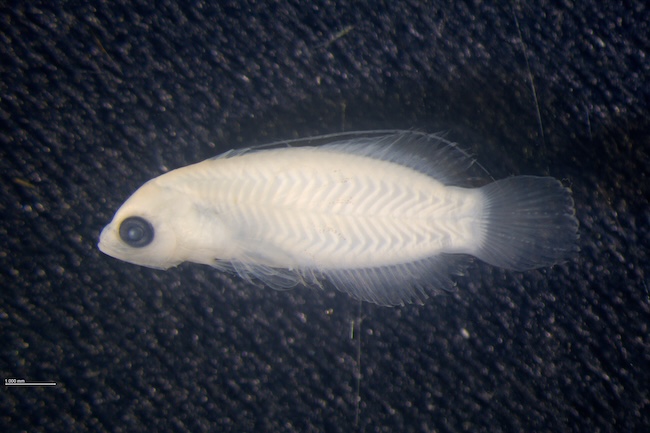
A fish native to subtropical regions found in the South Korean sea (Image courtesy of Yonhap)
SEOUL, Dec. 27 (Korea Bizwire) — South Korea’s Meteorological Administration released a stark warning on December 26 about the future of marine environments around the Korean Peninsula, projecting significant changes in ocean temperatures, sea levels, and marine conditions by 2100 without substantial carbon reduction efforts.
The high-resolution marine climate change scenario, developed in collaboration with research teams led by professor Song Hajoon from Yonsei University and professor Tak Yong-jin from Gangneung-Wonju National University, utilized the K-ACE global climate prediction model, refined to an 8-kilometer horizontal resolution from the original 100-kilometer scale produced in 2022.
The study compared low-carbon and high-carbon scenarios based on the Intergovernmental Panel on Climate Change (IPCC) Sixth Assessment Report. The low-carbon scenario assumes sustainable economic growth with minimal fossil fuel use, while the high-carbon scenario projects continued heavy reliance on fossil fuels and unrestricted urban development.
Under the high-carbon scenario, sea surface temperatures around the Korean Peninsula could rise by an average of 4.28°C by the end of the century (2091-2100) compared to recent levels (2015-2024). The West Sea and central East Sea regions could experience even higher increases of up to 4.5°C. In contrast, the low-carbon scenario shows temperatures stabilizing after 2050.
Marine heatwaves – defined as periods of five or more days when daily average water temperatures exceed the top 10% of 2015-2024 readings – are projected to become more frequent and intense. Under the high-carbon scenario, these events could occur for an average of 295.5 days per year, with intensity increasing by 2.5°C – both metrics significantly higher than in the low-carbon scenario.
The study also projects a decrease in surface salinity, potentially dropping by 1.1 practical salinity units (psu) in the high-carbon scenario by century’s end – double the decrease projected in the low-carbon scenario. Sea levels could rise by 55 to 58cm in the high-carbon scenario, about 21cm higher than under the low-carbon pathway.
These changes pose significant risks to marine ecosystems, extreme weather events, and coastal industries. The West Sea shows the highest vulnerability to temperature and salinity changes, while the East Sea faces the greatest sea-level rise risks. These variations could significantly impact regional fisheries and aquaculture while increasing the intensity of storm surges and extreme wave heights.
The Meteorological Administration plans to incorporate these findings into national climate change standard scenarios for marine areas, making the data available through climate change situation maps as required by law.
Lina Jang (linajang@koreabizwire.com)