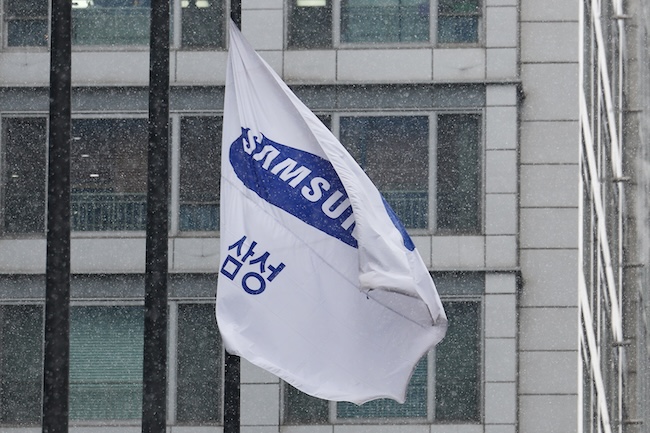
Major corporations are stepping in to offset the financial impact on their workers. (Image courtesy of Yonhap)
SEOUL, March 11 (Korea Bizwire) — As South Korea’s revised tax law imposes income tax on employee discounts starting in 2025, major corporations are stepping in to offset the financial impact on their workers.
Samsung Electronics announced on March 10 through its internal Family Net platform that the company plans to cover the tax burden incurred by some employees due to the tax law changes. The move ensures that employees can continue to benefit from corporate discounts without additional financial strain.
Under its existing benefits program, Samsung employees receive 2 million points on Family Net as part of their wage and collective bargaining agreements, effectively preserving their employee purchasing privileges. Workers can use the platform to buy Samsung products at discounts ranging from 10% to 30%, with a maximum spending limit of 30 million won over two years.
Hyundai Motor and Kia are also expected to address the tax issue in upcoming wage and collective bargaining negotiations. Traditionally, employees of the automakers have received discounts between 8% and 30% on company vehicles based on their tenure. However, they are restricted from reselling or purchasing another discounted vehicle within two years of an initial purchase.
With the revised tax law applied retroactively from the start of 2025, employees will now face taxation on discounts received, particularly for higher-priced vehicles with larger discounts, potentially leading to increased tax liabilities.
“The taxation of employee discounts effectively reduces the value of corporate welfare benefits, which is why companies are stepping in to support their workers,” said an industry official.
Under the new tax framework, the South Korean government has classified employee discounts on company products as taxable earned income. However, tax exemptions apply up to the greater of either 20% of market value or 2.4 million won annually.
As corporations navigate these regulatory changes, the extent of employer support in mitigating the new tax burden is likely to remain a key topic in labor negotiations across industries.
M. H. Lee (mhlee@koreabizwire.com)