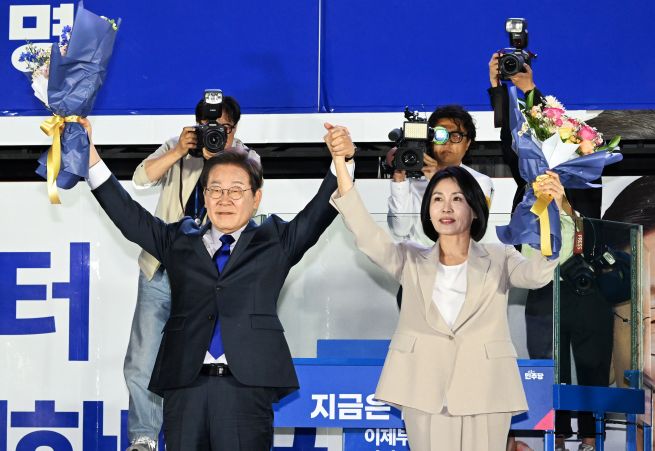
Lee Jae-myung, the presidential candidate of the Democratic Party and virtually confirmed as the 21st president-elect, and his wife Kim Hye-kyung raise their arms to greet citizens after receiving bouquets at a public vote-count broadcast event hosted by the party near the National Assembly in Yeouido, Seoul, on June 4. (Yonhap)
SEOUL, June 4 (Korea Bizwire) — Lee Jae-myung’s path to the presidency has been anything but conventional. Bruised by political defeat, dogged by legal battles, and shaped by a lifetime of adversity, the 61-year-old politician now stands at the pinnacle of South Korean politics — a figure both divisive and unwavering.
In a political landscape defined by volatility, Lee’s ascent reflects more than just resilience; it speaks to his near-obsessive focus on one goal: the presidency. That goal, elusive just three years ago, was realized in the wake of South Korea’s most dramatic constitutional crisis in recent memory — one that began with a surprise declaration of martial law by former President Yoon Suk Yeol on December 3, 2024.
It was a night that would come to define Lee’s legacy. Livestreaming on YouTube, he urged citizens to defend democracy. Then, in a move that stunned the nation, Lee scaled the walls of the National Assembly amid a police blockade, broadcasting the moment to over 2 million viewers. Within weeks, Yoon was impeached, removed from office, and Lee emerged as the face of the resistance — a symbol of political reckoning.
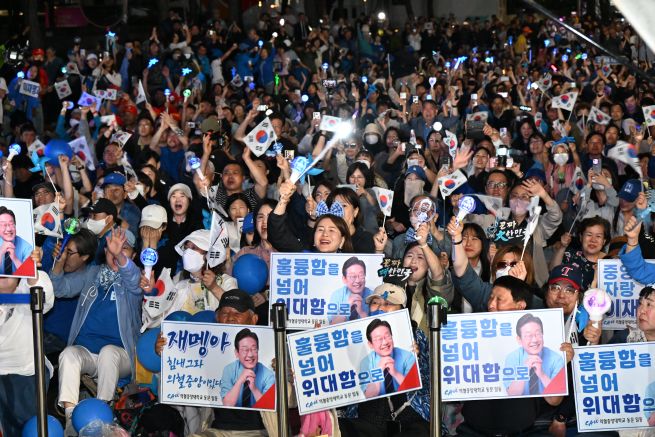
Citizens cheer as a broadcast prediction system declares Democratic Party candidate Lee Jae-myung’s “certain victory” at a public vote-count event for the 21st presidential election, hosted by the Democratic Party near the National Assembly in Yeouido, Seoul, on June 4. (Yonhap)
A Fighter Forged by Hardship
Lee’s rise is rooted in hardship. Born into poverty in Andong, the fifth of seven children, he was raised in a home without privilege or stability. At 12, his family moved to Seongnam, and Lee took jobs in factories, where he suffered lasting injuries — a damaged arm and impaired sense of smell.
He couldn’t attend regular school, instead earning his high school and college credentials through qualification exams. A scholarship student at Chung-Ang University, he passed the bar in 1986 and began his career as a human rights lawyer.
His first attempt at elected office came in 2006, when he lost a bid for mayor of Seongnam. He won in 2010 and again in 2014, building a profile as an activist-mayor who rolled out welfare initiatives like universal basic income for youth and free postnatal care — policies that drew praise from supporters and sharp criticism from conservative circles.
In 2018, he was elected governor of Gyeonggi Province, the most populous in the country, becoming the first liberal to hold the position in 16 years. He quickly emerged as a presidential contender, but lost the 2022 election to Yoon by just 0.73 percentage points — one of the narrowest margins in South Korean history.
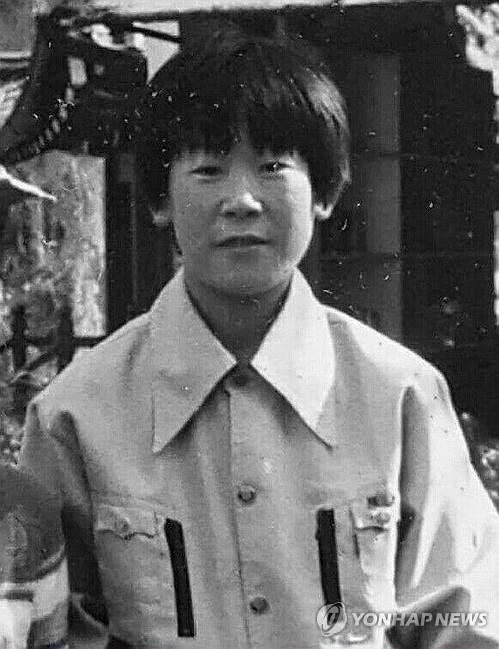
President-elect Lee Jae-myung is seen in 1978 when he worked at a baseball glove factory in this photo provided by his aides. (Yonhap)
The Trials — Literal and Political
Defeat did not push Lee out of the spotlight; it sharpened his edge. He ran for a parliamentary seat in Incheon’s Gyeyang-B district in June 2022 — and won. Though his party fared poorly overall in that election,
Lee leveraged his individual victory into a successful bid for party leadership. His critics accused him of seeking political immunity as he faced a raft of legal challenges: five separate trials on 12 charges, including violations of election law, all ongoing.
Even as accusations mounted — including unproven links to the deaths of at least five people connected to his cases — Lee’s support only grew. Inside the Democratic Party, he evolved from a fringe figure shunned by allies of former President Moon Jae-in to a dominant standard-bearer. His loyal base coined the nickname “Eodaemyeong” — short for “The president will be Lee Jae-myung anyway.”
His followers came in many forms: from fervent young women dubbed “gaettal” (daughters of reform) to close-knit circles formed during his time as mayor, governor, and opposition leader. Their loyalty held strong even as Lee survived a near-fatal knife attack, parliamentary approval for his arrest, and mounting scrutiny.
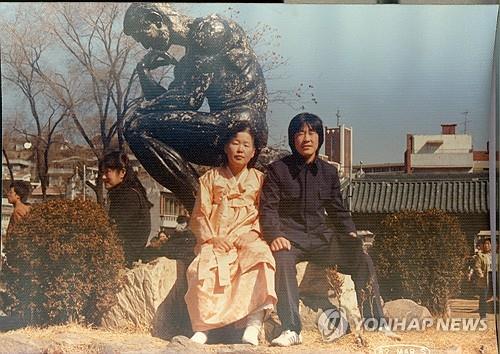
President-elect Lee Jae-myung (R) poses with his late mother, Koo Ho-myeong, during his entrance ceremony at Chung-Ang University in 1982, in this photo provided by his aides. (Yonhap)
Populism, Policy, and Polarization
Lee’s policy instincts have always skewed populist, often stirring debate and, at times, ridicule. During the 2025 campaign, his “hotel economics” theory — suggesting that a hotel reservation boosts the economy even if later canceled — drew fire for oversimplifying macroeconomics.
In another widely criticized moment, he claimed a cup of coffee costs just 120 won to produce despite retailing for up to 10,000 won, prompting backlash from small business owners.
Yet, his messaging on economic justice and inequality continues to resonate with voters exhausted by systemic stagnation and political elitism.
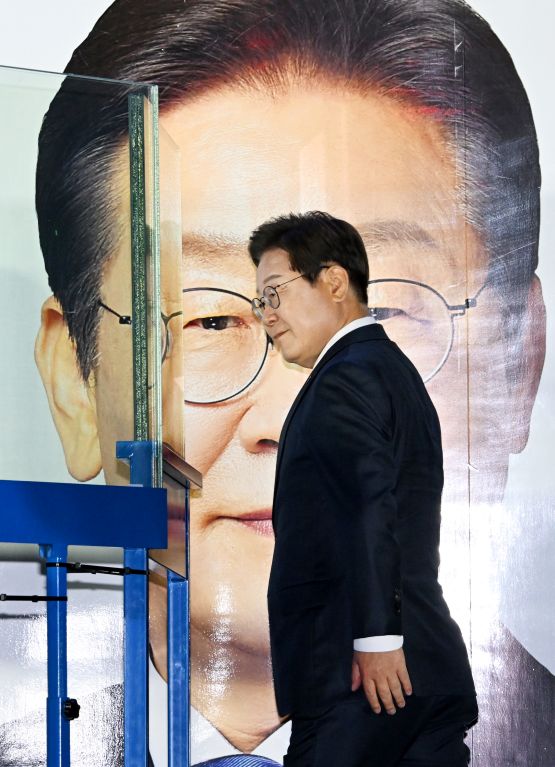
Lee Jae-myung, the Democratic Party’s presidential candidate and virtual president-elect, walks toward the podium to deliver a speech at a public vote-count broadcast event hosted by the party near the National Assembly in Yeouido, Seoul, on June 4. (Yonhap)
The Mandate Ahead
Lee enters office with both momentum and uncertainty. His Democratic Party, buoyed by a sweeping victory in the 2024 general elections, controls the National Assembly. But legal challenges still loom, and so do the expectations of a public divided over whether his rise marks a new beginning — or another chapter in Korea’s long political drama.
He is married to Kim Hye-kyung, a piano major, and has two sons. His story — from factory worker to lawyer, from underdog mayor to president — is one that even his harshest critics find difficult to ignore.
Lee Jae-myung, once the outsider, now holds the center of power. Whether his presidency will be as disruptive as his path to it remains the defining question of South Korea’s political future.
M. H. Lee (mhlee@koreabizwire.com)