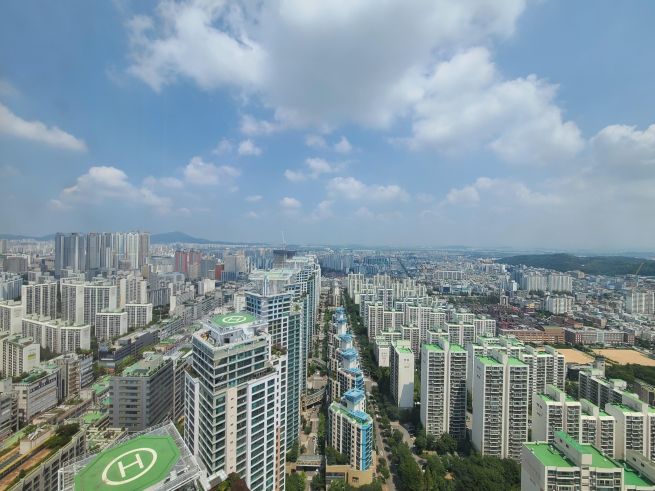
A cityscape filled with apartments. The skyline is densely packed with tall high-rise buildings. (Yonhap)
SEOUL, June 17 (Korea Bizwire) — On a weekday, a real estate agency in Seoul’s Mapo District was juggling multiple phone inquiries from prospective homebuyers but had little to offer, largely due to recent price hikes that encouraged home owners to withdraw their offerings in hope of further increases.
“We are getting inquiries from over 10 clients on weekdays, but there are no listings left,” the realtor, surnamed Kim, said. “Sellers keep raising prices, and once someone agrees to buy, the listing is often canceled in anticipation of further price hikes.”
She added, “It feels like 2020 again in terms of market sentiment.”
As South Korea transitions into the Lee Jae-myung administration, the housing market is coincidentally heating up again, emerging as one of the first major policy challenges facing the new president.
Just days after the June 4 election, data showed that apartment prices in Seoul surged at their fastest pace this year.
According to the Korea Real Estate Board, apartment prices in the capital rose 0.26 percent in the second week of June, matching the peak levels seen during the previous property boom in August 2024.
The rally, which began in Seoul’s affluent southern districts of Gangnam, Seocho and Songpa, has since spread to areas north of the Han River, including Yongsan and Mapo, as well as parts of Gyeonggi Province that surrounds the capital, such as Gwacheon and Bundang.
Experts attribute the latest price surge to a combination of factors.
With political uncertainty lifted following the election, expectations for a liquidity boost — through the incoming administration’s proposed minimum 20 trillion won (US$14.6 billion) supplementary budget and potential interest rate cuts — have fueled demand in the housing market.
apartment complexes in downtown Seoul. (Yonhap)
On the campaign trail, Lee pledged a supply-focused housing policy, distancing himself from the regulation-heavy approach of former liberal President Moon Jae-in.
“Lee’s message of avoiding tax-based housing controls clearly resonated, translating into stronger demand,” said Yoon Ji-hae, an analyst at real estate firm R114.
But experts caution that unrestrained demand could lead to a repeat of the rapid price escalation seen between 2017 and 2021, a period widely viewed as a policy misstep under the Moon administration.
The Lee government has yet to unveil its detailed real estate policy, with key ministerial and vice-ministerial appointments still pending.
The presidential state affairs committee, effectively serving as Lee’s transition team, is expected to present a comprehensive blueprint and policy direction in the coming weeks.
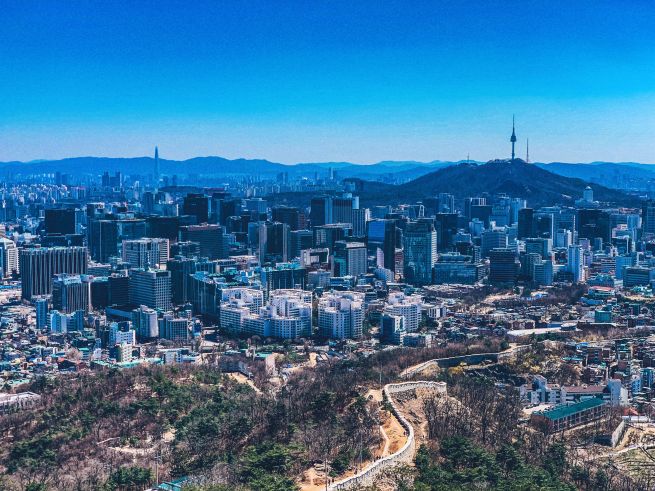
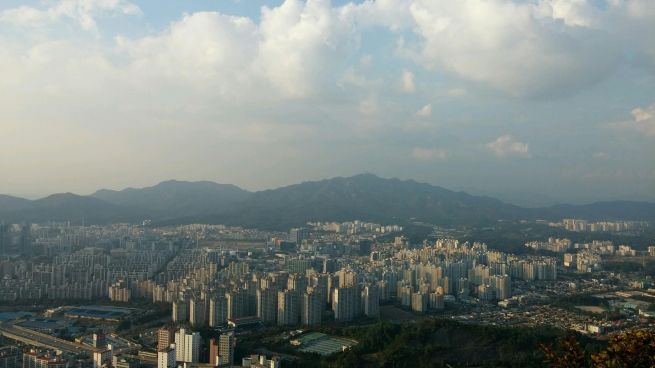
A panoramic view of downtown Seoul as seen from Inwangsan Mountain. (Yonhap)
In the meantime, financial authorities have begun to act.
On Monday, the Financial Services Commission and the Financial Supervisory Service held a closed-door meeting with key local lenders, urging them to tighten lending practices in response to the overheating market.
Acting Finance Minister Lee Hyoung-il also chaired an interagency meeting last week to assess housing market conditions and pledged to mobilize all available policy tools to prevent speculative behavior and market disruptions.
Market watchers say further regulations, including stricter lending rules, appear inevitable to rein in price growth.
“In the current climate, the government will likely have to consider designating certain areas as price-adjustment zones or speculative overheating districts to suppress demand,” said Kwon Dae-jung, a real estate professor at Sogang University.
Park Hap-soo, an adjunct professor at Konkuk University’s graduate school of real estate, echoed the call for intervention.
“Should excess liquidity continue to flow into the housing market, the government will have to manage demand through targeted taxation, such as reimposing heavy acquisition taxes on owners of multiple homes,” he said.
Some analysts say the Bank of Korea (BOK), which has cut its policy rate by 0.75 percentage point since late last year and signaled the possibility of additional rate cuts in the second half to support the economy, may slow the pace due to risks related to the property market.
BOK Gov. Rhee Chang-yong raised such concerns during a press briefing last month.
“In a situation of high market uncertainty, lowering the key rate too quickly could only end up inflating asset prices, such as those of real estate,” Rhee said. “We must not repeat the same mistakes made during the COVID-19 period.”
(Yonhap)