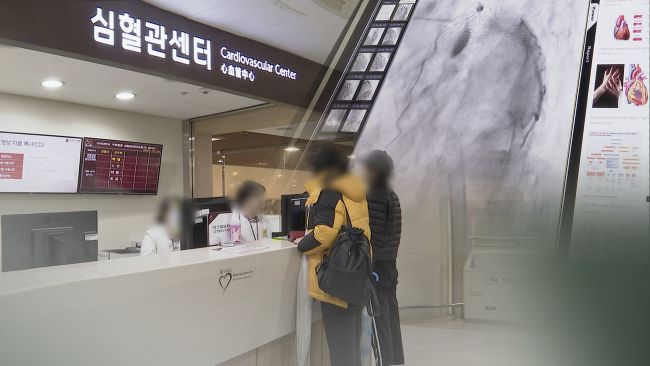
Study reveals link between employment, income, and post-heart attack mortality. (Image courtesy of Yohap)
SEOUL, June 26 (Korea Bizwire) — A new study has found that survival rates following acute myocardial infarction, commonly known as a heart attack, vary significantly in South Korea depending on employment status and income level, revealing stark disparities in health outcomes tied to socioeconomic status.
Researchers from Yonsei University’s Severance Hospital and Chung-Ang University Hospital analyzed national health insurance data and found that individuals insured through the regional health plan—typically the self-employed, unemployed, or retirees—were more likely to die following a heart attack than those insured through their workplace.
The study, published in the latest issue of Nutrition, Metabolism, and Cardiovascular Diseases, tracked 5,971 patients diagnosed with acute myocardial infarction in 2007 over a 13.5-year period.
Of these, 4,329 were workplace policyholders and 1,642 were regional subscribers. Patients were further categorized into low-, middle-, and high-income groups based on their insurance premiums.
The findings revealed that regional subscribers were 1.11 times more likely to die than their employed counterparts. Among regional policyholders, the lowest income group had a 34% higher mortality rate than those in the middle- and high-income brackets. Notably, income did not significantly affect mortality within the workplace-insured group.
Researchers attributed the disparity to differences in healthcare access and health literacy. Those with stable jobs typically had better access to regular check-ups and preventive care, while regional subscribers often faced financial barriers, lower health awareness, and reduced physical activity.
“This confirms the presence of health inequality in our society based on socioeconomic status,” said Dr. Kang Hee-taek, one of the study’s lead authors. “Public health initiatives—such as cardiovascular screenings and health education—targeted at low-income regional policyholders should be strengthened to close this gap.”
M. H. Lee (mhlee@koreabizwire.com)