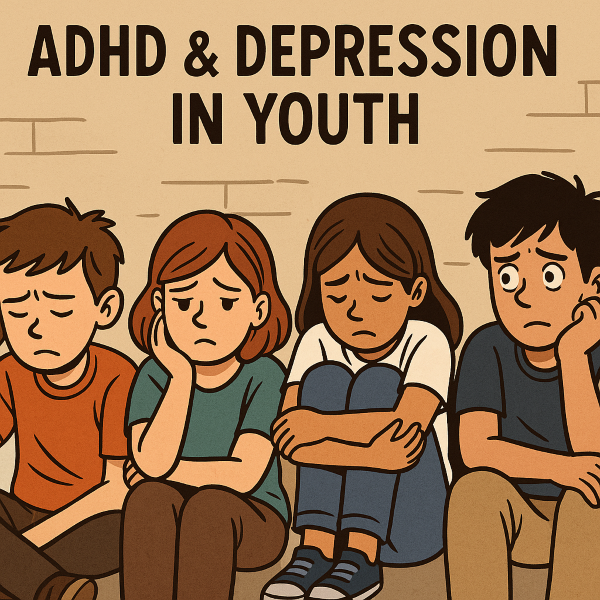
Youth Mental Health Crisis Looms as ADHD, Depression Cases Soar (Image supported by ChatGPT)
SEOUL, July 14 (Korea Bizwire) — A growing number of South Korean children and adolescents are being treated for mental health conditions, with one in every 27 receiving medical care for either attention deficit hyperactivity disorder (ADHD) or depression in 2023, according to new data.
An analysis released on July 13 by the education advocacy group Good Teachers Movement, based on data from the Health Insurance Review and Assessment Service, found that more than 240,000 individuals aged 5 to 19 received treatment for ADHD or depression last year. That accounts for 3.7% of the national youth population of approximately 6.5 million.
Specifically, 152,200 children and teens were treated for ADHD, while 88,500 received care for depression. Compared to 2017 — when just over 80,000 youth were treated for either condition — the figure has nearly tripled in just eight years.
The data revealed distinct age-related trends. ADHD was most prevalent among children aged 5–9 (2.9%), followed by 10–14-year-olds (2.6%) and 15–19-year-olds (1.7%). For depression, older teens were the most affected, with 2.9% of those aged 15–19 receiving treatment, compared to 0.84% in the 10–14 age group and just 0.14% among those aged 5–9.

ADHD and Depression Cases Surge Among Korea’s Youth Population (Image courtesy of Getty Image Bank/CCL)
At this pace, the group projects that by 2030, the number of youth receiving ADHD treatment could exceed 300,000, while depression cases may surpass 150,000.
The Good Teachers Movement emphasized the need for stronger in-school mental health infrastructure, noting that South Korea’s existing “Wee Project” — which supports students struggling with school violence and adjustment issues — suffers from limited staffing.
Currently, fewer than half of schools are assigned professional counseling teachers, and more than 27% of students flagged for follow-up care after behavioral screenings are not referred to secondary institutions.
“Schools need to play a stronger role in early intervention,” the organization said, calling for the nationwide placement of specialized emotional and behavioral support teachers and a more robust response framework for student mental health.
Lina Jang (linajang@koreabizwire.com)