
This photo provided by Hyundai Motor Co. shows promotional material for the automaker’s “Tree Correspondents” campaign. (Yonhap)
SEOUL, July 23 (Korea Bizwire) — In a quiet patch of forest in Brazil, a tree begins to speak.
Not in rustles or creaks, but in human language — telling stories of rising heat, thinning canopies, and soil growing thirstier by the day. Thousands of miles away in South Korea and the Czech Republic, other trees join the conversation. Their voices are part of a new digital chorus powered by artificial intelligence, offering a deeply personal narrative of our planet’s ecological distress.
This is “Tree Correspondents,” Hyundai Motor’s latest campaign that fuses cutting-edge technology with environmental storytelling. Launched Wednesday, the initiative uses large language models (LLMs) to transform real-time ecological data into first-person accounts — written not by humans, but by the trees themselves.
At the heart of the campaign is a simple but powerful idea: What if nature could tell its own story?
To make that vision a reality, Hyundai installed data trackers on trees across its Ioniq Forests — reforestation sites established in Brazil, the Czech Republic, and South Korea. These trackers measure soil quality, climate conditions, and other environmental variables. The data is then interpreted and narrated by AI, producing emotionally charged stories that shed light on the threats of climate change, biodiversity loss, and forest degradation.
Each tree, in effect, becomes a correspondent — not for a news outlet, but for the Earth itself.
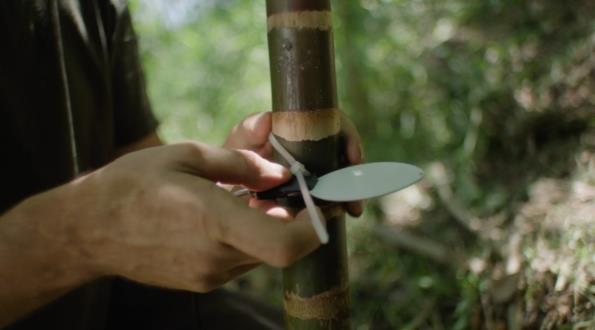
This photo provided by Hyundai Motor Co. shows a data tracker installed on a tree as part of the automaker’s “Tree Correspondents” campaign. (Yonhap)
“This campaign goes beyond conventional environmental messaging by giving trees a literal voice,” said Jee Sung-won, Hyundai Motor’s senior vice president and global chief marketing officer. “With Tree Correspondents, we wanted to create a more personal and emotionally resonant way to engage audiences with the urgency of climate action.”
The campaign is a creative extension of Hyundai’s long-running Ioniq Forest initiative, which began in 2016 to mark the launch of its Ioniq electric vehicle. Since then, the company has planted over one million trees in 13 countries, including the United States, India, China, and South Korea.
By combining sustainability with storytelling, Hyundai’s campaign aims to reconnect people with the natural world — not through statistics, but through voices that sound eerily familiar and heartbreakingly urgent.
Because when a tree speaks, perhaps we’ll finally listen.
Kevin Lee (kevinlee@koreabizwire.com)