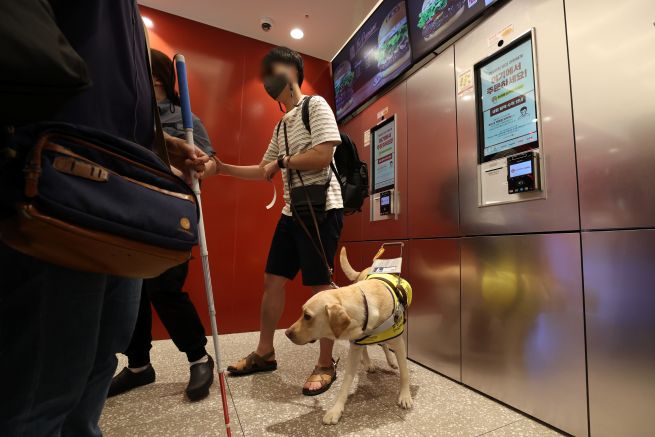
A visually impaired person waiting in front of a self-service kiosk (ordering machine). (Yonhap)
SEOUL, Aug. 8 (Korea Bizwire) — A recent survey has highlighted significant challenges disabled individuals face when using self-service kiosks in South Korea, with many preferring to order through human assistance rather than automated systems.
The findings, released by the Ministry of Health and Welfare on August 8, were part of a study assessing the implementation of the Disability Discrimination Act, ahead of its full enforcement in January 2024.
The survey, conducted between October 2023 and January 2024 by the Korea Disability Development Institute and Matrix Co., surveyed over 4,000 institutions and 540 disabled individuals. It sought to evaluate the accessibility of self-service kiosks and the level of discrimination faced by disabled people when accessing information.
Among visually impaired participants, 70% expressed a preference for ordering from a staff member rather than using a self-service kiosk. Overall, 45% of disabled respondents indicated that they would prefer to make orders through a person instead of using machines like kiosks, payment terminals, or ticketing systems.
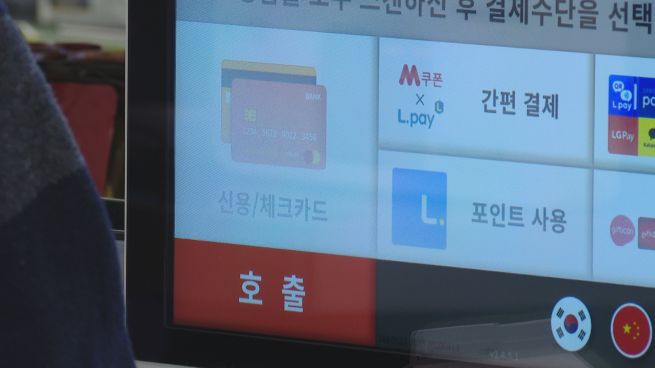
From the perspective of disabled individuals, the widespread use of automation technology is not welcome. Disabled people have shown a clear preference for ordering through a person rather than using self-service kiosks. (Image courtesy of Yonhap)
The most common difficulties reported included delays in order processing, awkward button placements, and trouble navigating menus.
Of the 277 disabled individuals who had used self-service kiosks, 44.8% preferred ordering through staff, double the rate of those who preferred kiosks (20.6%). The preference for human interaction was especially high among those with visual impairments (72.3%) and severe disabilities (51.6%).
The survey also revealed that 51.3% of disabled individuals suggested improvements, such as the installation of staff assistance or call buttons, dedicated spaces for users unfamiliar with kiosks, and campaigns to raise awareness about accessibility issues.
According to the National Information Society Agency, only an estimated 466 self-service kiosks in South Korea have been certified as fully accessible to people with disabilities.
Despite efforts to improve accessibility, there remains a significant gap in understanding and compliance. While 78.7% of institutions acknowledged their obligation under the revised Disability Discrimination Act to ensure accessibility for self-service kiosks, only 51.1% of disabled individuals were aware of this requirement.
Furthermore, 93.8% of institutions were aware of discriminatory practices as outlined in the law, but only 68.3% of disabled people knew about such protections.
The Ministry of Health and Welfare plans to use these findings to guide policy changes and improve accessibility for disabled individuals in public services.
Lina Jang (linajang@koreabizwire.com)