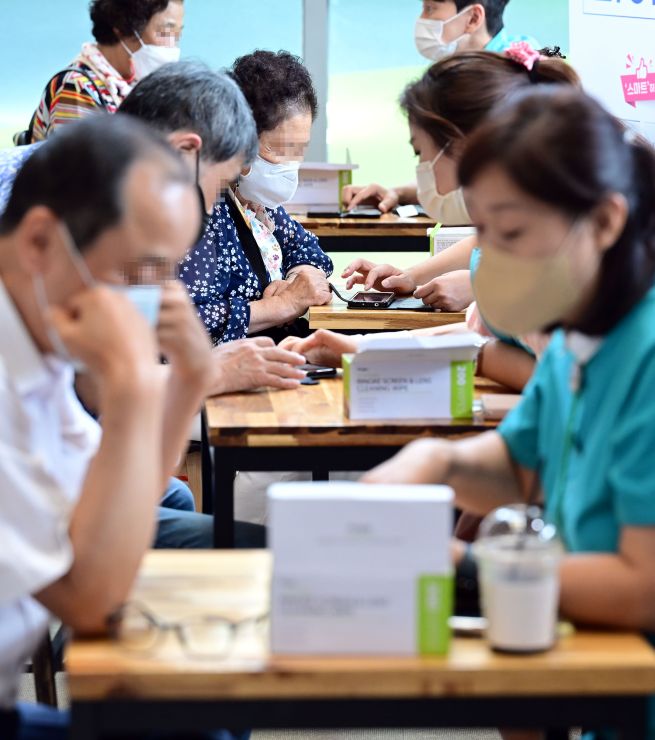
Elderly people learning how to use smartphones (Yonhap)
SEOUL, Aug. 19 (Korea Bizwire) — As daily life becomes increasingly reliant on digital tools, a new government survey has found that nearly one in 12 South Korean adults lacks the basic digital skills needed to navigate common tasks such as booking train tickets through an app, checking online invitations, or sending money via banking apps.
According to the Ministry of Education’s first-ever National Adult Digital Literacy Survey, released Tuesday, 8.2 percent of Korean adults fall into the lowest tier of digital literacy, unable to perform even routine operations with digital devices. The disparity widens significantly with age, income, education, and location.
Stark Digital Divide
The survey, conducted in 2024 among approximately 10,000 adults aged 18 and older, revealed that digital illiteracy rises sharply with age: 23.3 percent of people aged 60 and over were classified at the lowest literacy level, compared to just 0.8 percent among those aged 18–39.
Disparities were also notable across socioeconomic lines. Adults with less than a middle school education showed a digital illiteracy rate of 34.6 percent, while those with a university degree or higher recorded just 0.9 percent. Among households earning under 3 million won per month, the rate was 25.9 percent, versus 1.2 percent for those earning over 5 million won.
Geographic location also played a role: 12.7 percent of rural residents were digitally illiterate, compared to 6.1 percent in metropolitan areas. Women (10.0%) were also more likely than men (6.3%) to lack basic digital literacy.
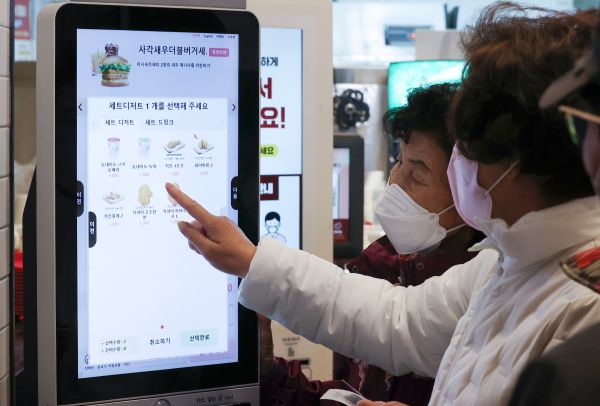
Teaching Seniors How to Navigate Kiosks (Yonhap)
Only Half Are Fully Digitally Proficient
Despite the challenges, more than half of adults—52.8 percent—were classified as fully proficient (Level 4), meaning they can solve complex problems using digital devices. However, 40.4 percent of all respondents reported experiencing difficulties using digital technology at some point.
Notably, 77.7 percent of adults over 60 admitted to having struggled with digital devices, compared to only 8.9 percent of people in their 20s and 30s.
The most common uses for digital tools were communication with friends and family (97%), information searches (84.8%), leisure activities like watching YouTube (84.4%), and online shopping or electronic payments (70.8%).
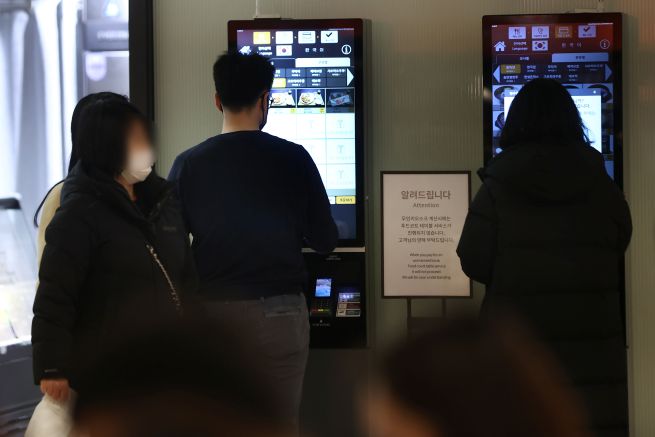
People Ordering Food at a Kiosk (Image courtesy of Yonhap)
Strong Interest in Digital Education
Nearly one-third of respondents said they believe digital literacy programs are necessary for adults. Of those, 62.1 percent expressed willingness to participate in such programs, citing reasons such as adapting to rapid societal changes, improving confidence, and reducing daily life inconveniences.
In response, the Ministry of Education announced plans to enhance AI and digital lifelong learning programs. Initiatives include expanding mobile digital education units like the Hangeul Sunshine Bus, offering hands-on experiences in banks and stores, and providing lifelong learning vouchers for low-income and elderly adults. Specialized programs will also target those aged 30 and older through a new AI-Digital Career Jump Pass.
Vice Education Minister Choi Eun-ok said, “This landmark survey helps us clearly understand the scale and characteristics of adults struggling with digital technology. We will ensure that no one is left behind in the digital era by providing strong, inclusive support.”
Lina Jang (linajang@koreabizwire.com)