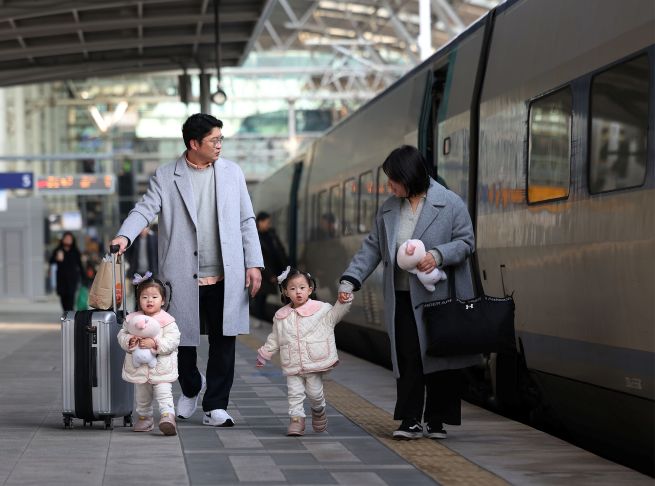
The findings highlight a striking paradox: even as South Korea’s total fertility rate has plummeted — from 1.48 children per woman in 2000 to just 0.72 in 2023 — the incidence of multiple births has continued to rise. (Yonhap)
SEOUL, Aug. 26 (Korea Bizwire) — South Korea now has one of the highest rates of multiple births in the world, even as its overall fertility rate continues to plunge, according to new research released Monday.
A study by the Korea Institute for Health and Social Affairs found that in 2023 South Korea recorded 26.9 cases of twin or higher-order births per 1,000 deliveries — the second-highest rate among 27 major countries surveyed, trailing only Greece at 29.5. The global average stood at 15.5.
For triplets and above, South Korea ranked first, with 0.59 cases per 1,000 deliveries, compared with 0.37 in Greece and a global average of 0.21.
The findings underscore a paradox: while South Korea’s total fertility rate has collapsed — falling from 1.48 children per woman in 2000 to just 0.72 in 2023 — the number of multiple births has surged. Over the same period, total multiple births rose from about 10,800 to more than 12,600, with their share of all births tripling from 1.7 percent to 5.5 percent.
Researchers linked the trend to two factors: older parents and advances in assisted reproductive technology. Between 2000 and 2023, the average age of parents at the time of multiple births rose faster than for single births — 5.0 years for fathers and 5.7 for mothers. Multiple pregnancies also tend to be shorter, averaging three weeks less than single pregnancies, and the risk of premature delivery was found to be 10 times higher.
Natural multiple pregnancies account for only 1 to 2 percent of cases, but among couples using infertility treatments, the figure rises sharply to as much as 40 percent, according to the report. With in-vitro fertilization and related procedures becoming more common, researchers expect multiple births to continue increasing.
“The rise in multiple pregnancies poses risks to both mothers and infants and creates new social challenges,” said Bae Hye-won, the lead researcher. “Yet data on households with multiple births remain extremely limited. We need more comprehensive tracking and welfare policies tailored to these families.”
The report adds urgency to South Korea’s broader demographic dilemma, as the country struggles with record-low fertility while facing rising health risks and costs associated with increasingly complex pregnancies.
Lina Jang (linajang@koreabizwire.com)