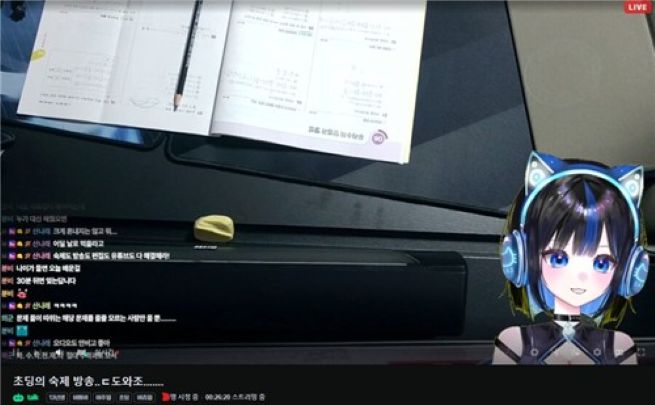
A livestream broadcast by a Vtuber presenting herself as an elementary school student (Image source = website screenshot)
SEOUL, Sept. 15 (Korea Bizwire) — Naver’s livestreaming platform Chzzk has permanently suspended the channel of a 12-year-old elementary school “Vtuber,” citing a violation of its rule barring anyone under 14 from joining. The decision has reignited debate over child safety and regulation in the fast-growing world of virtual broadcasting.
The girl, born in 2013, had broadcast under her guardian’s account, using a provocative avatar with revealing clothing and flushed facial expressions, while asking viewers to “help with homework.”
After her removal, she shifted to YouTube, where comments such as “better than adults” and “young and fresh” quickly appeared, underscoring the risks of sexual harassment and objectification that minors face in digital spaces.
Vtubers — online personalities who stream using 3D avatars instead of their real faces — have become a global phenomenon in recent years, enabling anonymity and income opportunities.
In South Korea, tutorials on “how to become a Vtuber” are spreading among children on social media, and accounts run by elementary school students are increasingly common across platforms including Chzzk, YouTube, and TikTok.
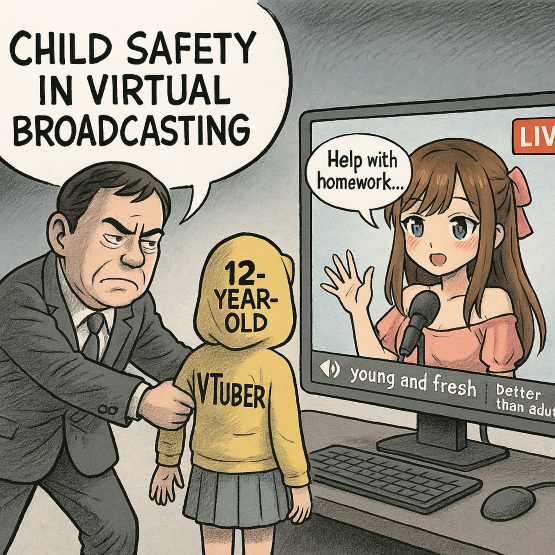
Naver’s Ban on Child Vtuber Sparks Debate Over Safety in Virtual Streaming (Image supported by ChatGPT)
But the avatars’ often exaggerated and adult-like appearances leave minors vulnerable to sexualization, experts warn. Virtual idols — groups of animated performers singing and dancing — have already been targets of sexual harassment and defamation cases pursued through their management agencies.
Legal protections, however, remain thin. Current laws such as the Act on Special Cases Concerning the Punishment of Sexual Crimes and the Child and Youth Sexual Protection Act only cover “real persons,” leaving avatars outside their scope.
“The line between a human and a character is blurring, but avatars still lack legal personhood,” said Jung Wan, a professor of law at Kyung Hee University.
Officials and scholars are calling for new safeguards. A Ministry of Gender Equality and Family official suggested restricting minors from purchasing or using adult avatars. Others argue platforms must take stronger responsibility.
“Children watch personal broadcasts more than TV, yet there is no content review system,” said Lee Yoon-ho, a professor of police administration at Dongguk University. “Streaming platforms should be held accountable.”
The episode has sharpened calls for updated regulations to address a new generation of digital content — where the boundary between virtual identity and real-world risk is increasingly fragile.
Lina Jang (linajang@koreabizwire.com)