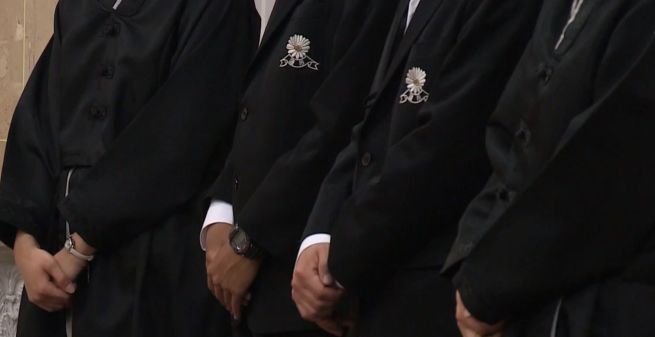
The bereaved family greets mourners at a funeral hall. (Yonhap)
SEOUL, Oct. 9 (Korea Bizwire) — Despite the country’s rapidly aging population, more than half of South Koreans have never discussed death or end-of-life care with their families, reflecting deep cultural reluctance to confront mortality, a new study shows.
According to a report published this year by the Korea Institute for Health and Social Affairs, 54.3 percent of adults said they have never talked about death, terminal illness, or treatment plans with close relatives, while 57.7 percent said their family members had never brought up the topic either.
Researchers noted that such silence contrasts with growing anxiety over physical suffering and the burden families face during terminal care. When asked what constitutes a “good death,” respondents most often cited avoiding physical pain, minimizing the caregiving burden on family members, and preventing financial strain from prolonged illness. Being surrounded by loved ones at the moment of death ranked lowest.
As deaths in South Korea continue to rise—surpassing 370,000 in 2022 for the first time—experts say more people will inevitably encounter the loss of loved ones and need to prepare emotionally and practically.
Yet attitudes are shifting toward greater autonomy and compassion in end-of-life decisions. Nearly 92 percent of respondents said they would choose to halt life-sustaining treatment if diagnosed as terminally ill, while 82 percent supported legalizing assisted dying under strict safeguards.
Medical and social experts are urging the government to create more open spaces for such discussions. “Society needs to normalize conversations about death and empower people to make informed choices,” said Yoon Young-ho, professor of family medicine at Seoul National University. He called for the wider adoption of Advance Care Planning programs in hospitals, which help patients document their wishes at various stages of illness.
Im Mi-jin, professor of social welfare at Konkuk University, added that death education should be introduced across age groups to foster a healthier understanding of mortality. “Death is a universal experience, not just for the elderly,” she said. “We need a culture where families and individuals can talk openly about their wishes before and after death, rather than avoiding the topic altogether.”
Lina Jang (linajang@koreabizwire.com)