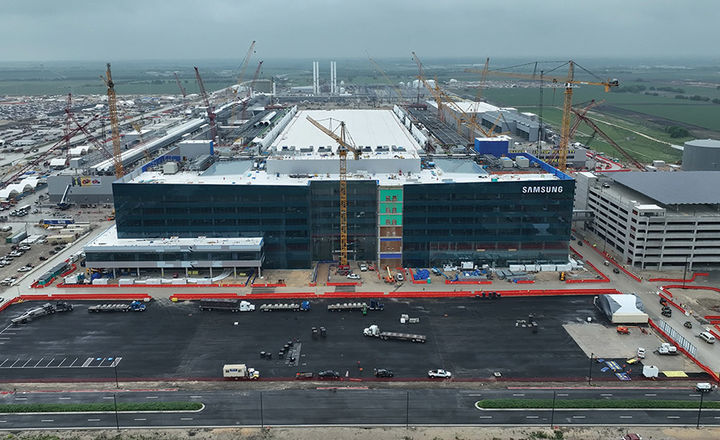
A semiconductor factory being built by Samsung Electronics in Taylor, Texas, USA. (Image courtesy of Samsung Electronics)
LOS ANGELES & SEOUL, Oct. 23 (Korea Bizwire) — Tesla CEO Elon Musk said the company will partner with both Samsung Electronics and Taiwan’s TSMC to produce its next-generation artificial intelligence chip, signaling a deepening collaboration between the U.S. automaker and the South Korean tech giant.
Speaking during Tesla’s third-quarter earnings call on Wednesday, Musk confirmed that “both Samsung and TSMC will work on AI5,” the latest version of Tesla’s in-house AI semiconductor designed for its autonomous driving systems. The announcement marks a shift from Tesla’s earlier plan to rely solely on TSMC for the AI5 production.
The move comes after Samsung secured a 22.7 trillion won ($16.5 billion) foundry contract with Tesla earlier this year, the largest single deal ever for the company’s semiconductor business.
The new AI5 orders are expected to provide a boost to Samsung’s foundry division, which has struggled with multi-trillion-won quarterly losses amid fierce competition with TSMC.
Tesla’s AI chips—AI4, AI5, and AI6—power the company’s Full Self-Driving (FSD) systems. Samsung previously handled production of the AI4 chip at its Pyeongtaek plant in Korea, while TSMC was tapped to produce AI5 using its 3-nanometer process in the United States.
Industry analysts expect Samsung to apply a similar 3-nanometer process at its Taylor, Texas facility, slated to begin operations next year, before moving to 2-nanometer production for the upcoming AI6 chip.
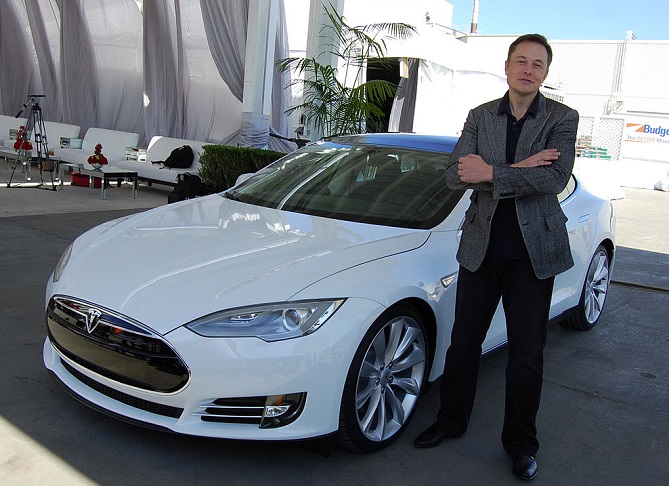
Elon Musk, CEO of Tesla Inc. (image: Public Domain)
In July, Musk publicly praised Samsung’s advanced foundry capabilities on X (formerly Twitter), noting that the company’s new Texas plant would be “dedicated to Tesla’s next-generation AI6 chip,” calling the partnership “strategically vital.”
While Tesla and Samsung have not disclosed the additional contract value for AI5 production, analysts said the deal could help accelerate Samsung’s recovery in the global semiconductor race. Samsung recently reported 12.1 trillion won in operating profit for the third quarter, driven by a rebound in its memory business, though its foundry unit remains in the red.
Industry observers expect production of the AI5 chip to begin as early as next year. “The exact production split between Samsung and TSMC remains unclear, but the additional orders mark a positive turning point for Samsung’s foundry performance,” one industry official said.
Meanwhile, Tesla said it plans to launch robotaxi operations in eight to ten major U.S. cities by the end of this year, pending regulatory approval, and is also moving ahead with the first production line for its humanoid robot Optimus.
Kevin Lee (kevinlee@koreabizwire.com)