Rising E-Scooter Injuries Spur Nationwide Push for Stricter Regulation (Yonhap)
SEOUL, Nov. 30 (Korea Bizwire) — South Korea is moving to tighten regulations on electric scooters as accidents involving personal mobility devices surge nationwide, raising concerns over public safety while prompting debate about the future of these increasingly common, eco-friendly vehicles.
According to data released on Sunday by the Korea Road Traffic Authority, accidents involving personal mobility devices (PMs), including e-scooters, rose from 897 cases in 2020 to 2,232 last year. Fatalities more than doubled during the same period, from 10 to 23, while injuries climbed to 2,486.
Once hailed as a solution to urban congestion and a low-carbon alternative to short-distance travel, e-scooters have rapidly become a source of public frustration. As riders dart unexpectedly into streets and sidewalks — a phenomenon that earned them the nickname “kick-deer” for their sudden, deer-like movements — complaints and safety fears have soared.
Teenage riders operating shared scooters without licenses have become a particularly urgent concern. A recent incident in Incheon, where a woman walking with her daughter was critically injured by two unlicensed middle-school riders, intensified public calls for stricter controls.
Local governments are already responding.
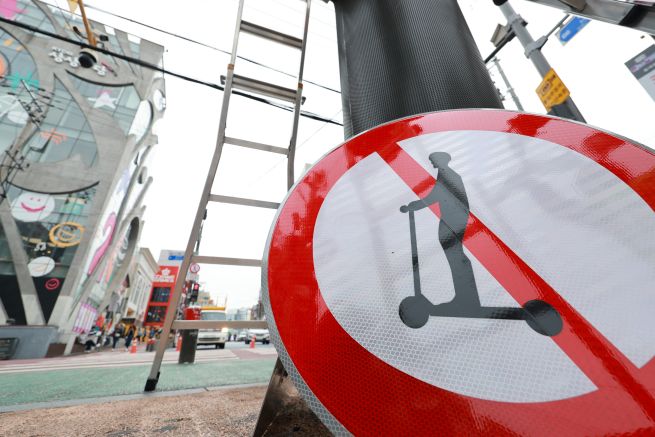
Seoul is operating two designated “no-scooter zones” around Hongdae and Banpo from noon to 11 p.m. In Gyeongnam Province, the maximum speed for shared scooters was lowered last month from 25 kph to 20 kph. Police have also urged rental operators to strengthen license-verification systems and warned that companies may face aiding-and-abetting charges if unlicensed riders cause accidents.
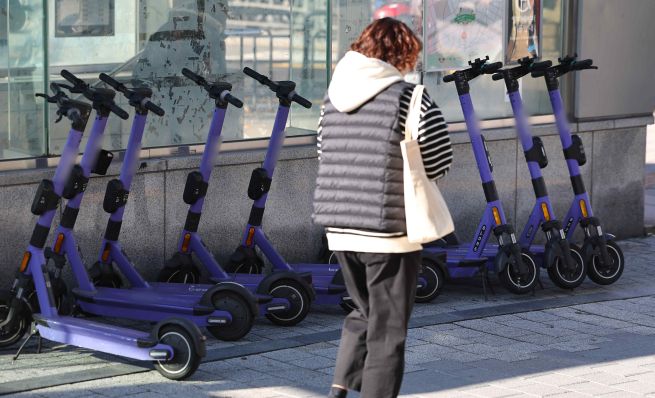
The usage of shared electric scooters is also significantly increasing. (Yonhap)
Industry Pushes Back Against Over-Regulation
While operators agree on the importance of preventing accidents, they warn that overly harsh restrictions could undermine the benefits of an environmentally friendly mobility option and jeopardize the broader PM industry.
Industry groups argue that banning or heavily limiting scooter operations is a short-sighted approach. Instead, they say companies and local communities should work together to improve safety and order.
Several operators have piloted measures to address these concerns.
Daegu last year introduced the nation’s first GPS-based virtual return zones, preventing users from ending a ride outside designated areas. Some companies are partnering with universities to run safety campaigns or develop technologies that block two-person riding, a major source of accidents.
However, most operators oppose mandatory license-verification requirements — a gap that has allowed unlicensed riders to continue renting scooters with ease. While the law requires riders to hold a license, it does not obligate rental companies to verify one.
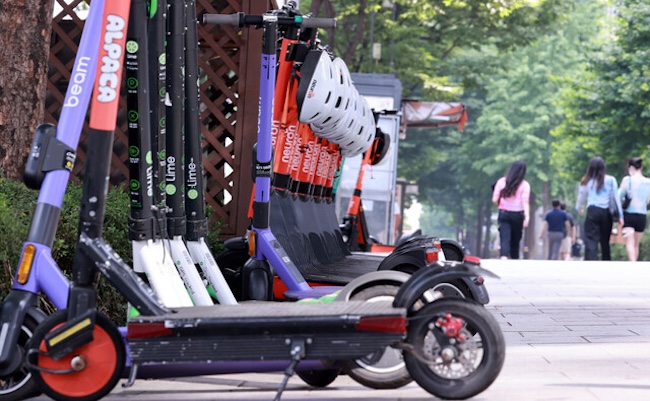
Electric scooters (Image courtesy of Yonhap)
Lawmakers Seek a Unified Legal Framework
Experts say the core problem is that Korea lacks a legal framework designed specifically for PMs. Currently, PMs are classified under the Road Traffic Act as “motor-driven bicycles,” a definition critics say does not reflect real-world usage or safety risks.
Kim Pil-soo, head of the Korea Personal Mobility Industry Association, said the country needs new legislation tailored to PMs to address issues such as unlicensed riding, tandem use, and sidewalk driving. He urged operators to prioritize industry development over competition.
The government and the main opposition Democratic Party agreed in a policy meeting on Nov. 20 to push related legislation during the current session of the National Assembly. Proposals under consideration include mandatory license plates for rental PMs and a dedicated PM-specific driver certification.
Yu Jeong-hoon, a transportation engineering professor at Ajou University, said Korea must combine enforcement and technology with sustained education. “We need to strengthen monitoring, revise license-verification systems, and adopt smart safety technologies — while building a culture of responsible PM use through regular training and public campaigns,” he said.
Kevin Lee (kevinlee@koreabizwire.com)