SEOUL, Dec. 2 (Korea Bizwire) — Global defense revenues reached an all-time high in 2024 as the wars in Ukraine and Gaza fueled a surge in weapons demand, particularly across Europe, according to new data from the Stockholm International Peace Research Institute (SIPRI). South Korea’s leading defense companies continued their rapid ascent, pushing the country into the world’s top 10 for total arms sales.
SIPRI’s annual report, released Monday, shows that the world’s 100 largest arms manufacturers generated a combined US$679 billion in sales last year, up 5.9 percent from 2023. It is the first time since 2018 that all of the top five global defense companies recorded growth.
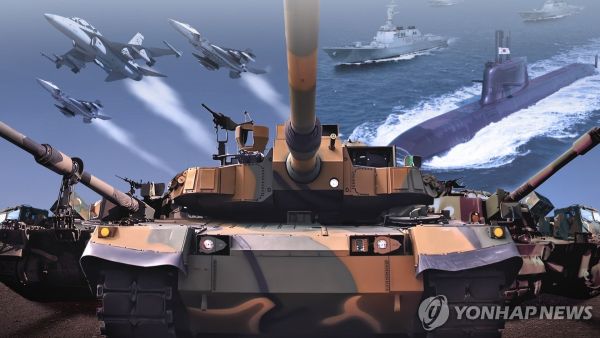
Korean manufacturers — Hanwha Group, Hyundai Rotem, LIG Nex1 and Korea Aerospace Industries (KAI) — all made the list for a second consecutive year. Together, the four firms posted US$14.1 billion in sales, a 31 percent jump that far outpaced the global average. Their combined share of the top 100’s total sales rose from 1.7 percent to 2.1 percent.
South Korea ranked 10th globally in arms revenue by country, trailing Germany but ahead of traditional European producers such as Spain and Sweden. The United States dominated with 49 percent of total sales, followed by China at 13 percent and Britain at 7.7 percent.
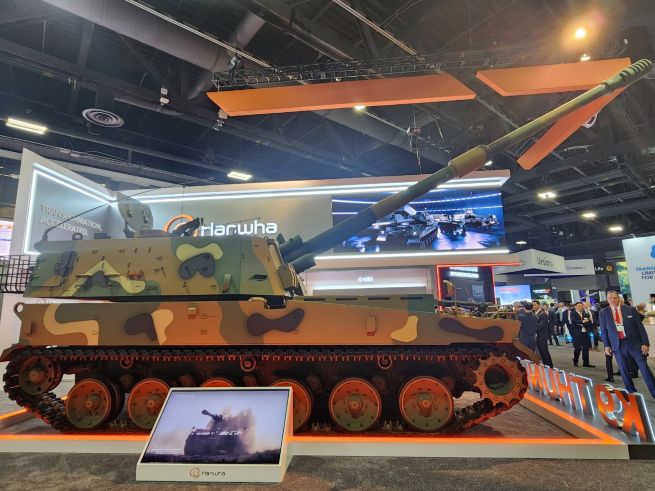
Hanwha Aerospace displays a K9 self-propelled howitzer at the Association of the U.S. Army (AUSA) 2025 Annual Meeting and Exposition at the Walter E. Washington Convention Center in Washington on Oct. 13, 2025. (Yonhap)
Hanwha Nears Global Top 20
Hanwha Group climbed from 24th to 21st place, bolstered by soaring exports of K9 howitzers, Chunmoo rocket systems, and 120mm self-propelled mortars, as well as expanded domestic procurement. SIPRI estimates the company’s weapons sales jumped 42 percent to US$8 billion.
LIG Nex1 and Hyundai Rotem also rose in the rankings, to 60th and 80th, respectively. KAI slipped from 54th to 70th after a slight revenue decline.
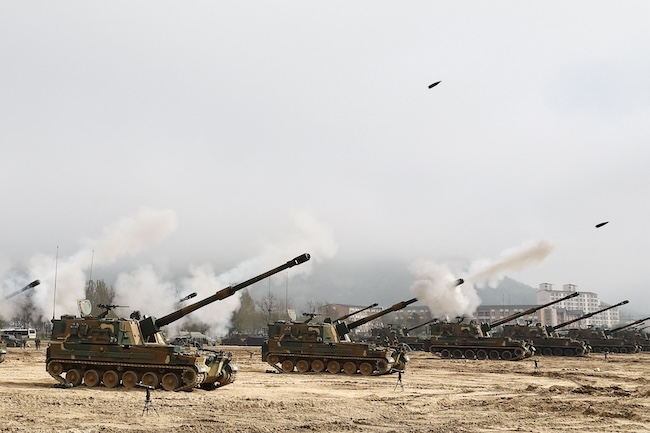
K9 self-propelled howitzers fire live rounds at a firing range in Cheorwon County, some 75 kilometers northeast of Seoul, in this file photo taken April 17, 2024. (Image courtesy of Yonhap)
Korea Fills Supply Gap as Western Producers Struggle
The report highlights a growing structural shift: while European nations scrambled to rebuild military stockpiles after Russia’s invasion of Ukraine, U.S. and European defense contractors struggled to meet delivery schedules amid unexpected spikes in demand.
South Korea — long maintaining a comprehensive weapons-production system due to its own security tensions with North Korea — has emerged as a crucial alternative supplier. Korean companies have struck major deals with Poland, Romania, Estonia and other Eastern European countries for K9 howitzers, K2 tanks and FA-50 light combat aircraft.
What began as a Cold War–era necessity has become a competitive advantage: Korea can deliver large quantities of modern, high-performance weapons at speed and at relatively competitive prices.
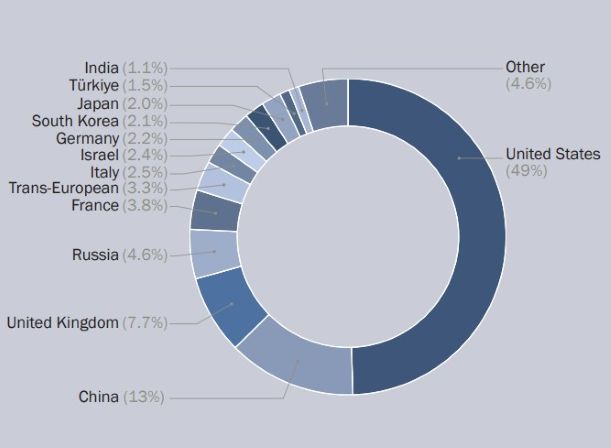
Share of Global Arms Sales by Country among the World’s Top 100 Defense Companies in 2024 (Stockholm International Peace Research Institute report)
Chinese Arms Sales Decline
In contrast to the global trend, China’s combined defense revenues fell 10 percent last year, with its share of the top 100 dropping from 16 percent to 13 percent. SIPRI attributed the decline to corruption allegations that delayed or canceled major procurement programs, deepening uncertainty around Beijing’s military modernization.
“Manufacturers have expanded capacity and benefited from high demand,” the institute wrote, “but they still face cost pressures and production challenges that continue to disrupt delivery timelines.”
M. H. Lee (mhlee@koreabizwire.com)