CJ Logistics, which offers seven-day-a-week delivery service, operates its fast weekend delivery program through “O-NE (Comes Every Day).” (Image courtesy of Yonhap)
Korean Delivery Workers Secure Voting Day Off Ahead of 2025 Presidential Election After Industry-Wide Pressure
SEOUL, May 24 (Korea Bizwire) — As South Korea prepares for its 21st presidential election on June 3, a heated debate over delivery workers’ right to vote has drawn national attention — and ultimately, a resolution.
Following mounting public pressure and internal negotiations, major logistics companies, including e-commerce giant Coupang, have agreed to designate the election day as a non-working day for most delivery drivers, many of whom are “specially employed” contractors not covered by the country’s labor laws and thus ineligible for paid holidays.
Until the last-minute agreement reached on May 23, thousands of delivery workers had feared they would be forced to work through the polls, unable to exercise their democratic right.
“I leave home at 8 a.m. and return after 9 p.m. If June 3 isn’t designated a day off, it’ll be nearly impossible to vote,” said Lee Jae-soon, a 47-year-old Coupang delivery driver based in Chuncheon. “Why is this basic right still being denied to us?”
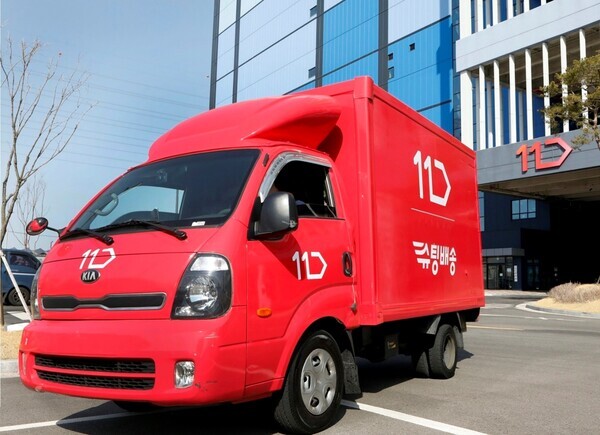
11st is offering a rapid delivery service called “Shooting Delivery,” based on both directly purchased items and consigned goods from third-party sellers. (Image provided by 11st)
For many in the industry, the situation underscored the conflict between civic participation and commercial pressure, especially as South Korea’s delivery market has grown increasingly competitive, with companies racing to offer 7-day-a-week shipping.
While previous elections — including the 2022 presidential and 2024 general elections — saw major logistics firms jointly agree to suspend operations for voting, that unity had frayed amid fierce competition. Coupang’s round-the-clock “Rocket Delivery” service has spurred rivals to keep up, making collective holidays harder to negotiate.
Amid Fierce Competition, Korean Delivery Workers Fight for the Ballot Box
Coupang’s rare concession to pause part of its service for election day marks a symbolic moment, as it’s the first time the company’s flagship delivery operation will be partially halted for political participation.
Even so, workers remain cautious about whether such accommodations will be sustained in the future. “This should be about more than just one election,” said Kim Gwang-seok, head of the Korea Delivery Workers’ Union under the Korean Confederation of Trade Unions (KCTU). “Voting is a constitutional right, and competition should never come at the expense of democracy.”
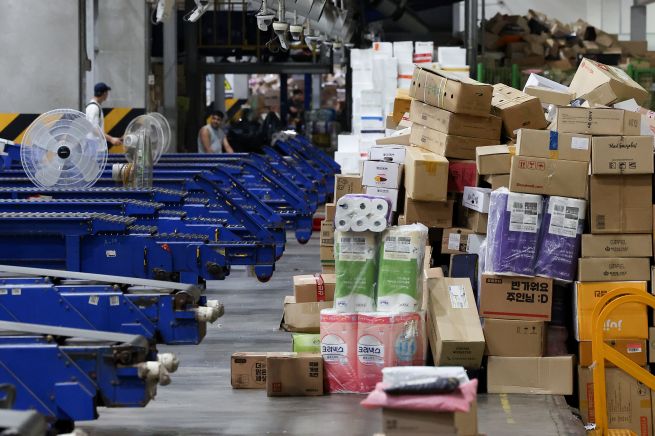
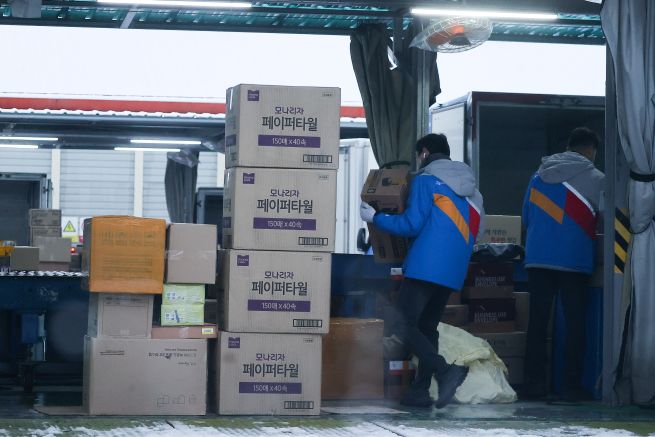
On the morning of August 13 last year, a day before the designated “No Delivery Day,” workers organize parcels at the Southeastern Logistics Complex in Songpa District, Seoul. (Yonhap)
In a recent protest in Gwanghwamun Square, the union demanded that June 3 be formally declared a “No Delivery Day.” Progressive political parties including the Democratic Party of Korea and the Labor Party echoed those calls.
Meanwhile, younger drivers like 29-year-old Cho, who was preparing to vote for the first time, expressed frustration that both early voting and election day fell on working days. “Last time, I couldn’t vote, and the president we got declared martial law before being impeached. I don’t want to sit this one out.”
With election day just over a week away, the delivery sector’s fragile agreement signals progress, but also raises long-term questions about balancing labor rights, essential services, and democratic participation in a fast-moving gig economy.
M. H. Lee (mhlee@koreabizwire.com)