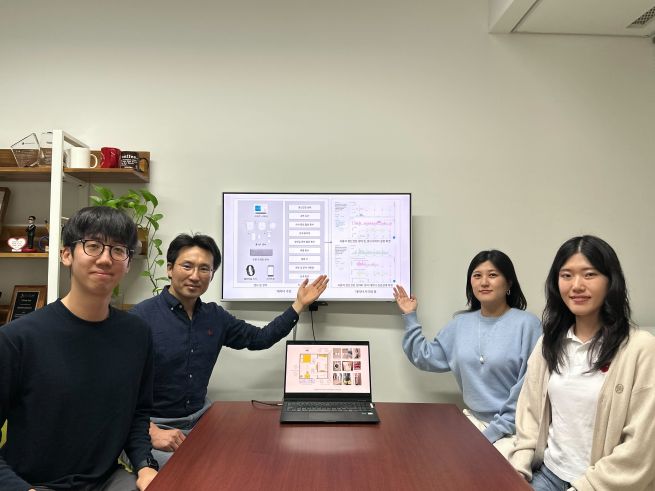
A research team led by Professor Lee Eui-jin from the School of Computing (Image courtesy of KAIST)
DAEJEON, Oct. 22 (Korea Bizwire) — As South Korea’s single-person households surpass 8 million, researchers at the Korea Advanced Institute of Science and Technology (KAIST) have unveiled a new approach to monitoring mental health using Internet of Things (IoT) data collected from home environments.
KAIST announced Tuesday that a research team led by Professor Lee Eui-jin from the School of Computing has demonstrated that data from home IoT sensors can be used to precisely track changes in an individual’s mental state, potentially addressing the growing issue of isolation and depression among people living alone.
Unlike existing methods that rely on smartphones or wearables—devices that require users to actively participate—the IoT approach gathers data passively through sensors installed in everyday appliances, sleeping mats, and motion detectors.
In a four-week study involving 20 young single-person households, the team found that IoT-based monitoring, when combined with smartphone and wearable data, provided a more accurate picture of psychological well-being.
Their analysis revealed that reduced sleep time was closely linked to higher levels of depression, anxiety, and stress. Rising indoor temperatures were also correlated with greater emotional instability. Behavioral patterns varied widely among participants, from “stress-eating types” who used refrigerators more frequently under stress to “lethargic types” who sharply reduced activity levels.
Across the board, irregular daily routines were strongly associated with deteriorating mental health—a finding that underscores the importance of consistent lifestyle patterns.
Professor Lee said the team plans to further develop the system into an AI-powered remote healthcare platform capable of predicting individual lifestyle patterns and offering personalized mental health coaching.
Kevin Lee (kevinlee@koreabizwire.com)