The agency noted the monsoon season ended the fastest on Jeju since nationwide weather observations began in 1973. (Image courtesy of Yonhap)
SEOUL, July 3 (Korea Bizwire) — The annual monsoon season has ended on Jeju Island and in the southern region, the state weather agency said Thursday, as the North Pacific high-pressure front has pushed the stationary front northwest.
The Korea Meteorological Administration (KMA) said Jeju and the southern region were freed from the influence of the stationary front on June 26 and Tuesday, respectively, ending their rainy season. The stationary front is created by the collision of hot and humid air moving north from the south and cold air moving south from the north.
The agency noted the monsoon season ended the fastest on Jeju since nationwide weather observations began in 1973. The previous record was July 1, 1994. In the southern region, the earliest recorded end to the monsoon season was June 30, 1973, making this year the second-earliest end.
The KMA said it is still too early to declare the end of the rainy season in Seoul and the central region due to the possibility of a temporary influence from a stationary front passing through North Korea.
Indeed, rain may fall in the central region Friday night and between Sunday night and Monday, it said, as the cold air from the north temporarily moves south.
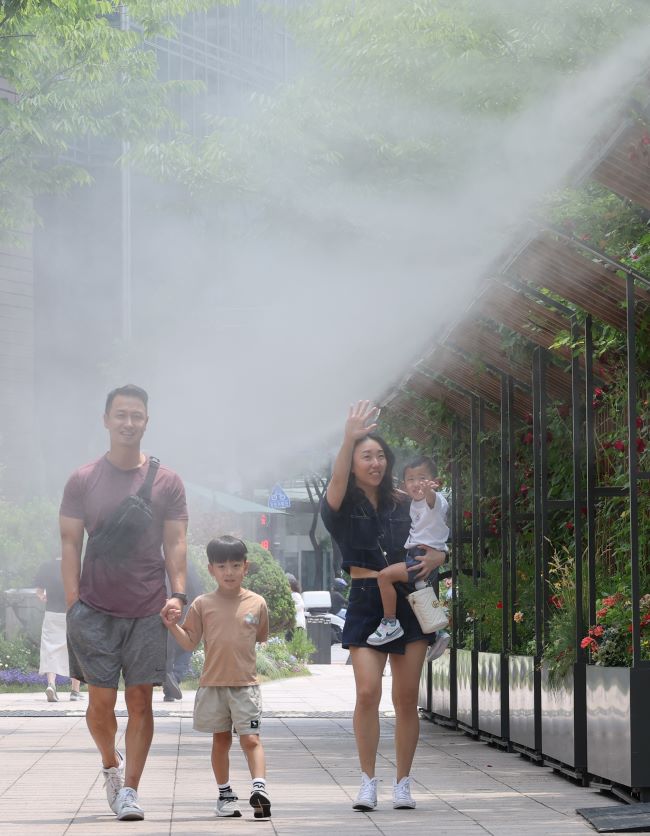
The KMA forecast that heat waves and tropical nights will continue nationwide for the time being, with the maximum sensible temperatures reaching 33 C to 35 C.
(Yonhap)