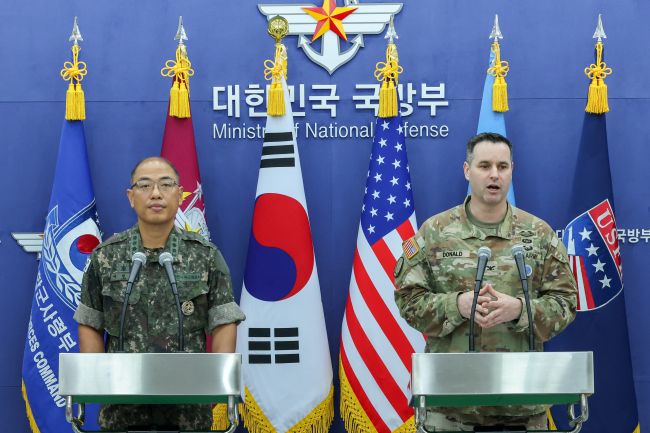
Joint Chiefs of Staff spokesperson Col. Lee Sung-jun (L) and Col. Ryan Donald, spokesperson for the U.S. Forces Korea, pose for a photo during their press briefing at the defense ministry in Seoul on Aug. 7, 2025. (Image courtesy of Yonhap)
SEOUL, Aug. 11 (Korea Bizwire) – North Korea’s defense chief on Monday warned that Pyongyang would exercise its “self-defense” right in the event of a provocation, denouncing a planned large-scale joint military exercise between South Korea and the United States.
North Korean Defense Minister No Kwang-chol issued the warning a week before Seoul and Washington are set to kick off their annual summertime Ulchi Freedom Shield (UFS) exercise from Aug. 18-28, according to the Korean Central News Agency (KCNA).
“We strongly denounce the U.S. and the ROK for their provocative moves of clearly showing the stand of military confrontation with the DPRK,” the defense minister said, accusing the allies of undermining the security environment on the Korean Peninsula and warning of “negative consequences.”
North Korea’s military “will cope with the war drills … with thoroughgoing and resolute counteraction posture and strictly exercise the sovereign right of the DPRK at the level of the right to self-defense in a case of any provocation going beyond the boundary line,” he warned.
DPRK stands for North Korea’s official name, the Democratic People’s Republic of Korea, while ROK means the Republic of Korea.
No described the UFS as both “a direct military provocation” against North Korea and “a real threat” that would heighten the unpredictability of the security situation on the peninsula, warning it will have “a boomerang effect,” plunging South Korea-U.S. security into “a less safe situation.”
The minister also cited the UFS as “the main reason” the situation on the peninsula is “changing negatively day by day,” adding, “It is the absolute mission” of the North Korean military “to contain offensive movements of the enemy states, counter their military provocations and defend the security of the state and the peace of the region.”
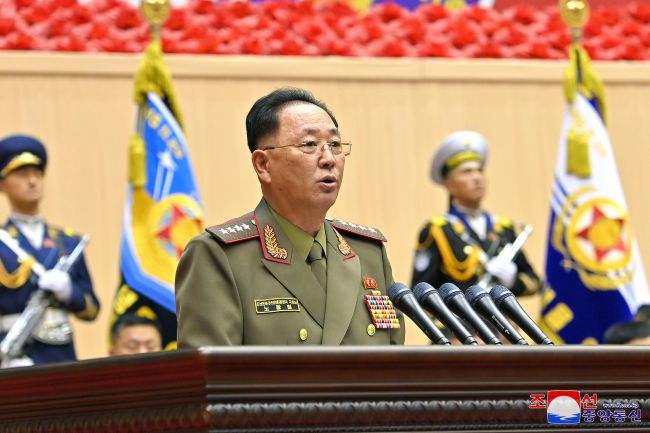
This file image from the Korean Central News Agency, published Nov. 18, 2024, shows North Korean Defense Minister No Kwang-chol during a military event in Pyongyang. (Yonhap)
This year’s UFS exercise has been partially adjusted, with about 20 of the originally scheduled 40 drills postponed to next month due to what military officials cited as the ongoing heat wave and flood damage, as well as Seoul’s apparent bid to improve ties with North Korea.
Adjusting the UFS has been a key focus in inter-Korean relations since Kim Yo-jong, the powerful sister of North Korean leader Kim Jong-un, protested the exercise, describing the Lee administration as no different from his hard-line predecessor in a statement last month.
Monday’s statement by the defense minister, however, made no mention of the partial postponement.
South Korea’s unification ministry spokesperson Koo Byoung-sam noted that this year’s statement, issued by the North’s defense minister, represents an escalation from last year, when a similar statement against the UFS was released under the defense ministry spokesperson’s name.
However, the tone of this year’s statement appears to be “relatively measured,” focusing more on elaborating the regime’s stance rather than issuing a military threat, Koo said.
The unification ministry spokesperson also reaffirmed that the joint drills are regular trainings of a strictly “defensive nature, aimed at deterring war and safeguarding peace.” “Going forward, the government plans to continue efforts to calmly and consistently promote cooperation in building peace on the Korean Peninsula,” he said.
When asked about the North’s statement, Seoul’s defense ministry on Monday stressed the upcoming drills are conducted regularly to maintain a combined readiness posture and have contributed to peace and stability on the Korean Peninsula and in the region.
In a joint statement released Thursday, the allies emphasized the upcoming drills are “defensive in nature,” without directly mentioning North Korea’s military threats.
(Yonhap)