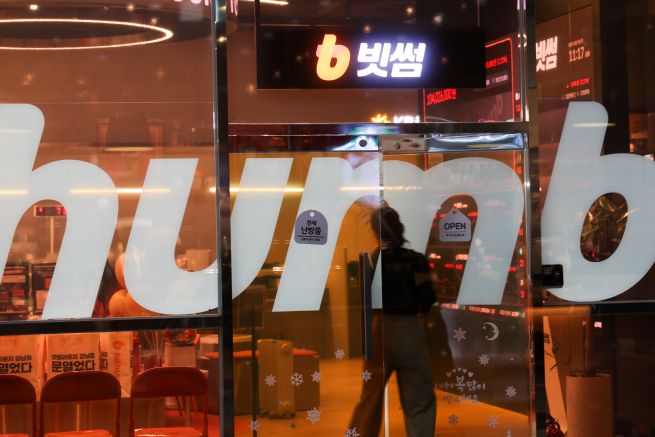
A view of the Bithumb Lounge in Gangnam. (Yonhap)
SEOUL, Feb. 10 (Korea Bizwire) — South Korea’s financial authorities have launched a formal investigation into Bithumb, one of the country’s largest cryptocurrency exchanges, after it mistakenly distributed more than 60 trillion won — about $41 billion — worth of bitcoin it did not possess.
The Financial Supervisory Service informed the exchange on Monday that it would begin a probe, following an on-site inspection conducted days earlier, according to industry officials. The investigation centers on a promotional event in which Bithumb intended to award customers 620,000 won but instead transferred 620,000 bitcoins to 249 users.
The error briefly flooded the exchange with bitcoin that did not exist in its actual reserves, triggering a rapid sell-off before the mistake was identified. Bithumb said it swiftly retrieved most of the misallocated tokens, though 1,788 bitcoins had already been sold.
“We are taking this case very seriously,” an official at the Financial Supervisory Service said, adding that regulators would pursue strict legal action against conduct that undermines market order.
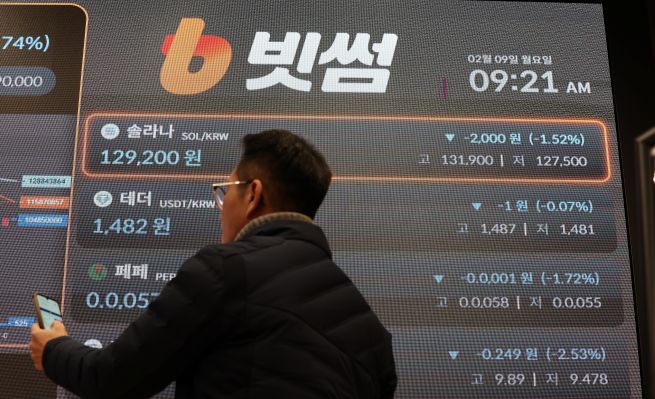
Prices of cryptocurrencies are displayed on a screen inside the lounge of Bithumb, one of the crypto exchanges in South Korea, in southern Seoul, in this file photo taken Feb. 9, 2026. (Yonhap)
The incident has renewed scrutiny of how centralized exchanges operate. Platforms such as Bithumb rely on internal, book-entry systems to track ownership and execute trades without recording each transaction on a public blockchain. If improperly managed, such systems can create so-called “phantom balances” — discrepancies between customer account statements and actual reserves.
As of the end of September, Bithumb held roughly 42,000 bitcoins, nearly all of which belonged to customers. The scale of the mistaken transfer far exceeded those holdings.
The investigation unfolds as lawmakers debate new legislation governing virtual assets. Lee Chan-jin, the head of the Financial Supervisory Service, said the handling of “ghost coin” issues would be a key consideration in shaping regulatory revisions.
For investors and policymakers alike, the episode underscores the fragility of trust in digital asset markets — where a clerical error can ripple through trading systems at breathtaking scale.
Ashley Song (ashley@koreabizwire.com)