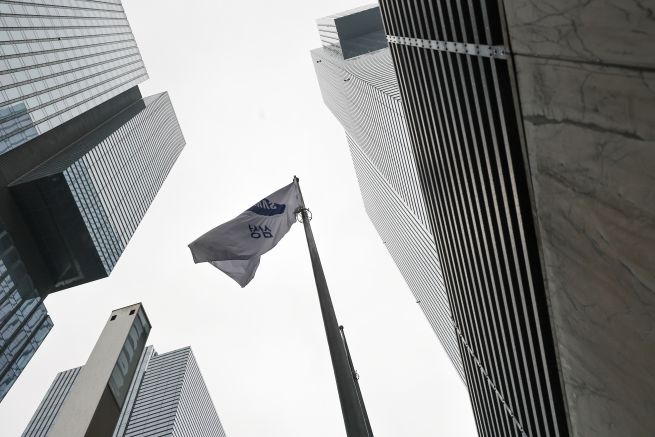
A view of Samsung Electronics’ Seocho headquarters in Seoul. (Yonhap)
SEOUL, Feb. 3 (Korea Bizwire) — Samsung Group will standardize English as the sole language for all documents exchanged between its domestic and overseas units, a move aimed at streamlining global operations and accelerating decision-making.
According to industry officials on Monday, the policy will take effect next month, starting with Samsung Electronics, Samsung Display and Samsung Biologics, and will be gradually extended to other affiliates. Under the new guidelines, all internal documents shared across borders — including those involving Korea-based entities — must be written exclusively in English.
Samsung has already required English for internal reports and meeting materials within its overseas subsidiaries since 2023. However, documents exchanged between domestic and foreign units had remained exempt, often resulting in parallel versions in Korean and English. The expansion of the policy is intended to eliminate such duplication and reduce inefficiencies.
The company said the change reflects a broader effort to lower linguistic and cultural barriers, improve collaboration among its increasingly global workforce and ensure that employees worldwide can access the same information in real time. Executives believe the shift will speed up decision-making and execution across Samsung’s far-flung businesses.
Samsung Adopts English as Common Language Across Global Affiliates
Several units, including parts of Samsung Electronics’ semiconductor foundry division as well as Samsung Biologics and Samsung Bioepis, have already been conducting meetings and preparing reports in English.
The move aligns with Samsung’s longer-term push to strengthen global talent mobility. Since 2022, the group has operated the Samsung Talent Exchange Program, which allows Korean employees to work overseas and foreign staff to gain experience at its Korean operations — a departure from past practices that largely sent only domestic staff abroad.
Samsung’s workforce is now predominantly global. As of the end of 2024, the company employed roughly 137,000 staff overseas, surpassing its domestic headcount of about 125,000.
Industry analysts said the English-only policy, combined with expanded cross-border talent exchanges, could enhance Samsung’s competitiveness by improving internal integration, supporting mergers and acquisitions through better retention of key personnel, and making the group more attractive to top global talent.
Kevin Lee (kevinlee@koreabizwire.com)