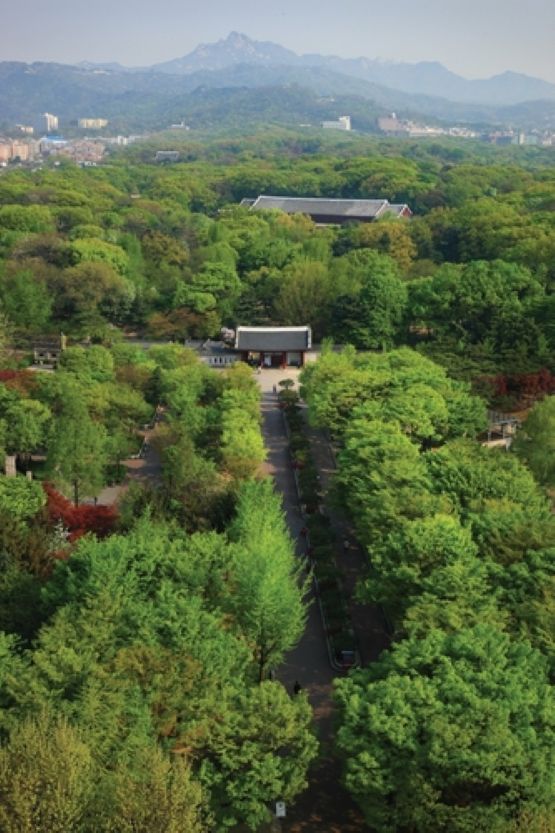
Aerial view of Jongmyo Shrine, a UNESCO World Heritage site (Image provided by the Korea Heritage Service National Heritage Portal)
SEOUL, Nov. 3 (Korea Bizwire) — As South Korea marks the 30th anniversary of Jongmyo Shrine’s inscription as a UNESCO World Heritage Site, a dispute over urban redevelopment in central Seoul is stirring fears that the Confucian royal shrine could soon find itself on the organization’s endangered list.
The 15th-century shrine—dedicated to the kings and queens of the Joseon Dynasty—has long been regarded as one of Korea’s most sacred and architecturally restrained monuments. UNESCO hailed it in 1995 as an “outstanding example of a Confucian royal ancestral shrine” whose rituals and design have remained remarkably intact for centuries.
That legacy, however, may now be shadowed by Seoul’s redevelopment plans. The city government recently approved construction of a 142-meter-tall building across from Jongmyo, within the Sewoon redevelopment zone. Heritage officials warn that the structure would disrupt the shrine’s skyline and compromise the “Jongmyo view” once prized by scholars and visitors alike.
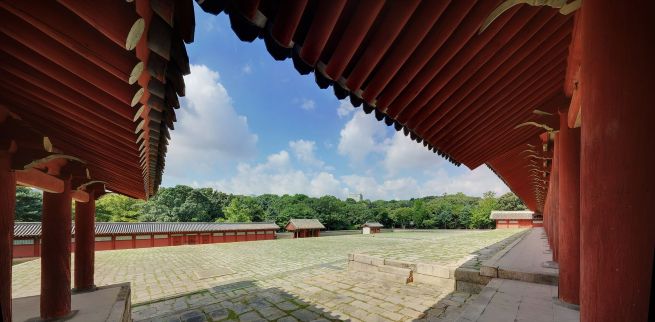
Wol-lang (side corridors of the main hall) at Jongmyo Shrine (Image provided by the Royal Palaces and Tombs Center, Korea Heritage Service)
The Korea Heritage Service, which manages the site, has voiced concern that UNESCO could intervene, noting that the organization already flagged the impact of tall buildings when Jongmyo was first inscribed. Cultural historians have drawn comparisons to the “royal tomb view” controversy in Gimpo, where high-rise apartments obstructed sightlines to another World Heritage site, prompting an official UNESCO inspection this year.
Experts caution that if construction proceeds unchanged, Jongmyo could risk being labeled a “heritage in danger.” They point out that while Seoul argues the project lies outside the 100-meter preservation buffer defined by domestic law, UNESCO’s guidelines call for broader environmental assessments beyond strict zoning lines.
The clash reflects a deeper tension between preservation and urban growth in one of Asia’s most densely built capitals. The Heritage Service insists that earlier height limits—set at 55 meters along Jongno and 72 meters by Cheonggye Stream—must be honored, while Seoul City maintains that redevelopment is essential to revitalize the downtown corridor and extend green space from Jongmyo to Namsan.
Behind the bureaucratic standoff lies a more fundamental question: how much of old Seoul can coexist with the city’s vertical ambitions? For Jongmyo, a space once revered as the still heart of a dynasty, the answer may determine whether Korea’s spiritual heritage can withstand the momentum of its modern skyline.
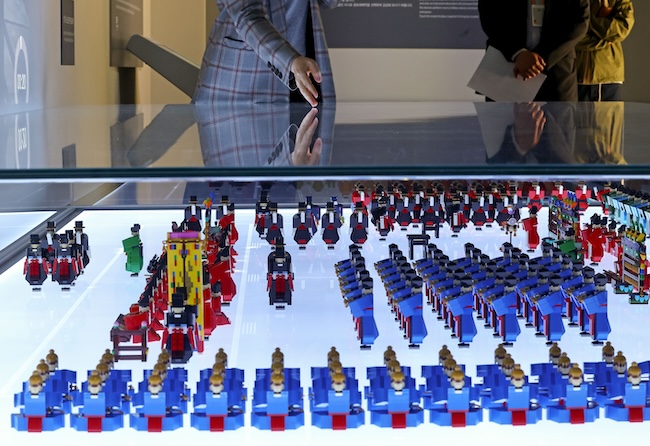
A highlight of the renovated exhibitions is a vibrant LEGO sculpture depicting the intricate Jongmyo Jerye rituals. (Image courtesy of Yonhap)
Lina Jang (linajang@koreabizwire.com)