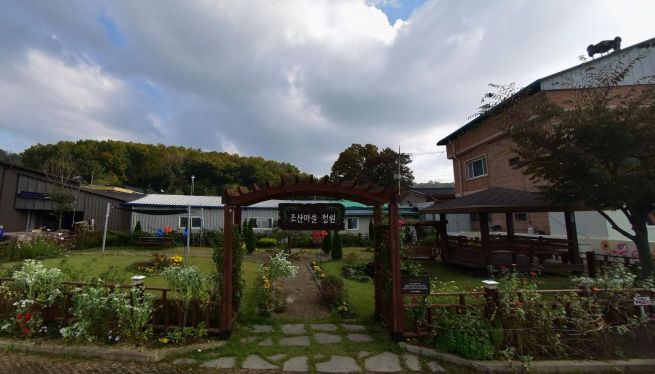
As the number of vacant homes increases, Gyeonggi Province is carrying out renovation projects by selecting properties that meet specific maintenance criteria. The photo shows a renovated vacant home.
(Image provided by the Gyeonggi Provincial Government)
SEOUL, May 2 (Korea Bizwire) — The South Korean government on Thursday announced a sweeping plan to manage the country’s growing number of vacant homes, aiming to turn more than 134,000 unused properties into assets that support regional revitalization and public safety.
Unveiled during an economic policy meeting chaired by Deputy Prime Minister and Finance Minister Choi Sang-mok, the “Pan-Government Vacant Home Management Strategy” will shift oversight from local governments to a broader, multi-tiered system involving national, provincial, and municipal authorities.
The plan also expands a digital platform called Binzip-Ae (binzibe.kr), offering real-time data on vacant homes, case studies, and property listings.
As of late 2024, an estimated 134,009 vacant homes were scattered across 243 municipalities, with nearly 43 percent located in 89 depopulating regions. Government officials warned that the problem is likely to worsen due to continued population decline and aging demographics.
To address this, the administration will draft two new laws — the Special Act on Rural Vacant Home Maintenance and the Special Act on Vacant Building Maintenance — which will formally define shared responsibilities among central and local governments, while unifying rural and urban management standards.
The upgraded Binzip-Ae platform, which launched its first phase in March 2025, will by year’s end offer property listings, local government administrative tools, and predictive analytics for vacancy trends.
To stimulate transactions, the government will also provide financial support through regional revitalization and intergovernmental cooperation funds, allowing vacant homes to be repurposed for residential, commercial, or community needs.
Local governments will be permitted to use donations raised through the “Hometown Love Donation Program” to fund demolition or renovation projects. In 2026, the government plans to launch a “Vacant Home Hub,” in which public corporations will acquire, demolish, or redevelop vacant structures.
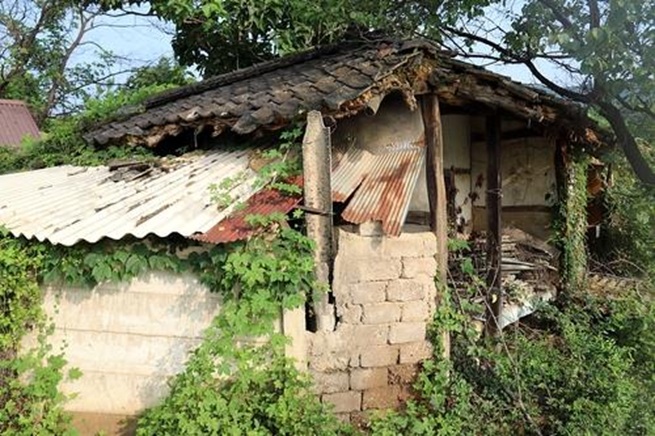
Vacant home (Image courtesy of Yonhap)
In neighborhoods with high concentrations of derelict properties, municipalities and local police will collaborate to improve safety infrastructure, such as surveillance and lighting, to prevent crime.
Efforts are also underway to strengthen local administrative capacity. The central government will offer model ordinances and support the creation of dedicated vacant home teams in areas most affected by population decline. Tax information systems will be streamlined to help local officials quickly identify property owners.
The policy also includes tax incentives for private owners who voluntarily demolish or repurpose vacant homes. For instance, the existing five-year cap on reduced property taxes for publicly repurposed land will be lifted, and the capital gains tax exemption period for non-business land will be extended from two to five years after demolition.
To further boost redevelopment, the government has doubled the demolition subsidy budget for 2025 to 10 billion won (approximately $6.9 million), supporting the removal of 1,500 vacant structures. Cost burdens will also be eased by exempting small-scale properties from requiring demolition plan reviews by experts.
Additionally, new business models will be introduced, including rural guesthouse ventures and third-party vacant home management services. A special “vacant home guesthouse” classification will allow individuals, organizations, and companies to run lodgings without the residential requirement usually tied to rural hospitality operations.
An official from the Ministry of the Interior and Safety noted that the relaxed residency condition is intended to attract broader participation in the effort to revitalize rural and underutilized spaces across the country.
M. H. Lee (mhlee@koreabizwire.com)