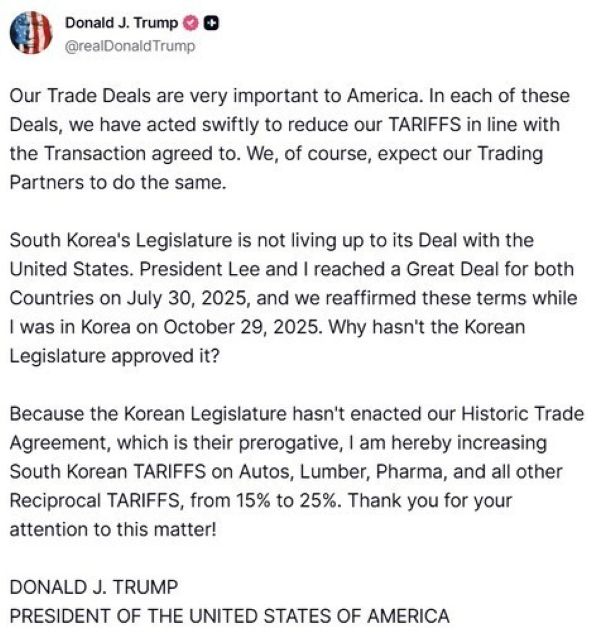
This image, captured from U.S. President Donald Trump’s Truth Social account, shows his announcement of a decision to increase reciprocal tariffs and auto duties on South Korea. (Yonhap)
SEOUL, Jan. 27 (Korea Bizwire) – The South Korean government said Tuesday that it had received a formal letter from the United States urging swift implementation of a bilateral tariff agreement, a move that comes as President Donald Trump signaled a tougher trade stance toward one of Washington’s closest Asian allies.
The confirmation followed Mr. Trump’s announcement that the United States would raise so-called reciprocal tariffs on South Korean goods to 25 percent, up from 15 percent, citing delays in Seoul’s approval of legislation tied to a major investment pledge to the United States.
According to South Korea’s Ministry of Trade, Industry and Resources, the letter was addressed to Science Minister Bae Kyung-hoon and shared with the ministry as a reference. Officials declined to disclose details of its contents, saying diplomatic protocol limited what could be made public.
The disclosure aligns with earlier media reports that the Trump administration had sent a message to Seoul roughly two weeks ago, pressing for follow-up measures related to a trade deal concluded in October. The agreement was part of a broader framework under which South Korea pledged about $350 billion in investments in the United States.
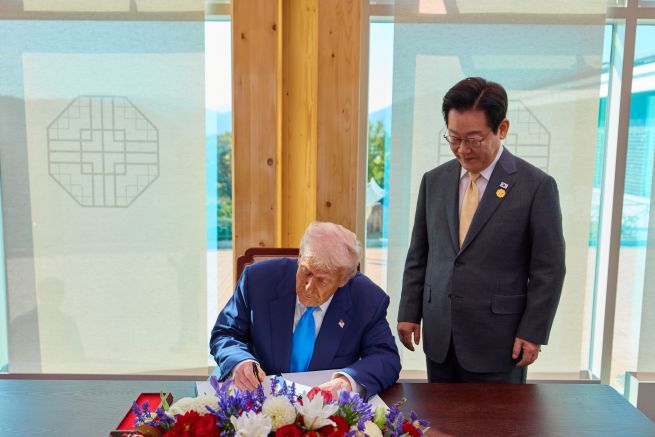
President Lee Jae Myung looks on as U.S. President Donald Trump signs the guestbook at the Gyeongju National Museum, the venue for the South Korea–U.S. summit, on October 29. (Photo courtesy of the presidential office)
The legislation intended to support that commitment was submitted to the National Assembly in November by the ruling Democratic Party but has yet to pass, a delay the White House has cited as justification for reinstating higher tariffs, including on automobiles.
But many analysts in Seoul say the dispute may extend beyond legislative timing.
The letter reportedly included language warning against what Washington views as discriminatory treatment of American companies under South Korea’s proposed online platform regulations. Those rules, aimed at curbing the market power of dominant digital firms, have drawn increasing scrutiny from U.S. lawmakers and business groups.
Tensions have also been heightened by a South Korean investigation into Coupang, a U.S.-listed e-commerce company, following a large-scale data leak. American lawmakers and investors have criticized the probe as unfairly targeting a U.S. firm, while the State Department last month expressed “significant concerns” about regulatory steps that could affect online platform businesses operating in Korea.
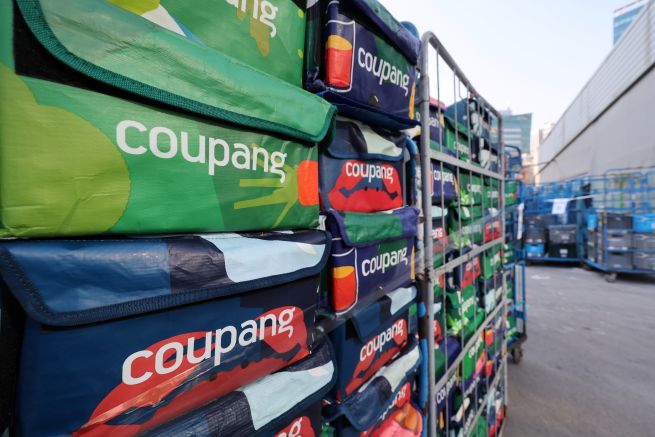
A Coupang logistics center in Seoul. (Yonhap)
The issue surfaced again during a meeting last week between Prime Minister Kim Min-seok and Vice President JD Vance, according to South Korean officials. The two sides agreed to manage the matter carefully to prevent it from escalating into a broader diplomatic dispute.
For Seoul, the episode underscores the growing complexity of its economic relationship with Washington — one increasingly shaped not only by tariffs and manufacturing investment, but by the politics of digital regulation in an era of intensifying technological rivalry.
M. H. Lee (mhlee@koreabizwire.com)