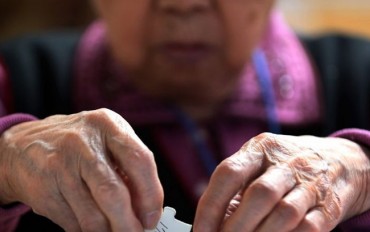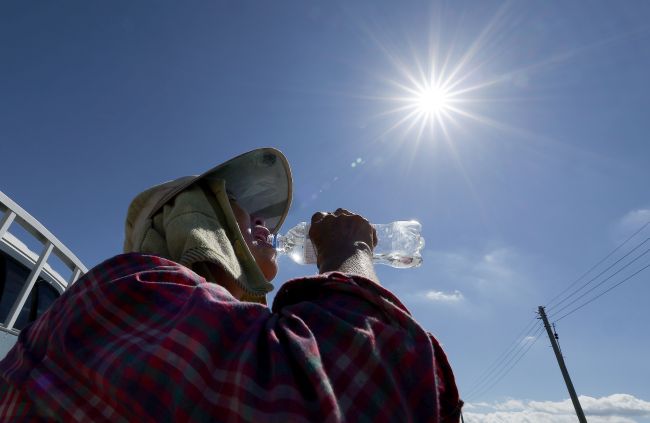
As temperatures soar, farmers find relief in water breaks. (Image courtesy of Yonhap)
SEOUL, July 2 (Korea Bizwire) – As South Korea sweats through a relentless summer, the risks of heat-related illnesses are mounting—quietly but dangerously. While a cold drink or a shaded bench might seem like enough to beat the heat, medical experts say this summer demands more vigilance than ever.
At the heart of the concern is a growing number of cases tied to heat-related illnesses, a category that includes everything from muscle cramps and dizziness to life-threatening heatstroke. Behind the medical terms lies a simple truth: the human body can only take so much.
“People tend to underestimate how quickly heat can overwhelm the body,” said Dr. Ko Dong-ryul, an emergency medicine specialist at Gangnam Severance Hospital. “By the time symptoms like confusion or fainting appear, it might already be too late.”
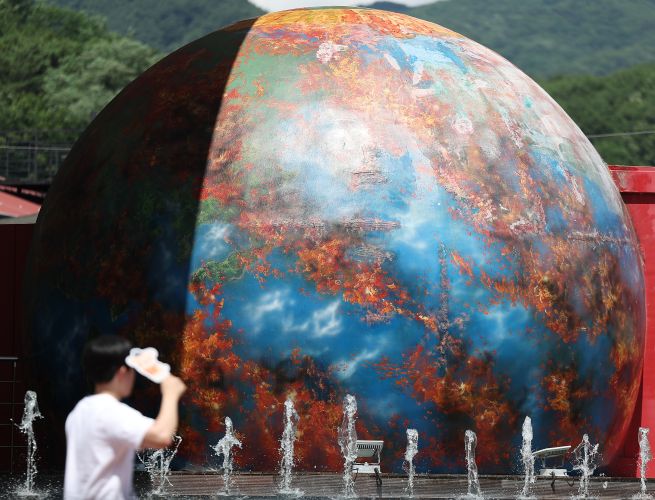
On July 1, as most parts of the country remain under heat wave advisories, a fountain operates in front of the “Burning Earth” sculpture at the Daegu Citizen Safety Theme Park in Dong-gu, Daegu. The city recorded an average daily temperature of 30.7°C the previous day — the hottest June day since weather observations began there in January 1907. (Photo: Yonhap)
The Dangerous Duo: Heat Exhaustion and Heatstroke
Among the most common heat-related conditions is heat exhaustion, often triggered by heavy sweating without proper fluid or salt replacement. Its symptoms—fatigue, nausea, pale skin, and cramps—are unpleasant but manageable, especially if caught early. Cooling off in a shaded area and sipping water or electrolyte drinks can usually reverse the damage.
But when the body’s internal thermostat breaks down completely, it slips into heatstroke, the most severe form of heat illness. Unlike exhaustion, heatstroke is a medical emergency. Body temperatures soar above 40°C. Sweating may stop entirely, skin feels dry and hot, and confusion or unconsciousness can set in. Without immediate intervention, it can lead to organ failure or death.
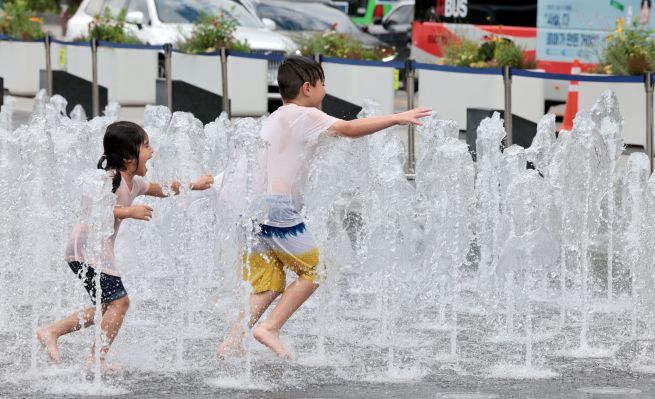
As sweltering heat continued across South Korea on July 1, with heat wave advisories in effect for most regions, young children enjoy cooling off at the ground fountain in Gwanghwamun Square, Seoul. (Yonhap)
When Water Isn’t the Answer
While staying hydrated is essential, doctors warn against one common mistake: giving water to someone who has passed out. “If a person is unconscious from heatstroke, forcing water into their mouth can lead to choking or aspiration,” Dr. Ko emphasized. “Call 119 immediately. Time is critical.”
Not Just the Elderly
Although seniors and children are particularly vulnerable, heat-related illnesses don’t discriminate. A seemingly healthy adult can just as easily succumb after exercising in the midday sun or commuting in a stuffy vehicle without proper ventilation.
The Korea Disease Control and Prevention Agency (KDCA) stresses that no one should be outdoors for extended periods between noon and 5 p.m., the hottest part of the day. And if you don’t feel thirsty? Drink anyway. Thirst is not always a reliable indicator of dehydration.
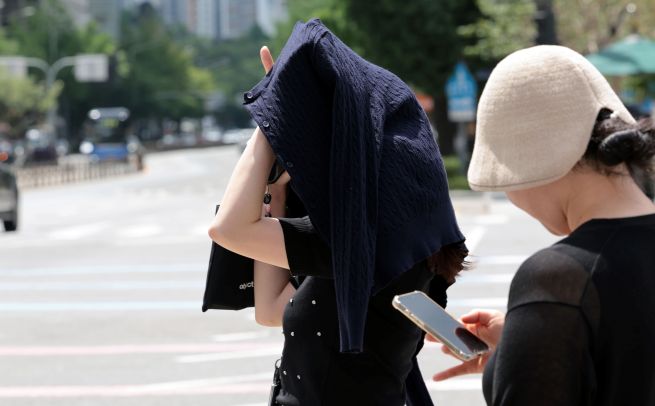
As scorching temperatures gripped the nation on July 1, with heat wave warnings issued across most regions, a Seoul resident shields themselves from the sun with clothing while walking through Gwanghwamun Intersection. (Yonhap)
Hydration, the Right Way
Not all liquids help. “Beer and iced lattes might feel refreshing, but they actually do more harm than good,” said a KDCA spokesperson. Alcohol and caffeine act as diuretics, accelerating water loss. Instead, experts recommend sticking to water or ion-replenishing beverages.
A Cultural Adjustment
In a country where iced coffee is practically a summer staple and air-conditioned cafés offer more than just relief from the sun, adjusting daily habits isn’t easy. But with record-breaking heatwaves becoming the new normal, it may no longer be a matter of comfort—but survival.
As the summer deepens, South Koreans are being called to do more than just fan themselves or seek shade. Staying safe will require conscious, daily decisions: checking the forecast, choosing the right drinks, and above all, listening to the body when it begins to signal distress. Because when the heat rises, awareness becomes the coolest defense.
Lina Jang (linajang@koreabizwire.com)