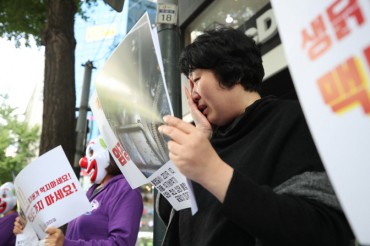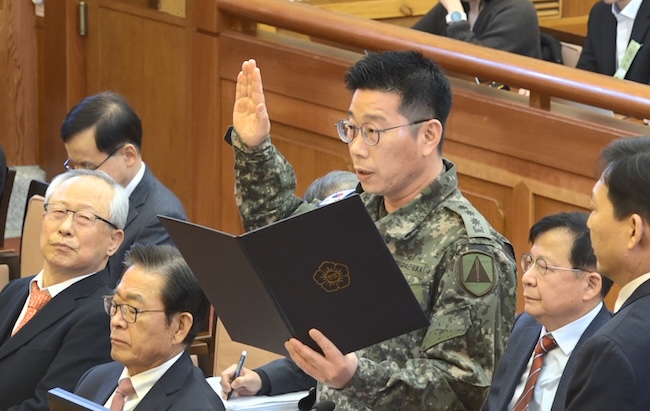
South Korea’s Ministry of National Defense has introduced a revised executive order that would allow military officers, including colonels, to be promoted for acts of integrity. (Image courtesy of Yonhap)
Seoul, July 30 (Korea Bizwire) — South Korea’s Ministry of National Defense has introduced a revised executive order that would allow military officers, including colonels, to be promoted for acts of integrity — such as refusing unlawful or improper commands during the controversial December 3 martial law planning incident.
The amendment to the Enforcement Decree of the Military Personnel Act, re-issued for public comment on July 18, expands eligibility for one-rank special promotions to all service members up to the rank of colonel. The original draft, announced just two weeks earlier, had limited eligibility to lieutenant colonels and below.
Previously, special promotions were largely reserved for acts of valor during combat or national emergencies. The revised decree broadens the criteria to include exemplary service during peace time, such as:
-
Distinguished operational achievements,
-
Heroic actions during natural disasters or accidents,
-
And exceptional contributions to the military through professional excellence.
The changes follow the March 2025 revision of the Military Personnel Act, which permits waiving minimum time-in-service requirements for those with outstanding national service records.
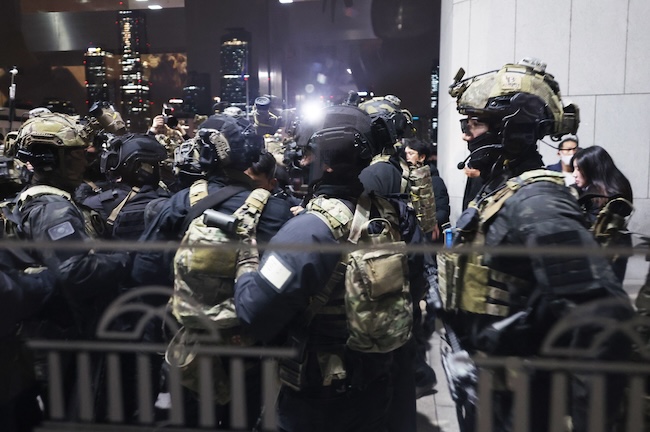
Soldiers prepare to enter the main hall of the National Assembly in Seoul in the wee hours of Dec. 4, 2024, following President Yoon Suk Yeol’s declaration of martial law, citing the need to root out pro-North Korean forces and uphold the constitutional order. (Image courtesy of Yonhap)
This update now provides legal grounds for promoting officers who protected public safety by resisting or passively executing illegal orders related to the 2023 martial law contingency plan, referred to as “12·3 비상계엄.”
President Lee Jae-myung, during an appointment ceremony for new Defense Minister Ahn Gyu-baek on July 28, explicitly directed the ministry to pursue special promotions for officers who acted lawfully during the martial law crisis. The move suggests growing political will to formally recognize those who prevented potential abuses of power.
The Ministry’s swift revision — just 10 days before the President’s remarks — is widely interpreted as an effort to include colonels like Cho Sung-hyun, commander of the Capital Defense Command’s 1st Security Regiment, among those eligible for promotion. Cho reportedly played a key role in preventing the implementation of martial law directives.
The Defense Ministry’s audit office has already begun verifying accounts from the period and has postponed promotion deliberations for field-grade officers pending the outcome of the review. Those findings may also influence the status of Marine Colonel Park Jung-hoon, who defied orders to halt a politically sensitive investigation into the death of a Marine during a flood rescue mission. He, too, could now qualify for promotion under the revised rules.
A ministry spokesperson denied the revisions were tailored to benefit any individual, stating, “The expansion to include colonels reflects the number of field commanders at that rank, not a specific case.”
The move marks a significant step toward institutionalizing ethical conduct in the military and promoting a culture of accountability within South Korea’s armed forces.
M. H. Lee (mhlee@koreabizwire.com)