Korean Air will begin retrofitting 11 Boeing 777-300ER aircraft starting in September to add ‘Premium Class’ seats. (Photo courtesy of Korean Air)
SEOUL, Aug. 11 (Korea Bizwire) — In response to growing demand for enhanced comfort at a more affordable price point, South Korean airlines are increasingly introducing ‘premium economy’ seating, positioned between economy and business class.
This new seating option provides more spacious accommodations and upgraded services, catering to passengers seeking better value without the high cost of business class.
Korean Air, which will introduce 40 premium economy seats on its Boeing 777-300ER aircraft starting in mid-September, is leading the charge. These seats will be available on medium-to-short-haul routes such as those to Japan and Southeast Asia.
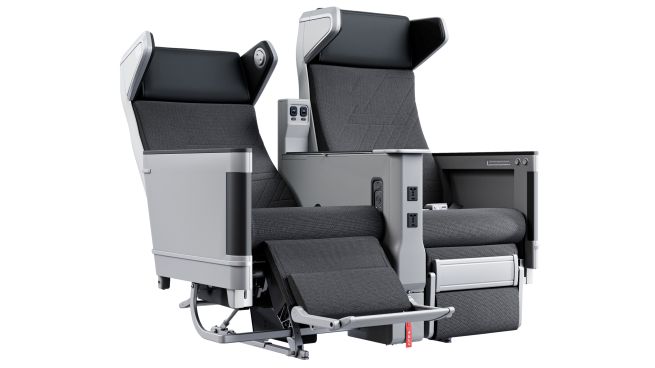 The new configuration replaces first-class seats and reduces business class to 40, offering 39 to 41-inch seat pitch and 19.5-inch seat width—significantly more space than regular economy seats.
In-flight services will mirror those in business class, including premium meals and blanket services.
The price of these seats is about 10-15% higher than regular economy, but still much cheaper than business class, making them an attractive option for cost-conscious passengers. On key routes such as Incheon to Bangkok or Singapore, the price difference is less than half of what business class fares cost.
Asiana Airlines, the first domestic carrier to introduce premium economy, launched its “Economy Smartium” seats on A350 aircraft in 2017. The seats offer more legroom and are particularly popular among long-haul travelers to North America and Europe. Following the merger of Asiana and Korean Air, the premium economy seats are expected to be consolidated into a unified offering.
Low-cost carriers (LCCs) are also jumping on the trend. Jeju Air introduced “Business Light” seats in 2017, while Air Premia debuted its “Premium Economy” seats in 2021. Jin Air and T’way Air have also incorporated similar seating on their flights.
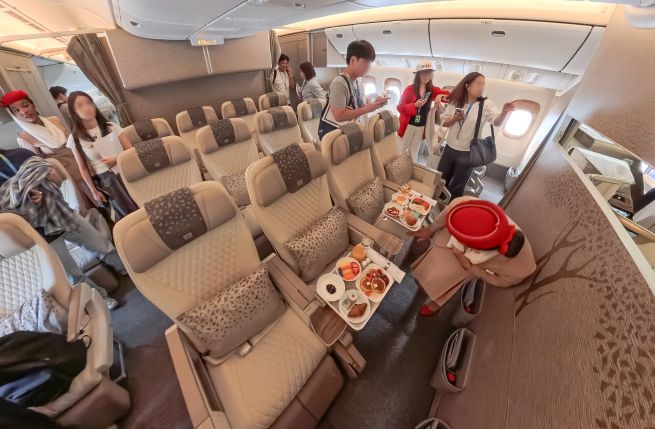
Emirates Airlines has also unveiled its retrofitted Boeing 777 with premium economy seats. (Yonhap)
International airlines have been offering premium economy for decades, with carriers like Eva Air, British Airways, and Delta Airlines adopting it over the years. The introduction of these seats is seen as a strategy to increase profitability by filling the middle ground between the more expensive business class and often overbooked economy class.
Delta, for example, reported that premium economy revenues in the first half of this year increased by 6%, while regular economy revenues fell by 4%, projecting that premium economy will eventually surpass economy class in revenue by 2027.
As airlines strive for higher seat occupancy rates and profitability, passengers are gaining access to improved services at a reasonable price, marking a shift in the airline industry’s structure.
Professor Kim Gyu-wang from Hanseo University noted that the expansion of premium economy, even among LCCs, is reshaping the aviation market, providing both better service for passengers and increased revenue potential for airlines.
Ashley Song (ashley@koreabizwire.com)