
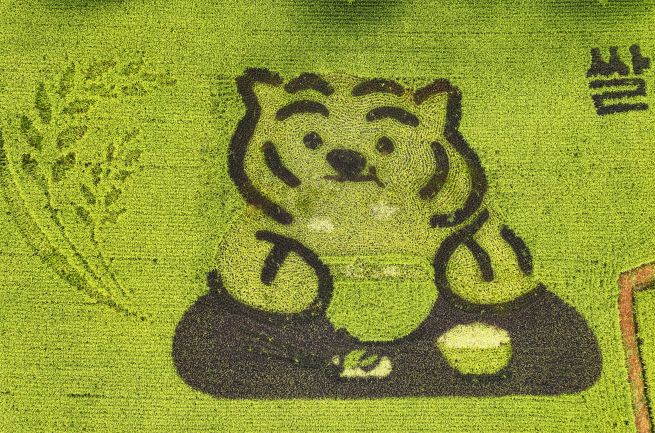
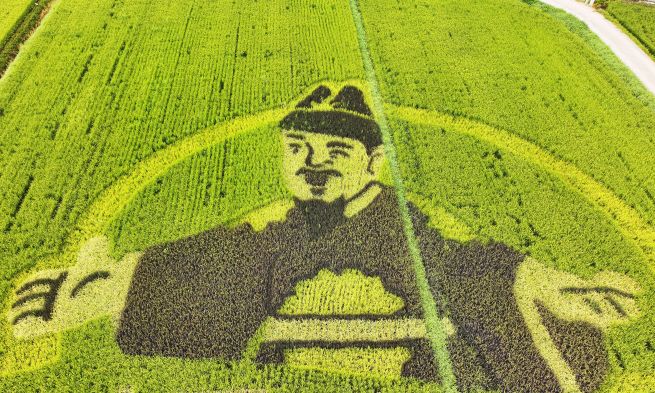
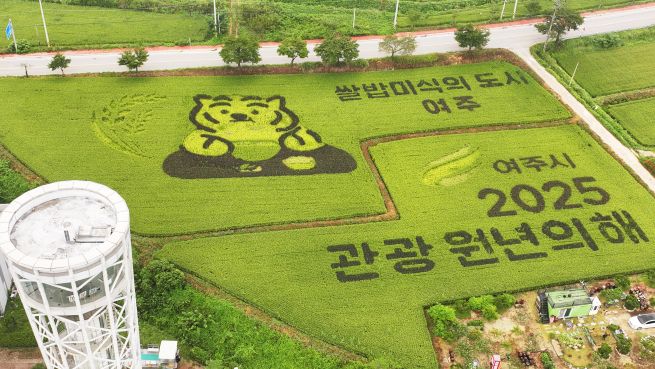
On August 17, in Yeoju—one of the country’s premier rice-producing regions—colorful characters were artistically planted using differently colored rice strains in the paddies.
YEOJU, Aug. 18 (Korea Bizwire) — As South Korea commemorates “Rice Day” on August 18, a day symbolically chosen to honor the labor of farmers—based on the breakdown of the Chinese character for rice (米) into 8 (八), 10 (十), and 8 (八)—the nation finds itself grappling with a deepening crisis in rice consumption, agricultural sustainability, and food sovereignty.
Once the foundation of every Korean meal, rice is steadily losing its place at the national table. Consumption has declined annually, while rural communities face mounting challenges from an aging farming population and shrinking profit margins.
In particular, low rice prices have forced many farmers to abandon their paddies, contributing to a troubling rise in farm closures.
South Korea’s self-sufficiency in key grains hovers in the low 20% range, making it increasingly dependent on imports of wheat, soybeans, and corn.
Even rice, the nation’s most produced grain, is stuck in a policy-induced dilemma of oversupply and falling prices.
The stark contrast between symbolic reverence for rice and its declining real-world significance is further highlighted on the eve of Rice Day.
On August 17, in Yeoju—one of the country’s premier rice-producing regions—colorful characters were artistically planted using differently colored rice strains in the paddies, offering a vivid reminder of rice’s cultural and economic value.
As the country reflects on the importance of rice in sustaining rural livelihoods and national food security, this year’s Rice Day underscores the urgent need for more effective policies and renewed public awareness to protect South Korea’s grain independence.
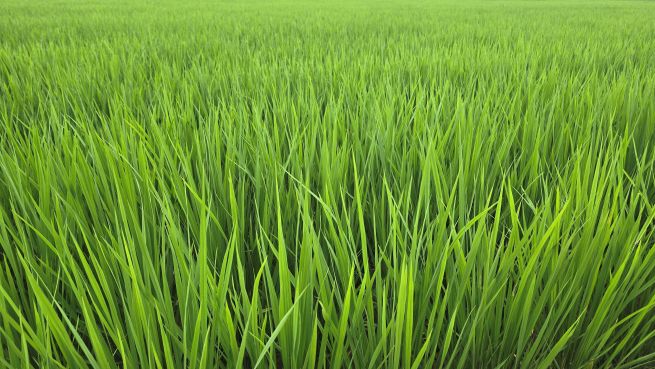
Image credit: Yonhap / photonews@koreabizwire.com