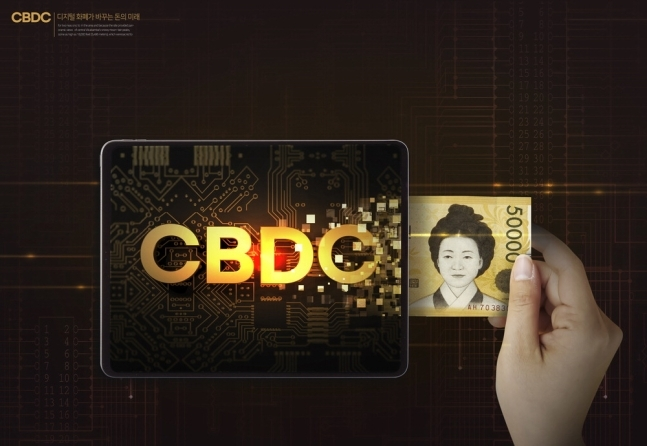
BoK Chief Urges Korean Banks to Back CBDC Pilots in One-on-One Meetings (Image courtesy of Getty Image Bank/CCL)
SEOUL, Sept. 8 (Korea Bizwire) — South Korea’s central bank, in coordination with the government and the country’s largest lenders, is preparing to test the use of central bank digital currency (CBDC) for distributing public subsidies, a move officials say could curb misuse and improve accountability.
According to financial industry sources, the six major banks — KB Kookmin, Shinhan, Hana, Woori, NH Nonghyup and Industrial Bank of Korea — have indicated interest in participating in the pilot, following direct outreach from the Bank of Korea’s digital currency division late last month.
The program would shift government subsidies and vouchers from cash to programmable digital tokens, using blockchain-based distributed ledger technology. Such design would allow authorities to set usage limits and expiration dates, preventing fraud or diversion and enabling more precise measurement of the subsidies’ impact.
The Bank of Korea and the Ministry of Finance plan to brief interested banks as early as mid-September, with live testing possible in the first half of 2026 if preparations proceed smoothly.
“This time, the Bank emphasized it wants to work only with banks strongly committed to participation,” said one banking official, noting that an earlier trial of deposit tokens collapsed over disputes about costs and the emergence of private stablecoins.
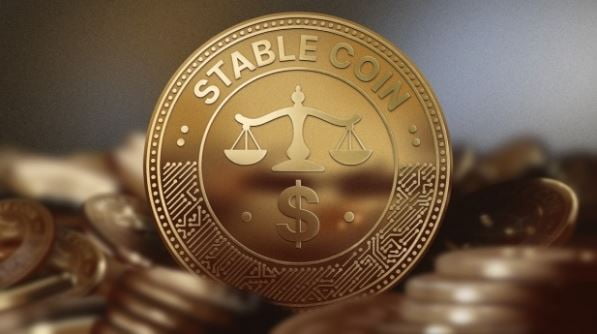
A stablecoin is a type of cryptocurrency that minimizes price volatility by pegging its value to a specific asset, most commonly the U.S. dollar. To maintain this value, stablecoins are backed by collateral, with U.S. Treasury bonds frequently used for this purpose. (Image courtesy of Yonhap)
With more than 100 trillion won ($73 billion) in government subsidies distributed annually, banks see both risks and opportunities. The necessary cloud infrastructure from prior CBDC deposit token experiments remains in place, lowering costs, according to industry sources.
In parallel, the central bank is cautiously exploring the role of won-based stablecoins. While it has long argued such tokens should be issued through banks first, legislative discussions in the National Assembly on broader stablecoin regulation have forced a more measured stance.
Bank of Korea Governor Rhee Chang-yong told lawmakers in August that programmable currency is “essential for the future” but should be introduced in stages, starting with banks. Lawmakers, however, countered that allowing non-bank stablecoin issuers to back tokens with government bonds could be equally safe and prevent liquidity strain.
The experiment marks a significant step in South Korea’s digital currency policy — balancing innovation with regulatory caution, while testing whether state benefits can be delivered more efficiently in a programmable form.
Ashley Song (ashley@koreabizwire.com)