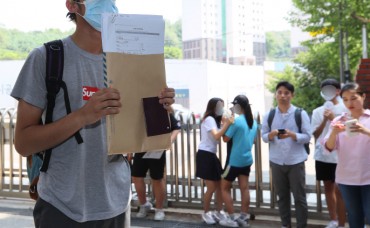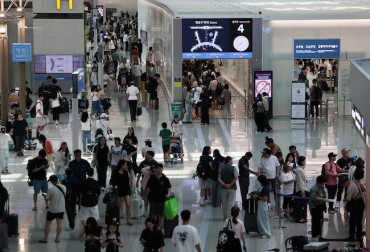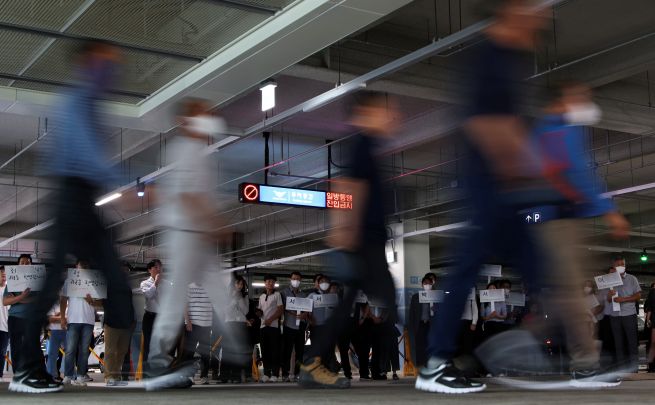
South Korean workers who had been detained in Georgia by U.S. immigration authorities arrive at Incheon International Airport’s Terminal 2 on September 12 and move to vehicles. (Yonhap)
SEOUL, Sept. 18 (Korea Bizwire) — South Korea and the United States have begun working-level discussions aimed at overhauling the visa system for Korean workers, following the mass detention of more than 300 South Koreans at a Georgia construction site earlier this year — an episode that rattled both industry and diplomacy.
The Ministry of Foreign Affairs in Seoul said Thursday the two governments agreed to create a joint working group after the weeklong detention, which ended only after intense diplomatic negotiations.
The arrests highlighted how unclear visa rules and slow approval processes have become a major source of friction as Korean companies expand large-scale manufacturing projects in the United States.
According to the ministry, Seoul and Washington have already held two director-level consultations — one between the South Korean Foreign Ministry and the U.S. Embassy in Seoul, and another between the South Korean Embassy in Washington and the State Department — to prepare the launch of the group.
“We shared proposals on the operation of the working group and called for the first meeting as soon as possible,” the ministry said in a statement.
Officials said the group will focus on streamlining entry procedures for Korean business personnel, many of whom have struggled with restrictive interpretations of visa categories.
A significant number of those detained in Georgia were working under short-term business or recreational visas, underscoring the legal ambiguities facing foreign engineers and technicians deployed on temporary assignments.
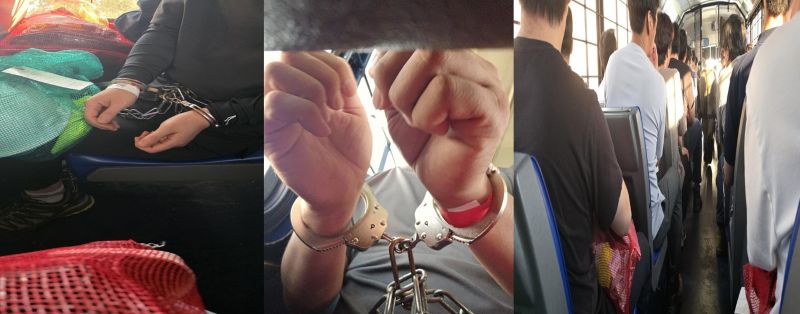
Workers in handcuffs and chains. Many of them were highly skilled technicians from South Korea’s elite universities, dispatched to help accelerate the early operation of the U.S. plant. (Image source: Worker A’s detention diary)
Seoul’s Domestic Push
In parallel, the South Korean government has established an interagency task force to gather complaints and recommendations from companies. The group includes the ministries of foreign affairs, industry, and SMEs, alongside major business lobbies such as the Federation of Korean Industries.
The task force will compile reform proposals to present to U.S. counterparts, reflecting growing calls from industries that say long visa application timelines and inconsistent enforcement are hampering operations.
“The uncertainties surrounding U.S. visa policy pose real risks for our companies,” one senior trade official said, adding that securing predictable entry procedures is critical for Korean firms that have invested billions in battery and semiconductor plants across America.
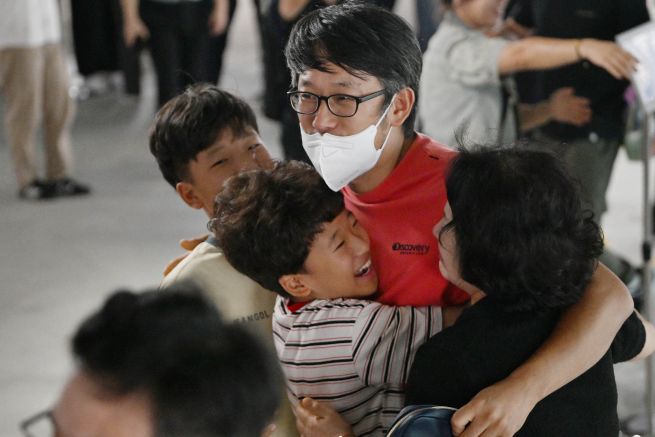
A South Korean worker who had been detained in Georgia by U.S. immigration authorities is reunited with family members in the parking lot after arriving through Terminal 2 of Incheon International Airport on September 12. They are among the engineers recognized as having top-tier technical expertise in South Korea. (Yonhap)
Industry Pressure, Political Stakes
The Georgia raid has become a flashpoint in South Korea’s debate over worker protection and industrial policy. Business leaders warn that unless visa rules are clarified, the competitiveness of Korean firms in the U.S. could be undermined just as they deepen their supply-chain presence under the Biden and Trump administrations’ reshoring agendas.
For Washington, the issue is more than bureaucratic: it touches on the reliability of foreign investment at a time when Korean companies are among the largest backers of U.S. manufacturing projects.
For Seoul, the incident has become a test of whether its workers can be safeguarded abroad while sustaining its role as a critical partner in America’s clean energy and high-tech strategies.
“The U.S. remains indispensable to our industrial future,” a South Korean diplomat said, “but predictability in visa policy is no less important than predictability in tariffs or subsidies.”
M. H. Lee (mhlee@koreabizwire.com)