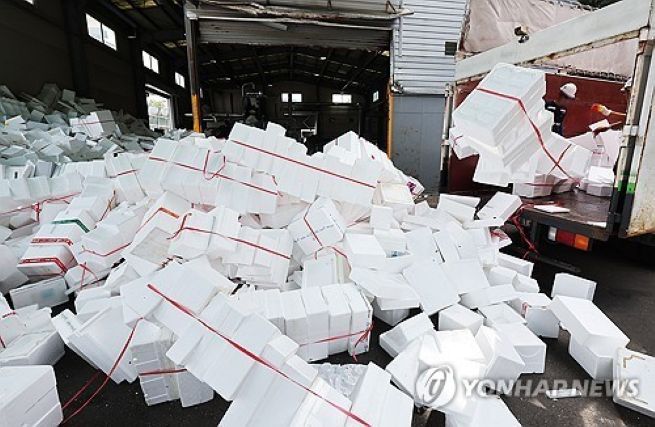
During holiday periods such as Chuseok, it is common for an enormous amount of waste to be generated.
SEOUL, Sept. 29 (Korea Bizwire) — As South Korea prepares for the Chuseok harvest holiday, when household waste typically spikes, local governments and businesses are stepping up efforts to promote greener practices — from reusable wrapping to bans on artificial flowers at cemeteries.
Officials in North Chungcheong Province estimate that nearly 20,000 tons of waste will be generated during the holiday week, about 40 percent more than usual. To cope, the province is mobilizing 3,700 sanitation workers and conducting inspections of major retailers to crack down on excessive packaging and plastic use.
In Cheongju, authorities are combining price inspections at traditional markets with a carbon-neutrality campaign, handing out cloth shopping bags to encourage consumers to avoid disposable plastic.
Food companies, meanwhile, are turning to recycled paper fillers and paper tape. One dried persimmon seller in Yeongdong said he had replaced conventional packaging with reusable cloth wraps and ice packs filled with frozen water. “It looks traditional, and it cuts waste at the same time,” he said.
Funeral and memorial practices are also changing. Cheongju recently signed an agreement with civic groups to promote fresh flowers instead of artificial arrangements at public cemeteries, where about 1,600 tons of plastic flowers are discarded annually nationwide. The city plans to distribute free fresh flowers next month and aims to ban artificial flowers entirely at municipal cemeteries by 2027.
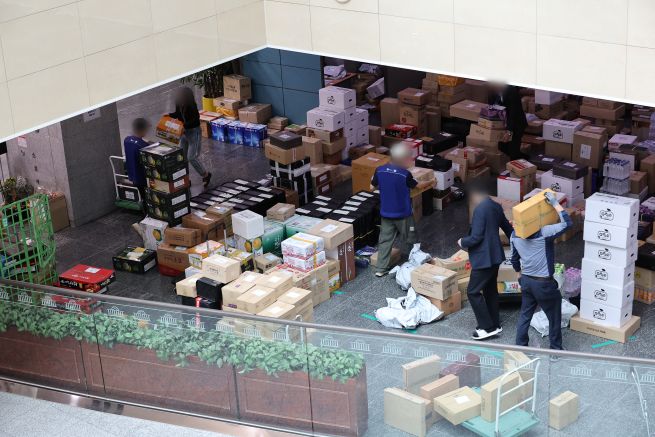
Chuseok gift delivery boxes are stacked at the National Assembly Members’ Office Building in Yeouido, Seoul, on September 25. (Yonhap)
Citizens are also adjusting habits. Some families are preparing smaller quantities of food, avoiding over-packaged gift sets, or choosing trains and buses over cars for their holiday travels. “Before, it was about abundance, even if food went to waste,” said a 33-year-old office worker in Cheongju. “Now we try to cook just enough, and I make sure to rinse plastics before recycling because I know how important it is.”
Officials stress that such efforts, however small, help curb waste and protect future generations from environmental harm. “Unnecessary plastic ends up as pollution,” said a provincial official. “This Chuseok, we urge everyone to practice eco-friendly consumption.”
Ashley Song (ashley@koreabizwire.com)