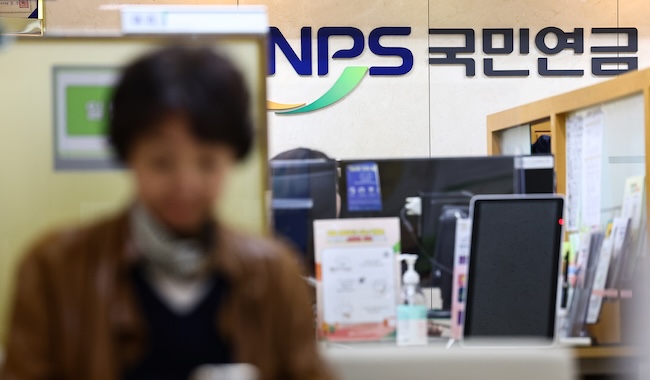
The National Pension Service (Image courtesy of Yonhap)
SEOUL, Oct. 15 (Korea Bizwire) — South Korea’s National Pension Service (NPS) said it will begin enforcing stricter “responsible investment” standards on private equity and other alternative investments, following heavy criticism over massive potential losses linked to the troubled retailer Homeplus.
The decision, announced by the Ministry of Health and Welfare during a parliamentary audit on Tuesday, marks a major shift in how the NPS manages the nation’s retirement assets.
For years, the fund applied environmental, social, and governance (ESG) criteria only to listed stocks and bonds, leaving private equity investments largely unregulated in this respect.
The policy change follows revelations that NPS, which invested 612.1 billion won ($445 million) in MBK Partners’ 2015 buyout of Homeplus, faces losses that could reach nearly 900 billion won.
The fund’s 29.5 billion won in common shares are likely to be written off entirely, and the recoverability of 582.6 billion won in redeemable preferred shares remains uncertain.
The controversy traces back to MBK’s aggressive financial engineering. After acquiring Homeplus from Tesco, the private equity firm sold off key store assets in a “sale and leaseback” scheme—raising cash for generous dividend payouts to investors but hollowing out the company’s long-term viability.
The retailer entered court receivership in March, sparking outrage that private equity profits had been privatized while public investors, including the national pension fund, bore the losses.

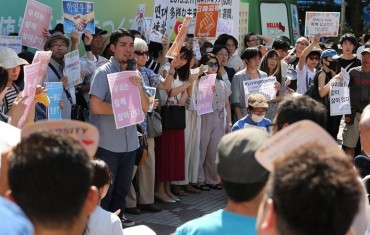
Homeplus, one of the country’s largest retail chains, filed for court receivership on March 4, 2025. (Image courtesy of Yonhap)
Critics say the scandal exposed deep flaws in the NPS’s partial application of responsible investing principles. “Private equity managers obsessed with short-term profits were allowed to handle the public’s retirement money without meaningful oversight,” said a report from the National Assembly Research Service, which faulted the absence of ESG guidelines in the alternative investment sector.
The government’s pledge to expand responsible investment standards to all asset classes has been met with mixed reactions. Reform advocates call it an overdue but necessary correction, while others deride it as a “too-late remedy” that follows years of inaction despite repeated warnings, including at the 2022 parliamentary audit.
The Homeplus case, observers say, offers a sobering reminder that the NPS’s foremost mandate—protecting the stability and sustainability of citizens’ retirement savings—must not be subordinated to the pursuit of short-term returns.
Preventing a repeat will require stronger ESG enforcement, tighter oversight of private equity, and an end to speculative investment practices that gamble with the nation’s pension capital.
Ashley Song (ashley@koreabizwire.com)