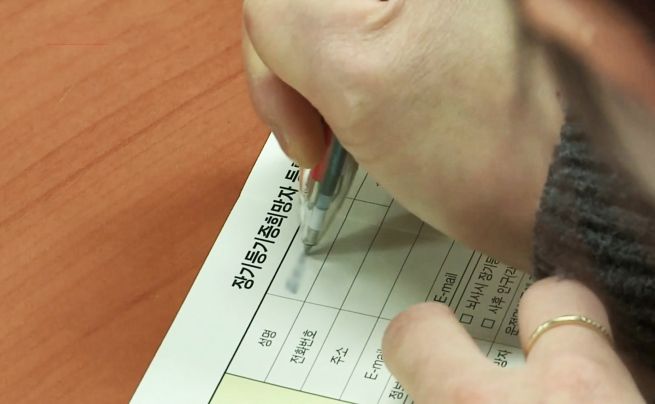
A person signing a pledge to become an organ donor (Yonhap)
SEOUL, Oct. 17 (Korea Bizwire) — South Korea will soon allow organ donations from patients who die after life support is withdrawn and their hearts stop beating — not just those declared brain dead — in a major policy shift aimed at easing the nation’s severe shortage of transplant organs, the government announced Thursday.
The change, part of the country’s first national master plan on organ and tissue donation and transplantation for 2026–2030, seeks to modernize an overburdened system and increase donor registrations.
The Ministry of Health and Welfare said it aims to raise the share of registered organ donors from 3.6 percent in 2024 to 6 percent by 2030, while boosting the number of brain-dead organ donors from 7.8 to 11 per million people.
Under the reform, donation after circulatory death (DCD) will be introduced for patients who have chosen to end life-sustaining treatment. Once consent for donation is given, organs can be retrieved after cardiac death is formally declared. DCD is already common in countries such as Spain and the United Kingdom, where it accounts for nearly half of all organ donations.
Currently, all organ donations in South Korea depend on brain-dead donors — a model that has faltered as cases decline. The number of brain-dead donors fell from 478 in 2020 to 397 in 2024, while the waiting list for transplants grew to nearly 55,000. On average, eight people die every day while waiting for an organ.
The plan also calls for expanding the list of transplantable organs, simplifying brain-death determination procedures, and increasing compensation for hospitals and medical staff involved in donor management.
Officials said the government will revise strict criteria for brain-death confirmation and enhance the use of electronic medical records to report potential donors.
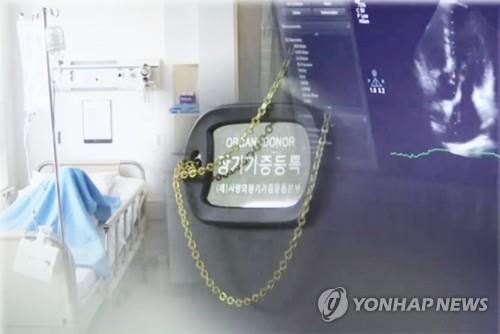
In the past, organ donations were typically made by individuals who had been declared brain-dead.
To boost participation, the number of official donor registration sites will nearly double, from 462 in 2024 to 904 by 2030. Residents will be able to register at community centers, driver’s license offices, and other public facilities, in addition to hospitals.
The government will also explore new ways to honor donors and their families, including revising financial assistance programs that currently provide up to 5.4 million won ($3,800) in funeral or medical support.
While international guidelines prohibit direct financial rewards, Korean officials say public sentiment favors modest assistance framed as condolence rather than compensation.
Another focus is reducing dependence on imported human tissues — which account for over 90 percent of supplies used in domestic surgeries — by promoting local donation. Officials also plan to phase out or strictly limit organ donations from minors, introducing psychological and ethical screening tools to assess consent and capacity.
In addition, the government intends to expand health insurance coverage for hematopoietic stem cell transplants, which currently require patients to pay up to 7 million won ($5,000) out of pocket.
The reforms mark the most sweeping overhaul of South Korea’s organ donation system in decades, reflecting a broader cultural and policy shift toward normalizing donation as both a medical and civic act.
Lina Jang (linajang@koreabizwire.com)