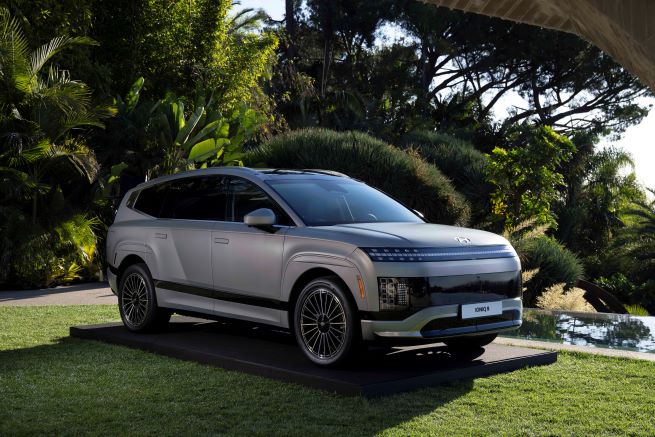
The Ioniq 9 features a spacious, lounge-inspired interior designed to comfortably accommodate up to seven passengers. Its “sleek aerosthetic” exterior seamlessly combines aerodynamic efficiency with sophisticated, futuristic styling, highlighting Hyundai’s commitment to cutting-edge innovation. (Image provided by Hyundai Motor)
SEOUL, Oct. 23 (Korea Bizwire) — Hyundai’s all-electric Ioniq 9 has received the highest safety rating among large sport utility vehicles in this year’s Korean New Car Assessment Program (KNCAP), while Ford’s Explorer placed last, according to results released Thusday by the Ministry of Land, Infrastructure and Transport and the Korea Transportation Safety Authority.
The evaluation covered three models — Hyundai’s Ioniq 9, Hyundai’s Palisade, and Ford’s Explorer. The Ioniq 9 earned first place with high marks across all categories: 90.1 percent in crash safety, 86.0 percent in pedestrian safety, and 90.0 percent in accident prevention. It also scored 72.7 percent in electric-vehicle-specific safety, rated “good.”
The Palisade also achieved a top-tier overall grade, with scores of 85.3 percent in crash safety, 79.0 percent in pedestrian protection, and 80.5 percent in accident prevention.
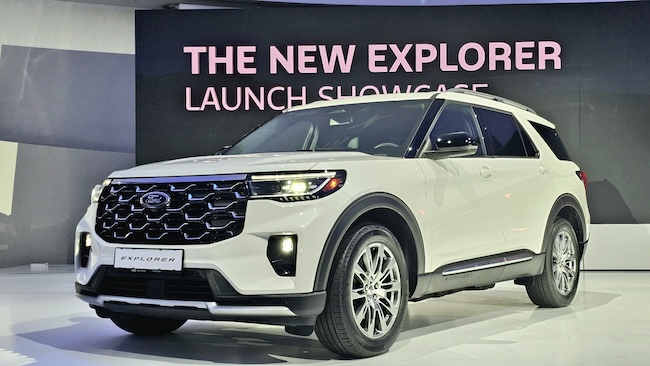
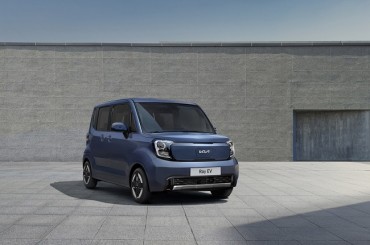
The New Ford Explorer (Image courtesy of Yonhap)
By contrast, the Explorer scored 76.4 percent in crash safety, 81.5 percent in pedestrian safety, and just 40.0 percent in accident prevention — earning the lowest, fifth-grade rating overall. Officials said the model was “adequate” in crash protection and “excellent” in pedestrian safety but “weak” in safety assistance systems, signaling the need for improvement.
The ministry said 11 vehicle models are being tested this year. After releasing the compact SUV results in September, the agency plans to announce mid-size pickup truck evaluations — including Kia’s Tasman and KGM’s Musso EV — in November.
Jung Yong-sik, director at the Korea Transportation Safety Authority, said the government aims to strengthen the credibility and transparency of the program. “We are reflecting public input in our vehicle selection process and releasing evaluations more frequently,” he said, adding that the goal is to make the KNCAP system “a participatory and trusted framework for automotive safety.”
Kevin Lee (kevinlee@koreabizwire.com)