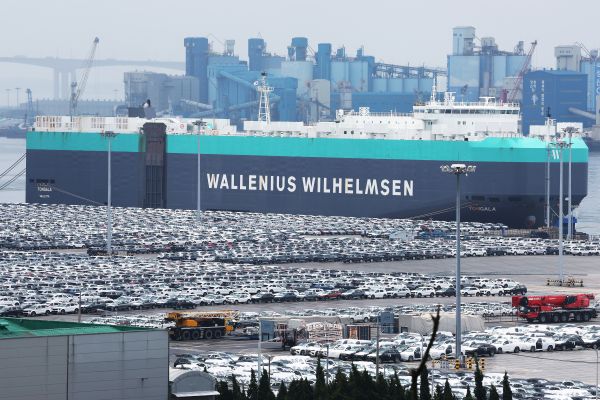
Cars destined for export are waiting to be shipped. (Yonhap)
SEOUL, Dec. 22 (Korea Bizwire) — South Korea’s used-car exports surged sharply this year, helping offset a slowdown in new vehicle shipments and preventing an overall decline in the country’s automotive exports, according to government and industry data released Sunday.
From January through November, used-car exports reached $8.4 billion, up 82.6 percent from a year earlier, the Ministry of Trade, Industry and Energy and the Korea Automotive Technology Institute said.
Over the same period, total automobile exports, including used vehicles, edged up just 2 percent to $66 billion, highlighting the growing role of secondhand cars in sustaining export performance.
Used vehicles accounted for 12.7 percent of total auto exports this year, nearly double their 7.1 percent share a year earlier. Excluding used cars, overall automobile exports would have fallen 4.2 percent, reflecting weaker new-car shipments amid U.S. tariff pressures and Hyundai Motor Group’s shift toward local production overseas.
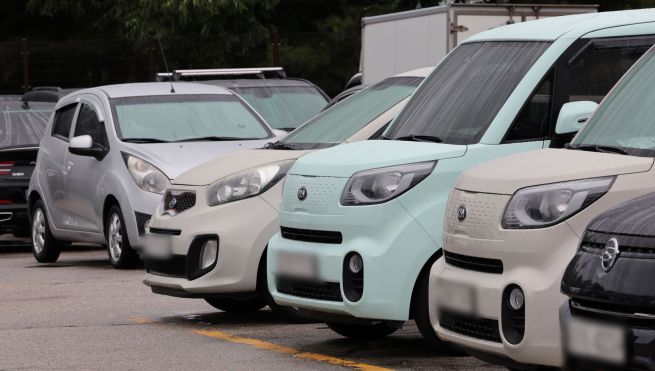
Janganpyeong Used Car Market, Seoul’s largest secondhand car trading hub. (Yonhap)
Industry estimates suggest new-car exports will total about 2.72 million units this year, down 2.3 percent from 2024.
Analysts attributed the boom in used-car exports to the improving quality and brand recognition of Korean vehicles, as well as the won’s depreciation, which made prices more competitive abroad.
Kyrgyzstan emerged as the largest export destination by value, followed by Russia, Kazakhstan, the United Arab Emirates and Türkiye, while Libya led in export volume, largely as a re-export hub for North Africa.
By powertrain, internal combustion vehicles still dominated, accounting for more than 90 percent of export value. Hybrid vehicle exports, however, jumped more than 300 percent, while electric vehicle exports grew modestly, reflecting global demand stagnation and infrastructure constraints.
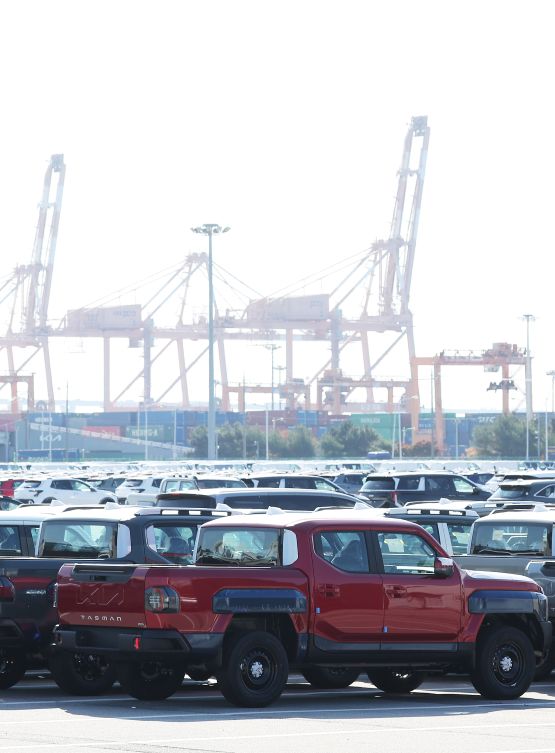
The photo shows export-bound automobiles lined up at Pyeongtaek Port in Gyeonggi Province on November 14. (Yonhap)
Experts say the surge underscores the need for South Korea to strengthen its used-car export ecosystem. Researchers have urged policymakers to benchmark Japan and China, both of which have established certification and quality standards that have fueled rapid export growth.
“With rising uncertainty from trade barriers such as U.S. tariffs, the used-car sector has strong potential to emerge as a new export engine,” the Korea Automotive Technology Institute said, adding that it could also revitalize the domestic auto and parts aftermarket.
Kevin Lee (kevinlee@koreabizwire.com)