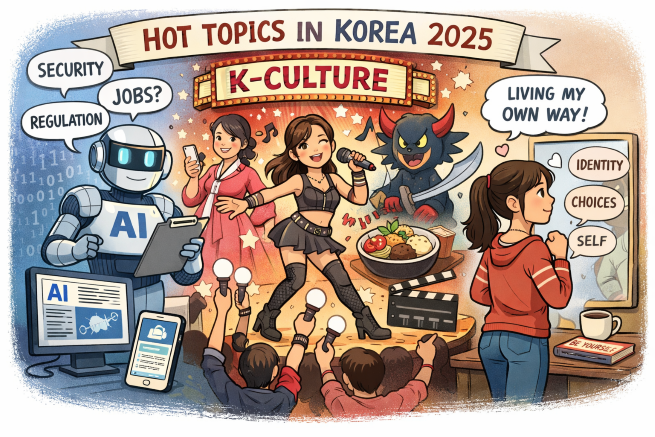
From Artificial Intelligence to K-Culture, What Koreans Talked About Most in 2025 (Image supported by ChatGPT)
SEOUL, Dec. 31 (Korea Bizwire) — Online interest in artificial intelligence, K-culture and personal identity surged in South Korea this year, reflecting shifting social values as technology, culture and individual choice increasingly shape public discourse.
According to a report released Wednesday by the Ministry of Culture, Sports and Tourism, online mentions of artificial intelligence rose 44 percent from last year, making it the most discussed topic across news articles, social media, online communities and video platforms.
Frequently associated terms included “security,” “policy,” “expansion” and “regulation,” suggesting that while the public is embracing AI’s convenience and potential, concerns over jobs, safety and fairness are growing alongside its rapid adoption.
Interest in K-culture also climbed sharply, with online references increasing 31 percent from a year earlier, buoyed by the global popularity of content such as the animated series “K-Pop Demon Hunters.”
Commonly cited keywords included K-pop, hanbok, Korean food and idols. The ministry said the trend shows K-culture evolving beyond entertainment into a space where emotional engagement, national pride and economic value converge.
Mentions of “nadawoom,” a term describing the pursuit of living according to one’s own values and identity, rose 10 percent. Related words such as “individual,” “identity,” “choice” and “self-determination” point to a broader shift toward prioritizing personal standards over external expectations when shaping one’s life.
Other areas that drew increased attention included health management, which rose 16 percent, consumption at 13 percent, and relationships and empathy, which climbed 20 percent, underscoring heightened public focus on well-being and social connection.
The findings are based on an analysis of 538 million pieces of online data collected between January and November from news outlets, social media platforms, online communities and video-sharing sites.
Lee Jung-eun, the ministry’s digital communications chief, said the analysis would be used to better anticipate public demand and strengthen communication strategies that resonate more closely with citizens in a rapidly changing media environment.
Lina Jang (linajang@koreabizwire.com)