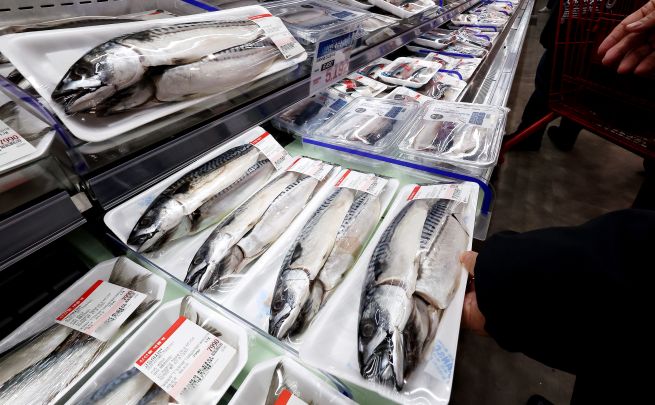
Mackerel prices are rising sharply. On Jan. 2, a shopper examines Norwegian mackerel at a large supermarket in Seoul. (Yonhap)
SEOUL, Jan. 5 (Korea Bizwire) — South Korea’s most familiar fish may soon become a luxury item.
Mackerel, a staple of the Korean diet, is facing mounting supply pressures as climate change shrinks domestic catches and Norway — the country’s dominant foreign supplier — moves to sharply cut its harvest.
The combined squeeze is already pushing prices higher and adding to inflation concerns, government officials and industry data show.
Norway plans to slash its mackerel fishing quota by 52 percent this year to 79,000 metric tons, down from 165,000 tons last year, according to South Korea’s Ministry of Oceans and Fisheries.
Compared with 2024 levels, the reduction amounts to a 63 percent cut. The decision follows an agreement among Norway, Britain, Iceland and the Faroe Islands to significantly lower total allowable catches in the Northeast Atlantic amid declining fish stocks.
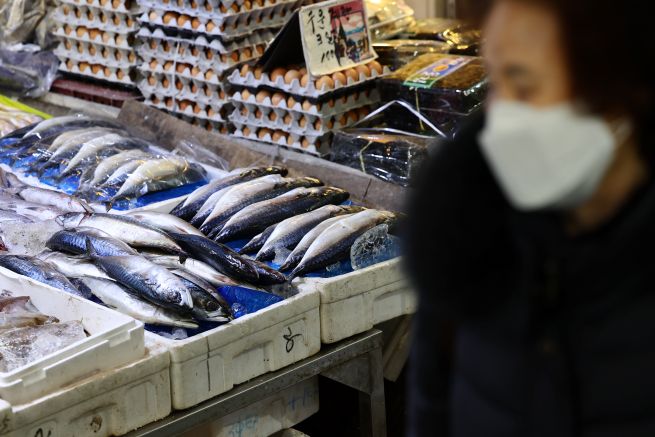
Mackerel Shortages Loom as Climate Change and Overfishing Take Their Toll (Yonhap)
The cuts come as mackerel is no longer considered a sustainable species. In 2019, the fish lost its certification from the Marine Stewardship Council after years of overfishing.
International scientific advisers had recommended even steeper reductions than those agreed by the four countries.
For South Korea, the timing is particularly problematic. Climate-driven changes in ocean conditions have reduced domestic mackerel production, especially of the medium and large fish preferred by consumers.
Imports surged 51 percent in 2025 to 83,000 tons, up from 55,000 tons a year earlier, with Norway accounting for 80 to 90 percent of that supply.
As availability tightens, prices are climbing. Norway’s mackerel output fell nearly 38 percent through November, and the import price of frozen mackerel rose 27 percent year-on-year to $3.30 per kilogram.
Combined with a weaker won, retail prices in South Korea have crossed a symbolic threshold, with two fish now averaging more than 10,000 won.
According to the Korea Agro-Fisheries and Food Trade Corporation, the retail price of imported salted mackerel reached an average of 10,363 won in December, up nearly 29 percent from a year earlier and more than 50 percent higher than two years ago.
Mackerel prices alone rose 11.1 percent year-on-year in December, contributing to a broader 6.2 percent increase in seafood inflation.
Officials warn that further supply disruptions could intensify pressure on household food costs. The oceans ministry said it is considering expanding tariff-free import quotas and promoting the use of smaller mackerel, while seeking to diversify import sources.
Still, with both domestic and overseas supplies under strain, South Korea’s once-affordable staple may increasingly become a costly indulgence.
Lina Jang (linajang@koreabizwire.com)