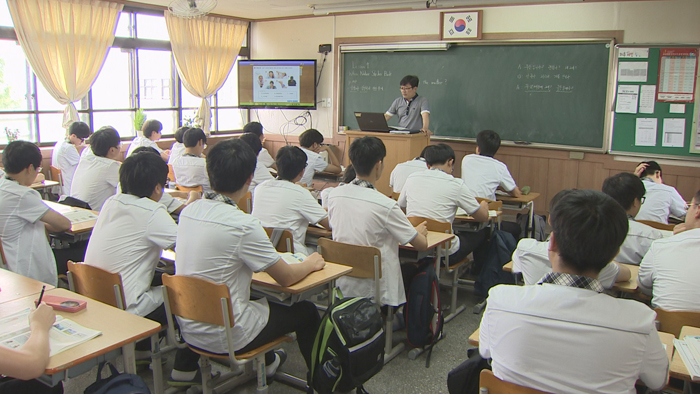
High school students attending a class. (Image courtesy of Yonhap)
SEOUL, Jan. 12 (Korea Bizwire) — Prescriptions of methylphenidate, a stimulant medication used to treat attention deficit hyperactivity disorder (ADHD), have risen sharply among children and teenagers in South Korea, with usage in the first nine months of last year already surpassing totals for the entire previous year, government data show.
According to the Ministry of Food and Drug Safety’s latest monthly report on controlled medical substances, more than 113,000 boys aged 19 and under were prescribed methylphenidate between January and September 2025, exceeding the full-year figure for 2024 by about 6 percent.
Prescriptions for girls in the same age group also climbed to more than 49,000, surpassing the previous year’s total.
The increase marks a continuation of a steady upward trend since 2021 and reflects a much sharper rise compared with 2023, when approximately 91,000 boys and 35,000 girls received the medication over the entire year.
Methylphenidate, a central nervous system stimulant classified as a controlled substance, is approved exclusively for the treatment of ADHD under medical supervision.
However, health authorities warn that it has become widely mischaracterized among students and parents as a “study-enhancing” or “concentration-boosting” drug, fueling concerns about inappropriate use.
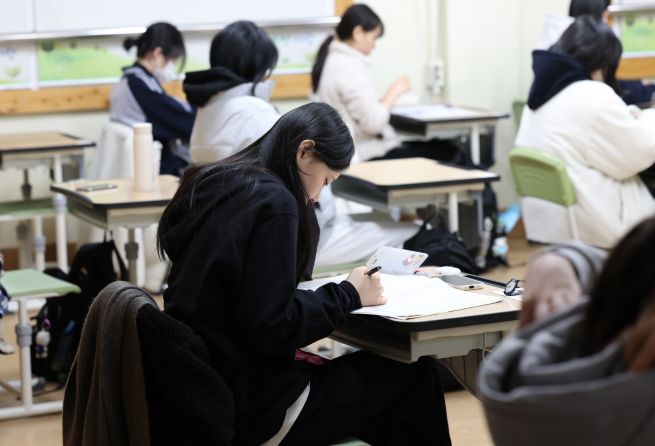
Students wait and study before the exam begins at Gyeongshin Girls’ High School in Buk-gu, Gwangju, on Nov. 16, the day of the College Scholastic Ability Test (CSAT). (Photo provided by Yonhap)
Data from the National Health Insurance Service indicate that prescriptions are most prevalent among teenagers and disproportionately concentrated in higher-income households. Geographic clustering has also been observed in affluent districts such as Gangnam and Seocho in Seoul, as well as Bundang, areas known for intense academic competition.
Medical experts caution that misuse of methylphenidate can lead to serious side effects, including insomnia, headaches, hallucinations, delusions and, in severe cases, suicidal behavior—risks that are particularly acute for adolescents.
The food and drug safety ministry said it has stepped up efforts to curb abuse, including crackdowns on illegal advertising and sales during college entrance exam periods and closer monitoring of medical institutions with high prescription volumes.
Authorities plan to further strengthen enforcement this year by deploying artificial intelligence tools to detect suspicious prescribing patterns.
As academic pressure continues to shape health behaviors among young people, officials warn that addressing misconceptions about ADHD medications will be critical to preventing long-term harm.
Lina Jang (linajang@koreabizwire.com)