The Story Behind Korea’s Laws: Your Guide to Korea’s Legal Pulse
SEOUL, Jan. 29 (Korea Bizwire) — South Korea’s Supreme Court ruled on Thursday that certain bonuses paid by Samsung Electronics must be included in the calculation of employees’ average wages, a decision that could reshape how severance pay is determined across the country’s private sector.
The ruling comes nearly seven years after 15 former Samsung employees filed suit, arguing that the company had underpaid their severance by excluding performance-related bonuses from the wage base used to calculate final compensation.
At issue was whether so-called “target incentives” — bonuses tied to the performance of individual projects and departments — should be considered payment for labor, and therefore counted as wages under the law.
In a closely watched decision, the court said they should.
The justices found that the incentives functioned as compensation for work, citing the structure of the evaluation system, the purpose of the payments and the criteria used to determine eligibility. Taken together, the court said, those elements established a sufficient link between the bonuses and employees’ labor.
Under South Korean labor law, severance pay is calculated using an employee’s “average wage,” defined as total earnings during the final three months of employment divided by the number of days worked during that period. Employers are required to pay at least 30 days’ worth of that average wage for each year of continuous service.
The ruling draws a distinction, however, between different forms of bonuses.
The court said that “performance incentives” — payments derived from a pool equal to 20 percent of departmental profits — could not be treated as wages. Those payouts, the justices noted, depended not only on individual labor but also on broader factors such as capital investment, operating costs, market conditions and management decisions.
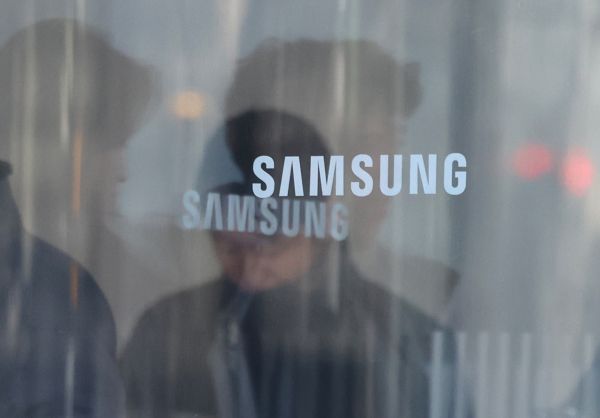
Silhouettes of employees are seen inside Samsung Electronics’ Seocho headquarters. (Yonhap)
Because lower courts had previously concluded that neither category of bonuses qualified as wages, the Supreme Court sent the case back to the Suwon High Court for a retrial, instructing it to reconsider the severance calculations in light of the new interpretation.
Legal and business circles followed the ruling closely, viewing it as a potential precedent for similar cases now pending before the court, including lawsuits involving former employees of SK hynix, HD Hyundai Heavy Industries and other major corporations.
The decision also builds on a 2018 Supreme Court ruling that required public institutions to include bonuses when calculating average wages — a judgment that has since fueled a growing wave of litigation in the private sector.
For companies, the ruling signals a narrowing boundary between discretionary bonuses and legally recognized wages. For workers, it marks a significant step toward broader recognition of performance-based compensation as part of their earned pay — and of the protections that come with it.
Jerry M. Kim (jerry_kim@koreabizwire.com)