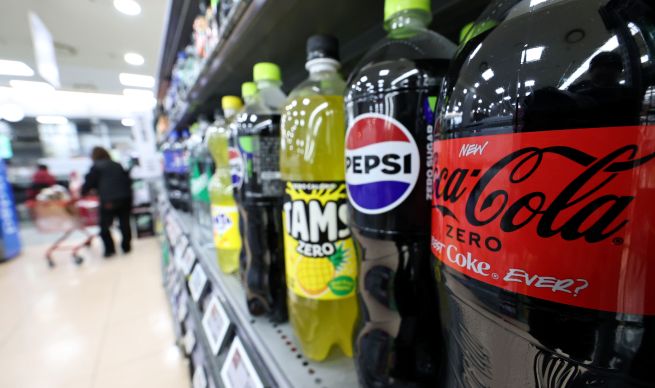
Sugar-free products, including zero-sugar cola, are displayed at a large supermarket in Seoul. (Yonhap)
SEOUL, Feb. 9 (Korea Bizwire) — South Koreans are consuming less sugar overall than they did at the peak of the mid-2010s. Yet a growing share of the population is ingesting sugar at levels considered excessive, according to a government report released Monday — a trend that is drawing renewed attention from policymakers.
Average daily sugar intake stood at 59.8 grams per person in 2023, up slightly from 58.7 grams in 2020, based on data from a national health survey conducted by the Korea Disease Control and Prevention Agency. While the figure remains well below the 67.9 grams recorded in 2016, it reflects a modest rebound after years of decline.
More striking, health officials say, is the rise in the proportion of people whose sugar consumption exceeds recommended limits. In 2023, 16.9 percent of South Koreans consumed more than 20 percent of their total daily energy intake from sugar — the threshold used to define excessive intake. That compares with 15.2 percent in 2020 and 15.8 percent in both 2021 and 2022.
Children and young adults appear particularly vulnerable. Among those under age 9, 26.7 percent consumed excessive sugar. The figure was 17.4 percent for teenagers and 17 percent for adults ages 19 to 29. Women were more likely than men to exceed recommended levels, with 21 percent of women classified as excessive consumers compared with 12.9 percent of men.
Sugary beverages and tea drinks were the largest contributors to high intake, followed by fruit, dairy products, frozen desserts and baked goods such as bread and cookies.
“Sugar consumption remains high through beverages and ice cream products with high added sugar content,” the agency said, calling for sustained policy and environmental measures to curb intake.
The findings come amid growing political debate over public health interventions. President Lee Jae Myung recently floated the idea of introducing a sugar tax, igniting discussion over whether such a levy could help reduce consumption and generate revenue for the health care system.
The data suggest that while average consumption has moderated over the past decade, unhealthy patterns persist — particularly among younger Koreans — posing a continuing challenge for health authorities.
Lina Jang (linajang@koreabizwire.com)